

Why Eon Wins for Cloud-First Enterprises
Backup posture that keeps up with cloud change
Cohesity environments can rely on static policies and ongoing manual effort to keep coverage aligned as cloud estates change.
Eon runs Cloud Backup Posture Management (CBPM) that continuously tracks coverage and drift as infrastructure changes.
- Discovers new resources across accounts, regions, and clouds
- Applies protection based on data type and business risk, not tags
- Flags under-protected resources during normal operations
- Keeps policy intent consistent as teams ship changes
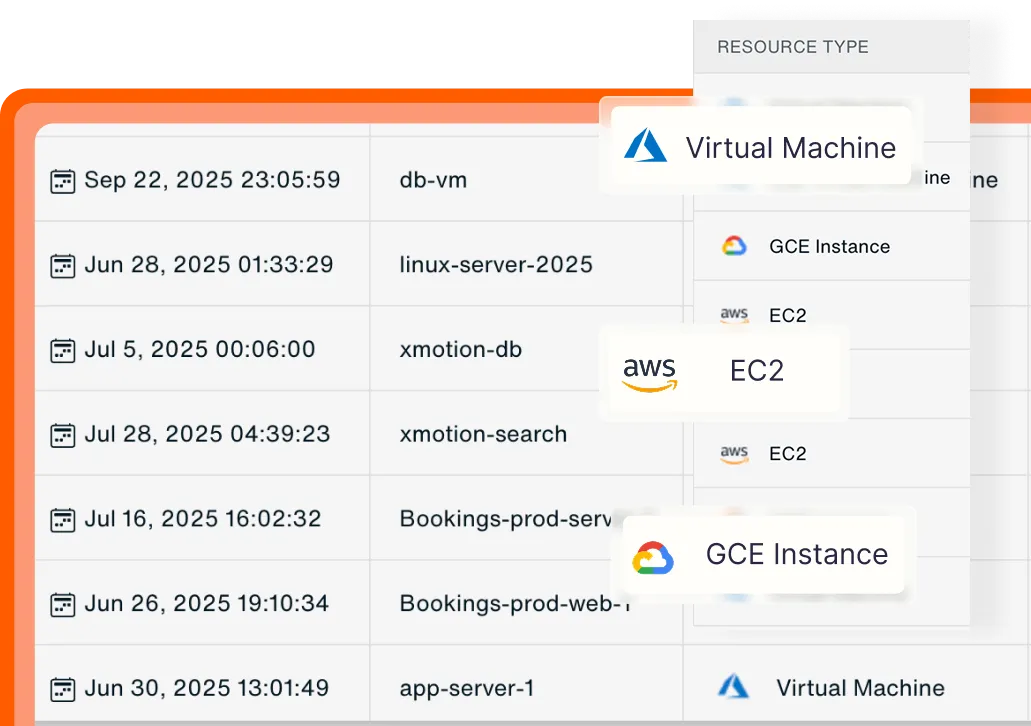
Resource inventory
A centralized view of resources by type, data class, and environment.
Backups that don't stay locked away
With Cohesity, getting answers from backup data often starts with restore workflows or additional setup to make data accessible.
Eon keeps backup data accessible so teams can search, inspect, and pull what they need without restoring full systems.
- Search files, objects, and database contents across backups
- Query database backups to find the right table, record, or time window
- Support audits and investigations without rebuilding environments
- Validate backup contents before you run recovery
Search your backups
Query backup data with simple search to find the right file, record, or point in time fast.

Ransomware resilience built into day-to-day backup
Cohesity supports immutability, but deeper detection and response workflows can add licensing and operational setup, depending on the environment.
Eon includes ransomware protection as part of the platform so teams run it by default.
- Immutable, logically air-gapped backups by default
- Anomaly signals tied to backup activity
- Clean recovery points preserved for rollback to known-good states
- Recovery workflows that help teams verify and restore quickly
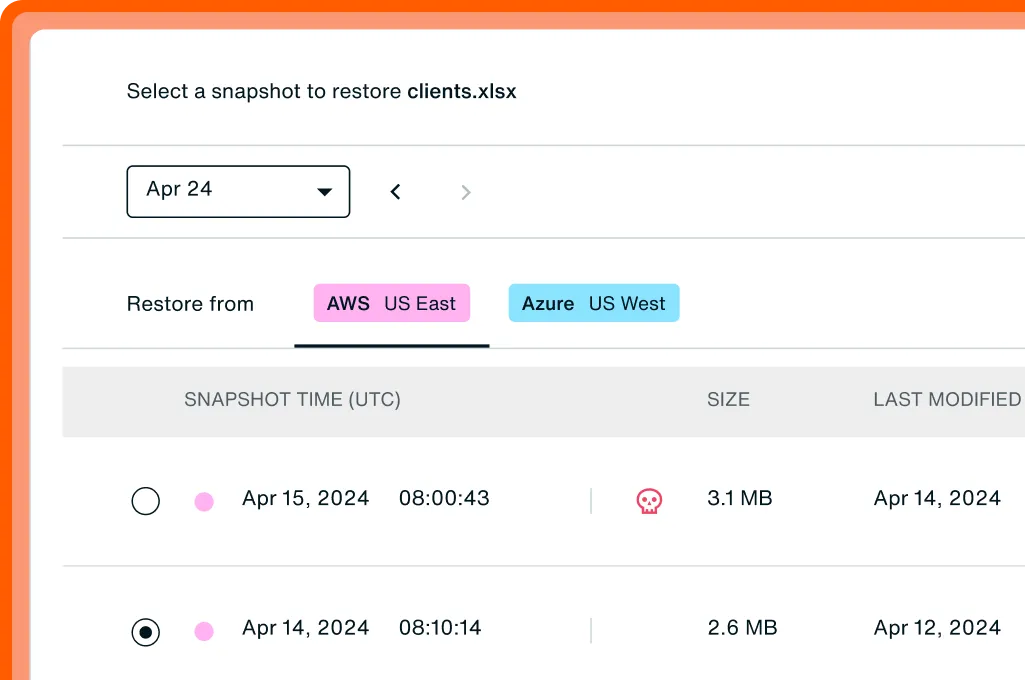
Ransomware: find + recovery
Investigate signals, then restore from a known-good point.
Costs you can explain without reverse-engineering infrastructure spend
Cohesity cloud deployments can add costs beyond storage, especially as cluster footprints grow or teams duplicate data for recovery patterns.
Eon keeps the operating model lighter, and Cost Explorer shows where spend comes from.
- Pricing driven primarily by protected storage
- Incremental backups plus global deduplication reduce stored footprint
- No cluster compute to size, run, or budget for
- Cost Explorer breaks spend down by workload and policy
FAQs
Teams compare Eon vs. Cohesity when they want cloud backup without running clusters, with faster granular recovery and easier access to backup data.
Eon focuses on AWS, Azure, and Google Cloud infrastructure with centralized posture, recovery, and cost visibility in one place.
For cloud-native infrastructure workloads, yes. Eon replaces cluster-based deployments with a fully SaaS-managed platform for cloud environments. Meanwhile, Cohesity could still be a fit for organizations that prioritize large on-prem or hybrid estates.
In many deployments, Cohesity’s cloud model involves customer-managed clusters and supporting infrastructure, which adds operational overhead as coverage grows.
Eon supports instant, granular recovery at the file, object, and database level with global backup search. Cohesity recovery workflows can be more restore-heavy for cloud infrastructure incidents, which can slow down day-to-day incident response.
Yes with Eon. Teams can search and query backup data directly for audits, investigations, analytics, and AI use cases without restoring full environments.
Eon includes Cost Explorer to show what’s protected, how policies apply, and where spend accumulates. Cohesity costs often expand with cluster footprint, storage duplication, and licensed features, which can make cost attribution harder.
Cohesity can fit organizations with large on-premises or hybrid environments that already operate cluster-based data protection infrastructure.