

AI security posture management (AI-SPM) answers a question older security stacks cannot. What AI is running in your cloud, and how exposed is it right now?
AI agents hold production credentials, LLM applications sit on regulated customer data, and a single misconfigured pipeline can expose both in minutes.
What is AI security posture management?
AI security posture management is the continuous practice of discovering, inventorying, and risk-scoring every AI asset in your environment. That inventory spans models and model endpoints, AI agents, training and grounding datasets, vector databases, embeddings, pipelines, and the permissions connecting all of it to production systems.
Posture means knowing the current state of those assets and closing the gap between that state and your policy. AI-SPM extends the discipline CSPM applies to infrastructure and DSPM applies to data onto the AI layer that now sits on top of both.
Why AI-SPM became urgent in 2026
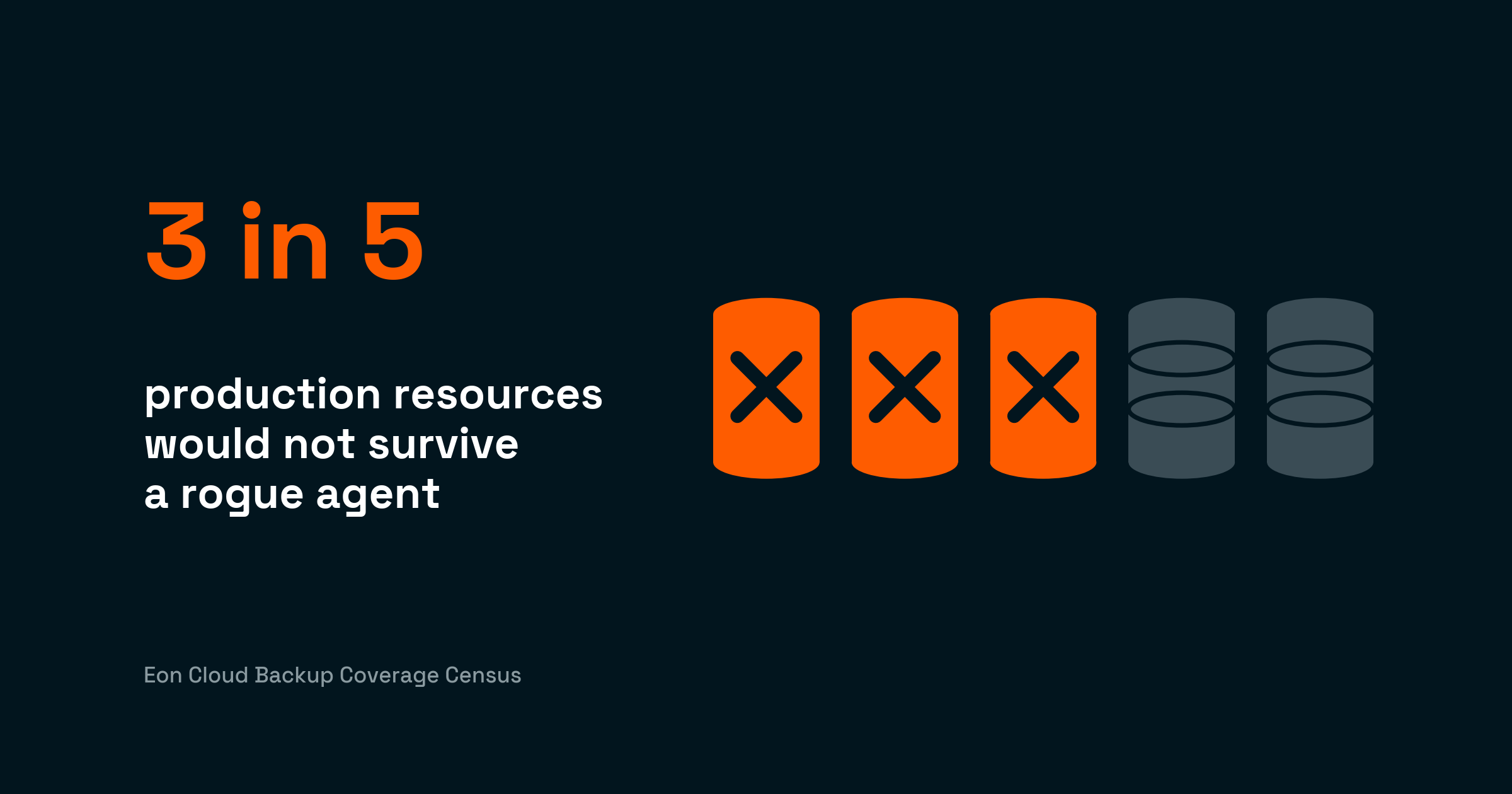
AI agents now run migrations and call cloud APIs with valid IAM roles, and when one goes wrong, it goes wrong at machine speed.
A coding agent inside PocketOS hit a credential mismatch in staging, and nine seconds later the production database and every backup attached to it were gone. The systems that endanger cloud data now share the same technology as the systems that protect it.
We see the same pattern in the breach data: in IBM's 2025 research, 97% of organizations that suffered an AI-related breach had no proper AI access controls.
6 capabilities every AI-SPM program covers
Every AI-SPM program covers the same six capabilities, regardless of vendor or platform.
- AI inventory and the AI-BOM. A live bill of materials for every model, agent, dataset, library, and API, including the shadow deployments nobody registered. AI footprints change week to week, so discovery has to be continuous.
- Data governance for training and grounding data. Classification of the datasets used for training, fine-tuning, and retrieval, so regulated records like customer PII are caught before they end up encoded in model weights or exposed through outputs and logs.
- Supply chain and configuration risk. A map of the upstream datasets, open-source libraries, APIs, and pipeline configurations each model depends on, with weak encryption, missing authentication, over-permissive service roles, and publicly reachable endpoints flagged along it.
- Runtime monitoring. Prompts, outputs, and agent actions watched for misuse, sensitive data leakage, and behavior that deviates from the baseline. Static configuration checks miss what a model does in production.
- Remediation workflows. Each risk routed to the engineer or data scientist who can fix it, with enough context to act, and tracked until the exposure closes.
- Compliance evidence. Model lineage, access records, and enforcement history captured as they happen, so the audit trail exists for frameworks like the NIST AI Risk Management Framework and the EU AI Act's high-risk obligations.
How to build an AI-SPM program in 7 steps
These steps assume you already have AI running in production. The sequence starts with what's deployed, since most teams inherit an inventory before they build one.
- Inventory every model, agent, and pipeline. Discover across all cloud accounts, managed AI services, self-hosted models, notebooks, and the agents your engineers wired up last sprint. Anything absent from the inventory is invisible to every control that follows.
- Classify the data feeding your AI. Map which datasets train, fine-tune, and ground each model, and label the regulated content in them. Classification has to run automatically because new data sources appear faster than any manual review cycle.
- Set posture policies that follow resources automatically. Write policies for encryption, access, retention, and protection, and enforce them on resource creation. A policy a human applies three weeks after deployment documents an exposure window it never closed.
- Monitor runtime behavior. Watch prompts, outputs, and agent actions against a baseline for sensitive data in responses, anomalous query patterns, and agents operating outside their declared scope.
- Move recovery outside the blast radius. Keep immutable, logically air-gapped copies of the data your AI depends on, including the vector stores and managed databases behind it, in an account that production and agent credentials cannot touch.
- Validate clean recovery points. Scan backup contents for encryption and anomalies so you know, before an incident, which recovery point is safe to use.
- Keep audit evidence continuous. Capture model lineage, access logs, policy history, and recovery test results as they happen, so the evidence already exists when the auditor arrives.
Where AI-SPM sits in the posture family
Each posture discipline secures a different layer, and each catches a failure the others cannot see.
CSPM, DSPM, and AI-SPM all ask whether something in the environment is exposed. Cloud backup posture management (CBPM) asks a different question: whether the data can be recovered when one of them misses.
Where AI-SPM's coverage ends
Posture tooling stops at prevention. It flags exposure and misconfiguration, and its remediation ends when the risky state is fixed. Recovery starts where that remediation ends.
When a coding agent drops a vector store, the RAG application feeding on it goes dark until the store is restored. Poisoned training data produces bad outputs until someone reloads a clean version. In both cases, detection tools name the event; recovery comes from wherever the data was backed up.
Gartner's 2026 Hype Cycle for Backup and Data Protection Technologies added an AI Data Backup profile for exactly this artifact set: model weights, checkpoints, vector databases, embeddings, and pipeline configurations.
AI recovery adds requirements to traditional backup. Poisoned data looks intact to a checksum, so validation has to inspect what's inside each recovery point. Vector databases and managed model endpoints often live in cloud services where backup scope has historically ended at the workload boundary.
The credentials your agents use to write to production also run production itself, so an isolated copy has to be isolated at the account level, where those credentials can't reach.
How backup data feeds AI workloads
The backup layer restores AI systems after an incident, and the same data can feed them. For most teams, the bottleneck sits at the data layer.
In our 2026 Cloud Data Infrastructure Report, 75% of the 583 IT leaders we surveyed said they run AI workloads against production data because their backup copies aren't reachable. That puts experimental pipelines on the systems AI-SPM is supposed to protect.
Backup data closes that gap when it stops being a black box. Stored in open formats like Parquet, Iceberg, and Delta Lake, backup copies become a governed source that Snowflake, Databricks, BigQuery, and Athena can query with zero ETL.
The CBPM engine that classified the data for protection also tells your AI governance program exactly what each dataset contains.
PDI Technologies demonstrates the pattern in production: analytics queries run against the protected copy in open Parquet, so they stay off the production systems that ring up sales around the clock, with no restore or second copy involved.
If DSPM already runs in your stack, the two layers connect directly. Eon's partnership with SentinelOne links DSPM discovery and classification with backup posture and recovery, so sensitive data is identified, protected, and restorable under one workflow.
How Eon closes the recovery gap
Your AI security posture management program tells you exactly how exposed your AI systems are. If one of them corrupts the data it runs on, or an agent deletes a vector store, do you know with the same confidence what you'd restore from?
Eon closes that half of the posture problem. CBPM discovers new AWS, Azure, and GCP resources as they come online and applies policy automatically, so nothing sits unprotected while your inventory refreshes.
Backups land in a logically air-gapped, immutable vault in a separate account that production and agent credentials can't touch. When a coding agent or a poisoning incident hits, Eon reads the logical contents of each recovery point to identify a clean one, and rolls back the specific rows and objects that were touched.
Recovery runs in minutes for granular restores; at scale, workloads like NETGEAR's 10TB SQL Server database drop from a full day to under three hours. Every restore is priced into the platform, with no retrieval, restore, or egress fees.
Book a demo and see how Eon verifies coverage and restores exactly what was hit, down to the record, across your accounts and clouds.
Frequently asked questions
Is AI-SPM a product or a practice?
AI-SPM is both a product and a practice, just as CSPM is. The practice covers discovery, classification, policy, monitoring, and evidence. Vendors package parts of it as tooling, and most organizations combine a posture product with processes their security and data functions already run.
Does AI-SPM cover backup and recovery of AI data?
No, AI-SPM doesn’t cover backup and recovery of AI data. AI-SPM identifies exposure and misconfiguration, and its remediation stops at fixing the risky state. Restoring a poisoned model, a corrupted training set, or a deleted vector store requires a separate data protection layer with isolated, verified backups.
How is AI-SPM different from MLSecOps?
MLSecOps is the full discipline of securing the machine learning lifecycle, from data sourcing through deployment and monitoring. AI-SPM is the posture component inside it, the continuous inventory and risk assessment that tells the wider program where to act.
Do you need AI-SPM if you already run CSPM and DSPM?
Yes, you need AI-SPM once AI touches production data. CSPM validates the infrastructure, and DSPM classifies the data, but neither models AI-specific risks like prompt injection, poisoned training sets, or an agent with permissions no human would ever hold.
Which frameworks map to AI-SPM controls?
The NIST AI Risk Management Framework is the most common reference in the US; the EU AI Act sets binding obligations for high-risk systems, and the OWASP GenAI LLM Top 10 supplies the threat taxonomy. AI-SPM programs typically generate the inventory and evidence these frameworks ask for.