


Stop guessing which backups are clean when ransomware hits. Learn how to identify clean restore points, gaps in coverage, and the tradeoffs between time, data loss, and spend.
Are our backups clean? How fast can we recover, and what will it cost?
If you’ve tried to answer those questions during a ransomware incident or a game-day drill, you know how quickly things break down.
8 ransomware backup protection best practices
1. Find the last clean point without guessing
One of the hardest moments in any recovery test comes when you can’t tell when the first compromise happened. The damage shows up in production, but backups have already copied files that were encrypted or deleted. Every restore becomes a risky guess.
We built Eon to remove that uncertainty:
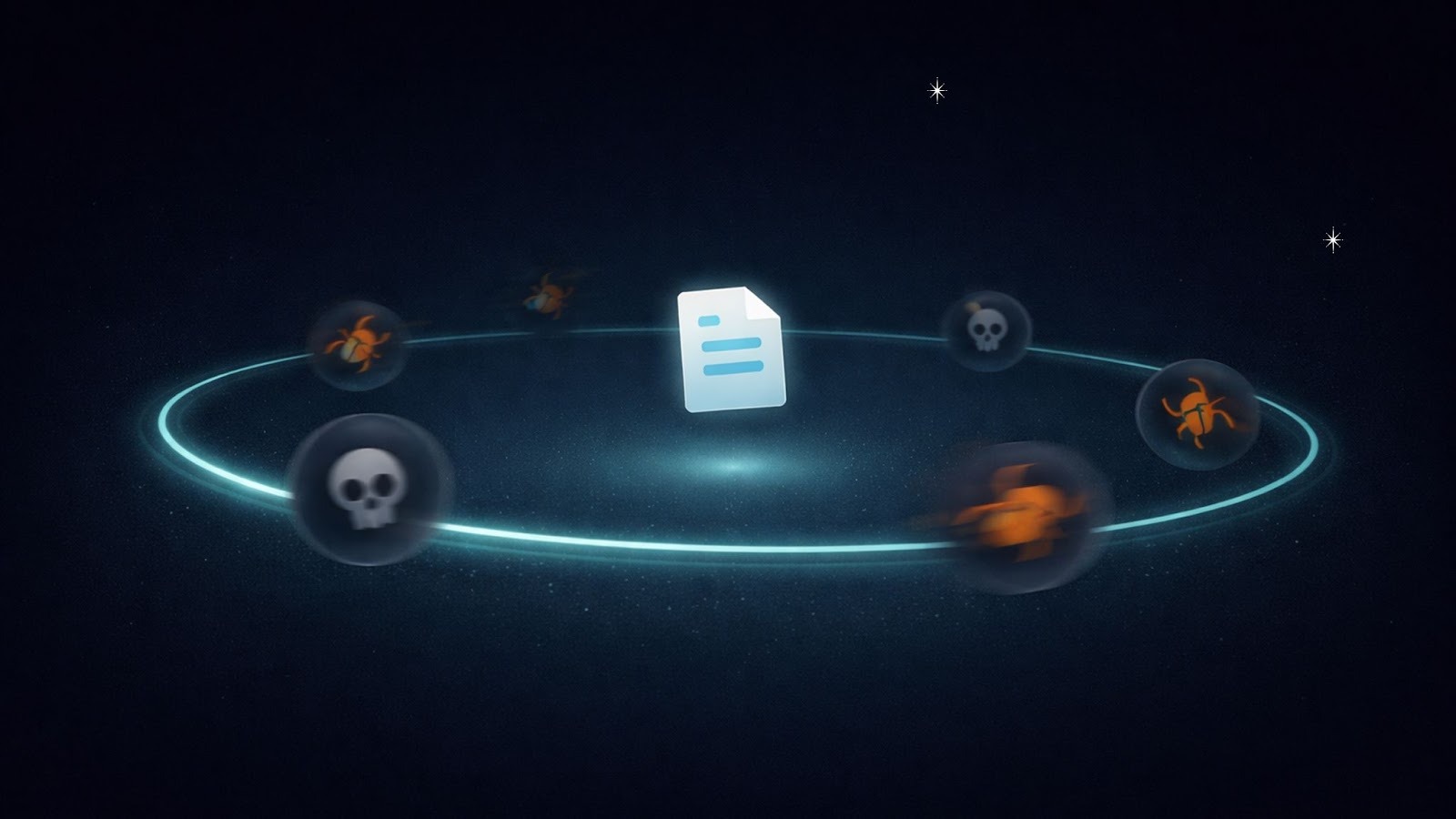
- It scans backup data for clear signs of ransomware: higher encryption levels, sudden jumps in entropy, and large sets of unexpected changes across files, objects, and database backup data.
- Instead of showing timestamps, Eon displays a timeline that marks when data starts to look compromised.
- During an incident, you can see which recovery points are clean, which look risky, and where the safe cutoff is.
Because Eon is cloud-native and agentless, it can scan backups across regions and accounts without extra personnel or jobs to manage. Such a simple feature changes restoration from guesswork to a confident, evidence-based action.
2. Use granular restore instead of rebuilding the world
Most tools still treat restore as all-or-nothing: full databases, entire volumes, huge buckets. That’s the last thing you want when a single app or table is blocking revenue or when a blind restore might pull ransomware back into production. Pulling ransomware back in is a live risk precisely because ransomware can affect cloud storage and the backup copies sitting beside it in the same account.
With Eon, teams can restore files, objects, and specific database tables instead of full stacks, which cuts recovery time and egress costs. Eon shows which files changed across snapshots and helps teams choose the latest clean version during recovery, so they don’t reintroduce malware into production.
3. Make immutability and air‑gaps part of the design
If you care about protecting backups from ransomware, cloud providers love to talk about Object Lock and soft delete. These help, but they are easy to misconfigure and often still live in the same blast radius as production.
Here’s what we’ve seen works best with customers:
- Backup copies that production identities cannot touch, with logical air‑gaps by default.
- Retention policies that no one can quietly shorten without friction and a trail.
- Separate control planes for backup work and daily cloud changes.
With Eon, immutability and air‑gaps are part of the backup design, not a setting you flip at the end. You make it hard for ransomware, or a panicked admin, to destroy the last safe copy. The mechanics of how immutable backups hold up under attack, and where they stop, are worth understanding before you rely on them.
4. Use Cloud Backup Posture Management to see everything
In large estates, one of the biggest risks is the stray account or data store that never made it under a backup policy. You usually find it only after failure or when an auditor starts asking hard questions.
Eon’s Cloud Backup Posture Management (CBPM) tracks what actually runs in AWS, Google Cloud, and Azure and compares it to your backup policies. It highlights gaps before an incident, shows which data has ransomware-ready backups, and where dangerous blind spots still exist.
During an attack, the same view helps teams see the blast radius and understand which apps, regions, and data sets sit in the impact zone and which still have clean restore points. It also gives security and compliance a live posture map that shows what is covered and what isn’t.
5. Report for audits and insurance, not just dashboards
When legal, compliance, and insurance step in, “we think we can restore in X hours” fails fast. If that conversation is a regular one for you, weigh platforms on cloud backup for compliance and security rather than on recovery speed alone.
Eon provides change history for backup, retention, and settings.
The reporting has helped customers escape hours of forensic backup archaeology and finally give clear answers instead of hand-waving.
6. Isolate blast radius instead of “wipe and pray”
In several tests, simple restores pulled dormant malware straight out of the backup chain and back into the recovery stack. Some samples stayed quiet for weeks, slid into every backup, and then lit up again after the restore.
Attackers now treat backup platforms as part of the target. They plant code directly in repositories or poison snapshots months in advance.
We’ve seen customers build a better flow:
- Restore suspect data into isolated landing zones first.
- Keep “under investigation” data away from production by default.
- Promote only validated clean data into live environments.
Your restore process starts to look like careful surgery instead of a full reboot.
7. Handle cost and scale from day one
At many companies, every time the cloud footprint passes a few hundred terabytes, backup conversations turn into cost fights. Cross‑region copies, long retention windows, and “back up everything forever” policies drive cloud bills up very quickly at that size.
With Eon, you can treat cost as part of resilience design.
Storage layouts follow real backup and restore patterns, retention tracks threat models and regulations instead of lazy defaults, and teams can mark some data as “gold tier” and the rest as “good enough.” The simple test is whether the bill still makes sense to finance.
8. Ship game‑day ready, not lab‑ready
A ransomware recovery plan is only credible if it survives honest game days. Lab demos always look clean, but real incidents never do.
Eon fits into those exercises the way a backup platform should work: queryable, intelligent, and cost-efficient from day one.
Teams can run realistic recovery tests across different accounts and regions to measure true Recovery Point Objective (RPO) and Recovery Time Objective (RTO). They can then use those results to adjust backup schedules and data retention rules so they align with what actually works, rather than only with what the plan says.
After a few of those runs, the anxiety drops and leadership conversations turn into clear decisions about recovery time, data loss, and what you’re actually willing to pay for. At that point, the tool becomes part of how we prove we’re ready rather than just theory.
Best ransomware backup protection options for cloud‑first teams
When comparing backup protection packages for large cloud environments, look at tradeoffs, not slogans. Here’s how the landscape actually looks.
| Option | What it is | Best for | Where it falls short |
|---|---|---|---|
| Eon | Cloud Backup Posture Management plus cloud‑native ransomware package for AWS, Google Cloud, and Azure | Cloud‑first enterprises, typically hundreds of TB and up, with strict RPO/RTO targets | Cloud‑only, not for on‑prem estates |
| Native AWS Backup + best-practice documentation | Native AWS backup service with built-in backup and security best practices | AWS‑heavy orgs with strong platform teams | DIY posture management, no cross‑cloud view, restores skew “all or nothing.” |
| Legacy-leaning hybrid vendor | On‑prem and hybrid backup platform with some ransomware features | Shops with big datacenters and limited cloud | Cloud often feels bolted on, with extra agents and consoles and fewer smooth, multi‑cloud workflows. |
Strengths and gaps of native AWS Backup
Native backup can work well in 10 TB and 100 TB estates. AWS Backup gives you unified backups for core AWS services, but anything beyond basic patterns, like custom recovery drills or cross-cloud workflows, still needs your own scripting and integration.
What works:
- Automated backups for major AWS services.
- Easy hooks into Object Lock, cross‑account vaults, and multi‑factor delete.
- Solid reference patterns and docs.
Where it doesn’t work:
- Cross‑cloud is out of scope, and even multi‑account gets tricky.
- “Ransomware‑ready” is a pattern you must design and maintain.
- Restores tend to use big‑hammer operations instead of tight, targeted ones.
If you have time and a strong platform team, it can work. If you want those engineers focused on customer features instead of scripting policies and restores, a dedicated backup and recovery platform with built-in orchestration works better.
Strengths and limits of legacy-leaning hybrid platforms
In plenty of environments, a legacy-leaning platform is still the “official” backup tool. It made sense when most critical systems were on‑prem. Once cloud took over, the story broke.
What teams often see:
- Ransomware features aimed at datacenters and VMs first.
- Cloud bolted on with more agents, proxies, and special cases.
- Operational overhead continues to rise as they add more cloud accounts and workloads.
If you remain mostly on‑prem, it might be fine. But if you live in the cloud now, you may want to use something that understands how these estates change.
Why traditional ransomware backup protection keeps failing
Most teams build backup strategies for outages and accidents, not for attackers who encrypt, delete, or poison recovery points. In large cloud environments, that gap shows up fast during real ransomware incidents.
From the inside, the failure modes repeat:
- You have backups everywhere, but no way to know which point is clean.
- Restoring one key database or app means bringing up half a region.
- Security keeps asking for the actual RPO and RTO, and you keep quoting best-case scenarios.
- Immutability lives as a bolt‑on config, not a deep design choice.
- Multi‑region playbooks turn into scripts, manual steps, and tribal knowledge.
We’ve all sat in too many reviews where everyone says “we’re backed up,” but also knows a focused ransomware hit would lead to days of guesswork and spending. That’s the gap Eon is closing.
How to evaluate ransomware backup protection
Here are the blunt questions that matter when evaluating ransomware backup protection:
- Can you see which backups are clean and which are dirty with real confidence?
- Can you restore only the data and services you need, without rebuilding everything?
- Can you view your true backup posture across all accounts and clouds?
- Can you afford this design at 500 TB or 2 PB without having to hide the bill?
- Can you prove all this to security, compliance, and insurance without a heroic sprint?
- Can the platform keep backup posture accurate across clouds without scattering agents and custom scripts everywhere?
If any answer is “no,” the option falls short.
Eon is the first cloud-native, agentless setup where you can say “yes” to all of that in a large, messy, cloud-first estate without dedicating half the platform team to custom backup plumbing.
Run your own ransomware backup protection review with Eon
If you want real numbers on your ransomware recovery posture, request a demo and ask the team to walk through your ransomware backup protection posture across AWS, Google Cloud, and Azure accounts with Eon.
During that session, you’ll see what’s covered, what’s exposed, how clean your restore points look, and what recovery will really cost in an incident. Once you’re connected with the team, you can share your rough cloud data footprint so they can tailor the review.