Resources

All the latest, all in one place. Discover Eon’s breakthroughs, updates, and ideas driving the future of cloud backup.

Thank you! Your submission has been received!
Oops! Something went wrong while submitting the form.
Featured Article
Case Study

StructuredWeb Reduces Cloud Backup Restore Time by 98% with Eon

Before partnering with Eon, StructuredWeb's IT team spent hours chasing down backups and navigating complex restore processes. Now? Restoring critical data is fast, simple, and stress-free.

As a leading provider of channel marketing automation SaaS to large enterprises such as IBM, ServiceNow, Google, and Zoom, StructuredWeb needed to streamline its cloud infrastructure backup process by introducing cloud backup posture management (CBPM), enhancing efficiency in IT operations and enabling a stronger focus on strategic data efforts.

Challenge

Before partnering with Eon, StructuredWeb faced challenges in managing their cloud infrastructure backups, including:

  • Ongoing, manual classification and tagging of resources became time-consuming and increased the risk of human error.
  • Retrieving critical data felt like searching for a needle in a haystack—time-consuming and frustrating.


“Our team is committed to continuously advancing our technology and infrastructure to support large technology enterprises. With Eon, we’ve invested in cutting-edge solutions that provide full visibility into our dynamic cloud resources. By streamlining backup management and optimizing efficiencies, we’ve reduced complexity and costs while enhancing data restoration speed and reliability. This ongoing investment reflects our dedication to delivering the best industry standards for our customers.”

— Daniel Nissan, CEO

Solution

  • Full visibility: Thanks to Eon’s inventory view and dashboard, StructuredWeb now has complete visibility into their backed-up resources. No more chasing down vendor snapshots. 
  • Automated resource scanning and classification: Eon’s platform has simplified StructuredWeb’s manual tagging process, ensuring backups meet both business and compliance needs while cutting costs. 
  • Instant access to backups: Eon’s database explorer allowed the team to run SQL queries directly on backed-up databases without having to restore full database clusters, saving time and frustrations of a time-consuming restoration process.

Results 

With Eon’s cloud backup solution, StructuredWeb experienced impressive results:

  • 98% reduction in backup retrieval time.
  • 20% less time spent by the IT team on manual classification and tagging. 
  • Full compliance with industry regulations within 30 days.
  • Estimated 40% annual savings in storage and restoration costs.

What They Say

“Eon has completely revolutionized our cloud backup strategy, providing the efficiency and scalability needed to support our growing list of enterprise customers. By eliminating complexity and reducing costs, Eon enables us to allocate more resources to innovation and business growth, ensuring we stay ahead in a rapidly evolving technology landscape.”

— Daniel Nissan, CEO

Featured Article
Case Study

Innago Simplifies Backup on AWS and Saves 40% with Eon

Learn how Eon’s first-of-its-kind autonomous backup platform helped Innago streamline backups and turn them into an easy-to-use asset that delivers ongoing business value and peace of mind.

Read the full AWS + Eon case study >>

Challenge: Scaling Backups Across Kubernetes and EC2

Innago is a fast-growing property management SaaS platform serving small to mid-sized landlords. As the company matured and transitioned to microservices architecture, the team began containerizing more of its workloads using Amazon Elastic Kubernetes Service (Amazon EKS). As environments scaled, backup and restore got harder.

Initially, Innago utilized open-source database operators, such as Crunchy PostgreSQL and MariaDB Operator, to run workloads on EKS. However, they quickly realized the need for a more centralized solution to manage backups at scale, enforce cross-region policies, support granular recovery, and meet compliance expectations.

At the same time, legacy EC2 workloads were still protected via AWS snapshots and Lambda automation, which introduced risk around missing coverage, regional gaps, and lack of restore assurance.

“Defining a policy for mandatory backups, setting retention windows, and requiring a different region used to be a lot of work. With Eon, it’s simple, and it even flags things our old setup couldn’t detect.”

— Chris Anderson, Director of Engineering, Innago

Innago sought a unified solution across its workloads to simplify restores, meet compliance requirements, and eliminate the need for manual validation of backup coverage.

Implementation: Agentless Setup and Fast Restore Validation

Innago partnered with Eon’s solution team to provide backup coverage and restore workflows for live EKS clusters running PostgreSQL and MariaDB. The implementation required no cluster-side agents and relied on Kubernetes-native patterns, including PVC-level backup and restore.

They deleted test data, ran restores, and confirmed everything came back clean. The average restoration time for small to medium volumes was 10–15 minutes.

Eon’s responsive support helped Innago’s engineering team gain confidence in the platform from the get go.

Solution: Unified, Policy-Based Cloud Backup with CBPM

Innago implemented Eon’s platform, including its key features:

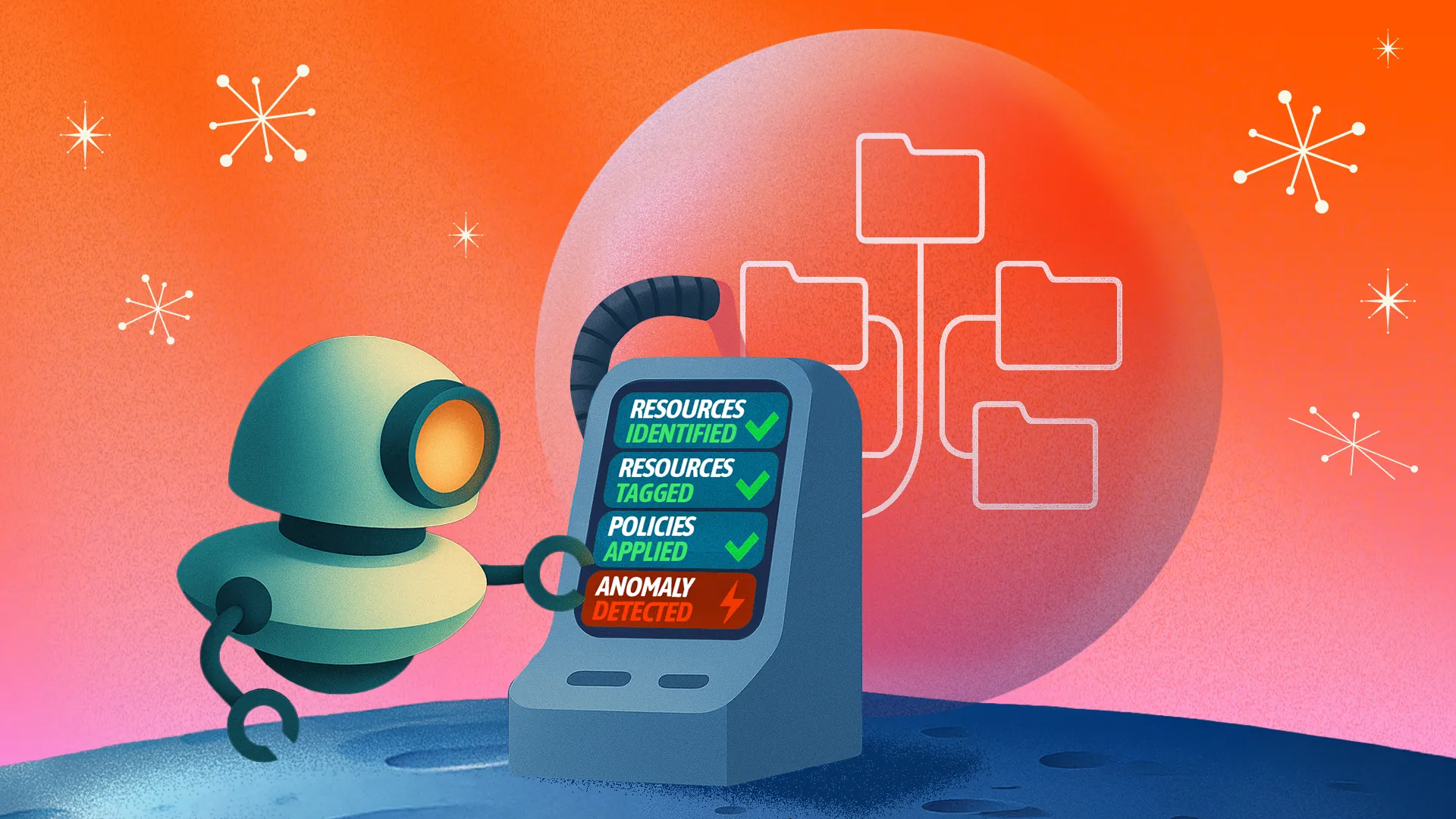
  • Cloud Backup Posture Management (CBPM): Eon continuously scans, maps, and classifies Innago’s cloud resources to automatically apply the right backup policies and enforce compliance requirements, such as cross-region replication.
  • Granular recovery and database-level visibility: With Eon, Innago can now restore Kubernetes workloads at the PVC, table, or file level, reducing recovery time and making compliance checks easier.
  • Centralized backup operations: Instead of juggling tools across EC2 and EKS, the engineering team can manage everything through Eon’s unified console.
  • Agentless Kubernetes backup: The implementation required no cluster-side agents, reducing complexity and aligning with Kubernetes-native patterns.

Results: Faster Recovery, Lower Costs, and Stronger Compliance

With Eon, Innago now has a single platform to ensure backup posture across AWS environments.

  • 40% cost savings by replacing traditional snapshots and backup duplication with Eon’s backup-optimized storage tier 
  • 10–15 minute restore times for common recovery scenarios
  • Cross-region enforcement and retention controls for compliance (SOC 2, PCI, GDPR)
  • PostgreSQL consolidation: As part of its modernization, Innago is phasing out MariaDB and consolidating on PostgreSQL—a move supported by Eon’s flexible backup workflows
  • Eliminated scripting and manual checks: Eon replaced Lambda-based snapshot logic and custom tooling with fully automated backup enforcement

Why It Matters: A Scalable, Reliable Backup Posture for Growth

Innago can now scale safely, is compliance-ready, auditable, and can grow its international reach. With Eon’s CBPM in place, the engineering team no longer has to manually validate backup coverage or worry about gaps, freeing them from the burden of constant oversight.

Backup is fully automated, and a reliable part of Innago’s cloud infrastructure strategy.

Featured Article
Article

The 5 Gaps Breaking Cloud Backup & How Leading Teams Are Closing Them

Survey data from over 150 cloud leaders reveals where backups are falling short and top teams are improving them.

Where Are the Cloud Backup Gaps?

Even the most cloud-forward teams are running into the same problems: missed recoveries, compliance gaps, and backups no one fully trusts. Survey data points to five key gaps that are breaking confidence and how top teams are closing them.

  • A recovery gap, where snapshot-based restores are too slow and too blunt
  • A visibility gap, where teams don’t know what’s protected, or what isn’t
  • A tooling gap, where backup processes are stitched together across clouds and scripts
  • A value gap, where backup data sits idle instead of supporting analytics or audits
  • And most critically, a confidence gap: teams simply can’t trust backups to work when it matters

The rest of this post breaks down how leading teams are closing each of these gaps with posture-aware strategies.

1. Why Don’t Teams Trust Their Backups? (The Confidence Gap)

Backups are supposed to be the safety net. But when a real recovery is needed, they too often become the weakest link.

While many teams still rely on static snapshots and stitched-together tools, others are shifting toward continuous posture management, granular recovery, and queryable storage. These teams aren’t just improving recovery times. They’re reframing backup as part of their active infrastructure, not just a last-resort safeguard.

39% of organizations said they’ve either lost cloud data or don’t trust that their backups are secure. Sixty-four percent of incidents were attributed to human error. Only 21% felt confident in the cost efficiency of their current setup.

Leading teams close this gap by adopting a continuous posture management, granular recovery, and queryable storage approach. Backups shift from last-resort insurance to an active part of cloud infrastructure.

2. Why Are Restores So Slow and Expensive? (The Recovery Gap)

When confidence is low, most teams default to over-restoring.

Snapshot-based recovery, especially for Amazon DynamoDB or Amazon EKS, often means pulling massive amounts of data just to find one object. It’s slow, expensive, and disruptively broad.

Teams with stronger posture, especially those trying to cut AWS S3 costs, are taking a different approach: granular recovery. By understanding the structure of what’s backed up and classifying it in real time, they can recover exactly what’s needed—nothing more, nothing less. That means lower RTOs, fewer resource drains, and faster business continuity.

This isn’t a nice-to-have. It’s the difference between meeting recovery objectives and missing them entirely.

3. What’s Hiding in Your Backups? (The Visibility Gap)

Even in cloud-forward environments, backup coverage is often uneven or unclear. Without automated classification and posture scoring, teams are left guessing what’s protected and where gaps might be hiding.

54% of respondents cited compliance or security risks caused by mismanaged backup data as their top concern.

The fix is real-time posture awareness. This means continuously detecting what’s unprotected, surfacing misconfigurations, and automatically enforcing policy coverage.

4. Are Too Many Tools Making Backups Harder? (The Tooling Gap)

Fragmentation is still the norm. Many teams rely on the native DR tools provided by cloud providers, brittle scripts, or third-party systems that don’t talk to each other.

The result is complexity: inconsistent policies, conflicting schedules, broken automations. 

51% of organizations still rely on manual or semi-automated processes, and 21% juggle multiple backup tools.

How leading teams close this gap: They consolidate onto a single posture-aware, cloud-native platform that:

  • Works across environments
  • Enforces consistent policies
  • Scales with infrastructure changes

5. Are Your Backups Doing Anything for the Business? (The Value Gap)

One of the biggest shifts in backup isn’t about protection—it’s about potential.

Backups represent the largest historical dataset that many organizations have. But for most, they’re inaccessible: stored in cold vaults, spread across formats, and siloed from the rest of the data strategy. That’s changing. 

81% of survey respondents said they see value in transforming backups into a queryable data lake, and 16% said AI and analytics are now driving their backup investments.

Leading teams are restructuring backups into queryable data lakes, unlocking value for:

  • Audits and compliance
  • Testing and analytics
  • AI model training

How Leading Teams Are Closing the Gaps

Organizations closing the confidence gap aren’t just modernizing tooling. They’re treating backup like any other strategic system: governed, observable, and adaptable.

They’re:

  • Replacing manual tagging with real-time classification
  • Enforcing posture dynamically across multi-cloud environments
  • Recovering selectively without over-restore delays
  • Making backup data queryable for audits, compliance, and analytics
  • Using posture scoring and behavioral indicators to surface risks early

In short, backup is no longer a static infrastructure. It’s a posture to manage, improve, and measure just like cost, security, or performance.

What Comes Next: From DR to Data Intelligence

As cloud environments become more distributed, fast-moving, and AI-connected, backups will continue to evolve—from a protection layer to an intelligence layer.

Cloud Backup Posture Management (CBPM) is emerging as the model for that shift: a way to ensure readiness, enable rapid recovery, and activate backup data across the organization.

Read the complete 2025 State of Cloud Backup Report to see where teams are succeeding and where most still fall short.

Featured Article
Article

How to Manage Backup Sprawl and Cut Cloud Storage Costs

Reduce backup storage costs, enforce retention policies, and manage data growth across AWS, Azure, and Google Cloud without overbuilding or losing control.

Are Your Cloud Backups Driving Up Costs and Risk?

Cloud data is exploding—up 16%+ a year—and unmanaged backups can double that growth. What’s meant to protect your business can quickly become your most expensive blind spot: extra storage costs, compliance risk, and operational chaos.

Here’s how to take control of your backups (and your costs) without overbuilding or losing resilience.

5 Best Practices for Scalable Cloud Backup Strategies

This rapid growth in cloud data creates major challenges around storage, cost, and management. Use these best practices to cut waste, reduce compliance risk, and keep backup sprawl in check.

1. Which Data Is Worth Backing Up—and Which Isn’t?

Avoid the "backup everything" approach by defining critical vs. non-critical data. Knowing what data needs frequent backups is key to optimizing costs and security. You need to categorize data strategically, making sure your backup policies are in line with automation and storage efficiency. 

So what’s critical and what’s not? Let’s break it down:

Figure 1: Backup storage and frequency for different data types

2. How Can Hot, Warm, and Cold Storage Cut Backup Costs?

To optimize storage efficiency and reduce costs, companies need to apply a tiered backup strategy. Tiering allows organizations to store frequently accessed data in high-performance (hot) storage while shifting less-used or archival data to more cost-effective warm or cold tiers. 

Here’s how to match your backup strategy to your data’s behavior—and cut waste while you’re at it.

Figure 2: Aligning data types to the right storage tiers to minimize cost
  • Tiering in action: Use hot, warm, and cold storage based on how often data is accessed. Eon automates this across clouds using actual usage patterns, not guesswork.
  • Lifecycle automation: Set it and forget it. Archive and delete based on rules—not tribal knowledge.
  • Tag hygiene matters: Lifecycle rules rely on good metadata. Eon finds and fixes drifted or missing tags so your cleanup rules actually work.
  • Backup frequency considerations: Not all data requires real-time backups; prioritizing mission-critical data helps optimize resources.

Related Article: Innago Simplifies Backup on AWS and Saves 40% with Eon

3. Why Should You Separate Backups from Production?

Don’t let one mistake wipe out everything. Separate your backups from production—full stop. If a bad deploy happens or ransomware hits, you don’t want all your environments going down together.

Keeping backups in a separate account gives you a smaller blast radius. It’s the first layer of defense.

Want another? Hand off key management to a different team, like compliance, not DevOps. Use native tools like AWS KMS, Azure Key Vault, or Google CloudCMEK, but enforce policy from a single control plane so no one’s flying blind.

You get tighter access controls, protection from insider threats, and backups that stay clean—no ransomware surprise, no accidental deletions.

4. How Can App Teams Manage Backups Without Losing Governance?

App teams know their data best. Let them own their backups—without giving up control.

  • Let teams define what matters. They know what needs hourly backups and what can go cold. Give them the keys to their data—but not the kingdom.
  • Enforce policies in the background. Set global rules for retention, encryption, and access. Eon applies them automatically, no matter who’s driving.
  • Make space for exceptions. Got legal hold or eDiscovery needs? Override policies when needed—without turning governance into a bottleneck.

5. How Do You Keep Backup Policies Consistent Across Clouds?

Even when application teams take charge of their backup strategies, centralized governance remains crucial for maintaining security, consistency, and compliance across the organization.

  • Org-wide policies: Establish global rules for data retention, encryption standards, and recovery objectives to ensure consistency across teams and business units.
  • Central dashboards: Implement unified dashboards that offer real-time visibility into backup health, cost trends, and anomalies, enabling proactive oversight without micromanagement. Centralized dashboards also help surface silent failures, like missed backup jobs, outdated policies, or untagged volumes, that could otherwise go unnoticed until a recovery is needed.
  • Guardrails over gatekeeping: Hand teams the autonomy they need to manage backups while enforcing necessary constraints, allowing speed without sacrificing safety.

Think of it as air traffic control for your backup environment. Like air traffic controllers coordinating flights, centralized governance ensures each backup process is safely managed without collisions, delays, or confusion.

Are Cloud-Provider Backup Tools Enough on Their Own?

Cloud-provider solutions like AWS Backup, Azure Backup, and Google Cloud Backup & DR enable application teams to manage backups with varying levels of control and integration.

For example, Azure Backup supports VM snapshots, Azure Files, and SQL databases with tiering into Archive Storage. At the same time, Google Cloud Backup and DR now orchestrates backups across GCE and GKE workloads, but often lacks centralized policy governance across projects.

While these tools simplify management within each cloud, many enterprises still struggle to maintain consistent retention, tagging, and compliance across environments. That’s where unified platforms like Eon provide value: helping app teams control backup schedules and retention while automatically enforcing organization-wide policies behind the scenes.

What Controls Keep Your Backups Secure and Audit-Ready?

Good backups are useless if they’re not secure or compliant. Here’s how to lock them down and keep auditors happy:

  • Encrypt everything. At rest and in transit. No exceptions.
  • Control access. Use least-privilege access—no shared keys, no shortcuts.
  • Map to frameworks. Eon aligns policies to GDPR, HIPAA, SOC 2, and more.
  • Catch misconfigurations early. Real-time monitoring and anomaly detection = fewer surprises.
  • Make it ransomware-proof. Immutability + isolation + instant recovery = no ransom paid.

How Do You Cut Cloud Backup Costs Without Sacrificing Safety?

Optimizing backup costs without losing resilience requires aligning storage and retention strategies with business needs.

Use these tactics to optimize costs and stay resilient:

  • Smart tiering: Cold data to Glacier or Archive. Hot data stays fast.
  • Avoid migration mistakes: Plan tiering upfront, not after a big bill.
  • Deduplicate and compress: One copy. Smaller copy. Better outcomes.
  • Automate retention: Move, expire, delete without manual cleanup.
  • Tune backups by workload: Not everything needs hourly snapshots.

How Do You Decide Between DIY and Managed Backups?

Whether you manage cloud backups in-house or use managed backup solutions, each route has trade-offs in cost, security, scalability, and operational overhead.

Risks of DIY Backup Management:

  • Brittle scripts, misaligned policies, and manual tagging can lead to shadow data, missed SLAs, and unaccounted storage costs.
  • Without automation, you risk inefficiencies, data loss, and compliance gaps.

Benefits of Managed Solutions:

  • Built-in automation, security controls, and compliance features reduce operational burden.
  • Unified platforms like Eon handle enforcement, retention, and multi-cloud visibility automatically.

Ask yourself:

  • Do we have time and expertise to manage backups ourselves?
  • Can we enforce policies across clouds and teams consistently?
  • Are we confident we could recover cleanly, right now?

If any answer is shaky, it’s time to simplify.

Do You Need More Storage—or a Smarter Backup Strategy?

A smarter strategy means:

  • Classify and tier your data
  • Automate policies (and exceptions)
  • Let app teams lead—with real guardrails
  • Monitor everything from one place
  • Build for compliance and recovery by default

Eon’s cloud backup platform helps you do all of that—with one platform that cuts waste, enforces consistency, and slashes your backup costs by up to 50%.

Want to see these strategies in action?

Take the next step in cutting cloud backup and retention costs without losing resilience.

Our live session with AWS, How to Cut Cloud Data Retention Costs, shares proven ways to:

  • Eliminate backup sprawl and over-retention
  • Automate lifecycle policies
  • Unlock cost savings up to 50% while staying compliant
Featured Article
Article

How to Cut Your AWS S3 Costs: Smart Lifecycle Policies and Versioning

Cloud teams love the flexibility of AWS S3, but managing costs and complexity over time? That’s where things get interesting.

Managing your S3 storage shouldn’t feel like bracing for another surprise bill. Without smart policy enforcement, even small oversights—like a missed cleanup rule—can spiral into compliance risks and thousands in hidden costs.

This article covers how smart lifecycle policies and versioning can help you tame your cloud storage costs without overcomplicating operations. Discover practical strategies to automate data transitions, trim unnecessary expenses, and simplify your day-to-day cloud management. And for even more on this topic, join our upcoming live session on How to Cut Cloud Data Retention Costs.

What Are Lifecycle Policies?

Before we dive into the mechanics, let’s ground ourselves in why lifecycle policies exist in the first place: They help you optimize cloud storage costs and manage data retention automatically so you only keep what you need, for as long as you need it, at the lowest possible cost.

As data volumes grow and retention timelines stretch, relying on manual cleanup or broad, generic rules isn’t just inefficient—it’s expensive and risky.

Think of lifecycle policies as your cloud storage janitor—quietly sweeping old files into cheaper storage tiers, cleaning out what’s irrelevant, and ensuring your buckets aren’t bloated with redundant data.

At a high level, lifecycle policies consist of:

  1. Transition actions: Move objects between storage classes (like from Standard to Infrequent Access or Glacier) based on frequency of access so you aren’t overpaying for cold data.
  2. Expiration actions: Automatically delete objects that are no longer needed, reducing unnecessary storage costs.
  3. Version management: Trim old versions of files to avoid paying for backups you'll never use.

Typical use cases include:

  • Unpredictable access patterns: Automatically tier data based on usage, so you’re not stuck paying for performance you don’t need.
  • Automated cleanup: Eliminate manual data deletion by setting expiration rules.
  • Compliance and retention: Define rules that meet legal or regulatory data retention timelines, without racking up excess costs.

S3 Versioning: Benefits and Considerations

S3 versioning was built to provide a safety net against accidental overwrites and deletions, offering an immediate rollback to any prior state and peace of mind when people or processes go awry. 

By storing every variant of an object within the same bucket, you can recover from simple mistakes in seconds. However, it was never intended as a backup or archival system, and relying on it for long-term retention can create hidden inefficiencies and leave dangerous gaps in your data protection strategy. If your recovery strategy is just to enable versioning, you’re betting on a feature never designed for durability, isolation, or compliance.

Related Article: How to Protect Your S3 Backups: Advice from an AWS Storage Expert

Each version is a full copy of the object, even if only a single byte changes. A single object with frequent updates can easily rack up dozens of full-size versions in a week. Without cleanup rules, these accumulate silently—and you pay for every byte. This drives up storage costs without delivering the air-gapped isolation or policy-driven reporting you need from a true backup solution. Versioning provides no way to verify recoverability, no audit trail for compliance, and no isolation in the event of compromise. It’s a convenience feature—not a protection mechanism. (AWS documentation is a great resource for understanding the basics of versioning.)

So, before you start versioning everything in sight, make sure you’re not solving for the wrong problem.

Versioning: Helpful, but Not a Backup Strategy

Versioning is designed to protect against accidental deletions and overwrites, and that’s where its value ends. It’s a simple mechanism that keeps previous versions of objects in the same S3 bucket, giving you a safety net for day-to-day slip-ups.

And yet, we still see teams assume that turning on versioning checks the “backup” box. But here’s the problem: treating versioning like a backup or archival solution exposes critical data. It’s not, and relying on it can expose vital data.

Let’s break it down:

Why Versioning Falls Short for Backup & Archival

  • No isolation: All versions live in the same bucket. If the bucket is compromised, so are all its versions.
  • No air-gap: There's no physical or logical separation between active and historical data.
  • No control: Without strict lifecycle policies, storage costs can balloon from unchecked version sprawl.
  • No backup features: There are no dedicated recovery points, no audit trails, and no compliance-grade reporting.

If you enabled versioning for object protection, great. But if you think that means you’ve got a backup or archive in place, you don’t.

Versioning is a data hygiene tool, not a data protection strategy.

Why It Matters

Versioning was never intended for disaster recovery, ransomware protection, or long-term data preservation. It’s a workaround, not a solution. For proper backup and recovery, you need tools purpose-built to:

  • Maintain air-gapped recovery points
  • Provide auditability and compliance support
  • Optimize storage intelligently over time

Whether it's ransomware, retention missteps, or a failed compliance audit, versioning won’t save you.

Suggested Article: Mansi Vaghela (AWS): Cloud Backup Security Concerns in a New Age of Ransomware

That’s where a platform like Eon comes in to give you real, resilient cloud backup that’s separate, secure, and scalable.

Lifecycle Policies and Versioning: A Solid Start—But Not the Whole Story

Pairing lifecycle policies with versioning can go a long way toward building a smarter, more cost-efficient S3 strategy. You get the foundational tools to protect your data while controlling unnecessary storage growth.

But while these AWS-native features offer powerful capabilities, they still require careful setup, ongoing monitoring, and regular tuning.

Some of the key tasks you can automate with the right rules in place include:

  • Managing version sprawl by transitioning older versions to lower-cost storage or expiring them after a set period.
  • Automating tier transitions for objects and older versions based on access frequency.
  • Reducing clutter through the scheduled expiration of outdated files and versions.

These AWS-native tools offer essential functionality but leave critical gaps in consistency, coverage, and compliance. That’s where platforms like Eon fill in the missing pieces.

Best Practices (and Common Pitfalls) for S3 Lifecycle Policies

S3 lifecycle policies can be your best friend—or your biggest blind spot. Get them right, and you can cut costs dramatically. Get them wrong, and you risk silent storage bloat, missed compliance goals, and spiraling complexity.

We’ve reviewed dozens of S3 environments, and these mistakes show up again and again, often hiding behind rising costs or patchy retention.

  • No tagging strategy: Without detailed, consistent object tags, you can’t write targeted lifecycle rules. That leads to one-size-fits-all policies that miss optimization opportunities.
  • “Set it and forget it” mentality: Business needs change. Retention timelines shift. But if your lifecycle rules don’t evolve with your data, you’ll keep cold data in hot tiers—or delete things too early.
  • Unmanaged versioning: Keeping multiple object versions without lifecycle rules can silently double or triple your storage usage.
  • Ignoring cold start costs: Moving data to Glacier Deep Archive saves on storage, but retrieval fees can burn your budget if access is even occasionally needed.

These aren’t just minor oversights. They’re the root causes of six-figure storage bills, compliance gaps, and misaligned cloud strategies.

  • Tag your data by function, owner, and criticality. This lets you create granular lifecycle policies (e.g., move analytics logs to IA after 30 days, delete dev snapshots after 14).
  • Use S3 Storage Lens to uncover inefficiencies. Don’t guess where to optimize—track object age, access frequency, and prefix-level trends across accounts.
  • Define tiering triggers based on usage patterns. For example: transition inactive backups to Glacier after 90 days—but only if they haven’t been accessed more than once in the last month.
  • Apply lifecycle rules to versioned objects. Don’t let old versions accumulate forever. Use NoncurrentVersionExpiration and NoncurrentVersionTransition rules to control bloat.

Why Manual Policy Management Doesn’t Scale

Even with tagging and regular audits, managing lifecycle policies across large environments is brittle and error-prone. Rules go stale. Tags drift. Teams forget to apply the right policies to new resources.

Eon transforms backup from a reactive cleanup chore into a proactive, posture-driven system. We don’t just automate storage rules—we enforce intelligent backup posture across your entire cloud footprint. We automatically:

  • Map all your cloud resources and their configurations
  • Classify data types and retention requirements with zero manual tagging
  • Assign and enforce backup lifecycle rules based on real usage patterns
  • Alert you to gaps in your backup posture or violations of compliance policies

With Eon, backup isn’t just cheaper—it’s smarter, auditable, and always aligned with your business and regulatory needs.

You get precise, cost-aware storage management without ever writing a policy file or wondering if stale rules are costing you money.

How to Level Up S3 Cost-Cutting with Eon

Smart lifecycle policies and versioning can help you reduce your S3 spend, but they only go so far on their own.

Eon takes your cost-cutting efforts to the next level by completely transforming how backup data is stored, managed, and used. Instead of simply optimizing existing S3 configurations, Eon reimagines your entire backup strategy to deliver:

  • Policy-driven backup automation: Automatically scan, map, classify, and apply backup policies across your cloud resources based on business and compliance requirements—eliminating the need for manual tagging.
  • Compliance and reporting: Leverage automatic reporting and policy enforcement to ease the burden of compliance requirements.
  • Centralized management: Oversee all your backup operations and adjust settings on the fly via a single dashboard.

Bonus: Give our article on Cloud Backup Posture Management a read for a deeper dive into how Eon manages cloud backups.

By leveraging Eon’s streamlined approach, you reduce manual oversight and ensure your storage strategy evolves with your needs. It’s not just about saving money—it’s about freeing up your time to focus on what really matters in your development workflow.

Conclusion

S3 lifecycle policies and versioning are powerful—but they weren’t built for resilience, compliance, or recovery at scale. That’s why teams who think they’re protected often aren’t. Analyzing usage patterns and cost drivers can be complex, so combining well-configured lifecycle policies with disciplined version management is essential to control your cloud spend without compromising data security.

You now have a toolkit of strategies—from automating transitions to setting up regular reviews—that can help you optimize your AWS storage. Remember, the key is continuous monitoring and refinement. Platforms like Eon offer valuable automation and insights to simplify your cloud ops.

Ready to experience automated solutions for your S3 storage management? Sign up for a demo of Eon today.

FAQs: S3 Lifecycle Policies & Versioning

Here are a few quick FAQs covering some common questions about S3 lifecycle policies and versioning.

What is an Amazon S3 lifecycle policy, and how does it work?

A lifecycle policy in Amazon S3 is a set of rules that automatically transition objects between storage classes or delete them after a defined time. It helps reduce costs by managing object lifecycles based on age, access patterns, or versioning status.

What are the pros and cons of S3 versioning?

S3 versioning protects against accidental deletions and overwrites by keeping prior versions of objects. But it also increases storage usage, especially if old versions aren’t transitioned or expired. Without cleanup rules, version sprawl can quickly inflate your AWS bill.

How can I monitor S3 bucket usage and optimize storage costs?

Use Amazon S3 Storage Lens to visualize storage trends across buckets and prefixes. Combine it with lifecycle policies and regular reviews to identify inefficiencies and reduce unnecessary spend.

Can S3 lifecycle policies save money on AWS storage?

Absolutely. Lifecycle rules can move data to lower-cost storage or expire unneeded objects, cutting monthly spend significantly. However, the key is consistent, up-to-date policy enforcement. Eon automates this to eliminate guesswork.

What’s the difference between S3 lifecycle policies and backup policies?

S3 lifecycle policies manage object transitions and deletion based on age or access. Backup policies ensure data is protected, recoverable, and retained for compliance. Lifecycle is about storage optimization—backup is about posture and resilience.

How does Eon improve S3 lifecycle management and versioning?

AWS provides powerful primitives but requires hands-on tagging, rule tuning, and per-bucket oversight. Eon automates backup policy enforcement, eliminates manual tagging, and provides centralized visibility across all buckets, accounts, and teams.

Can S3 versioning protect against ransomware attacks?

Not reliably. Since all versions live in the same bucket without isolation, ransomware or malicious deletions can wipe out your data. True ransomware protection requires air-gapped, immutable backup snapshots. Eon delivers that by default.

Featured Article
Article

Mansi Vaghela (AWS): Cloud Backup Security Concerns in a New Age of Ransomware

Ransomware isn’t just locking data—it’s going after your backups. This blog recaps a candid conversation between AWS and Eon on what it really takes to prepare, protect, and recover in the cloud era.

Cloud-First Doesn’t Mean Threat-Proof

In our latest Cloud Cuts episode, Eon Co-founder Gonen Stein sits down with Mansi Vaghela, a Senior Partner Solutions Architect at AWS, for an unfiltered conversation about the modern ransomware threat – and how to stay ready.

With ransomware attacks escalating across industries and cloud adoption continuing to rise, this is a must-listen episode for security leaders and cloud teams alike.

Want to hear how AWS thinks about ransomware recovery?
👉
Watch the full episode

Let’s walk through some key insights from the session.

The Growing Threat of Cloud Ransomware

Ransomware has become one of the most common and damaging cybersecurity threats businesses face today. As early as 2021, Gartner predicted that 75% of IT organizations would face one or more ransomware threats by 2025. The potential financial cost? Up to $20 billion annually.

“Ransomware isn’t a rare thing anymore. It’s happening constantly. From major hotel chains like MGM to healthcare providers like Scripps Health, so many businesses across different industries have been hit.” 

Mansi Vaghela, AWS, Senior Partner Solutions Architect

Beyond the financial ransom itself, the long tail of damage lies in prolonged downtime, regulatory fallout, and reputational harm.

For cloud-first companies, the risks are amplified. With critical data backups distributed across dynamic environments and no physical perimeter to protect assets, a single compromised credential or misconfigured permission can trigger a chain of events that takes entire operations offline, locks teams out of their own data, and incurs steep recovery costs. In cloud environments, attackers often gain access by exploiting long-lived credentials and excessive permissions, reminders of just how essential identity and access management has become.

How AWS Hardens the Cloud Against Ransomware

One of the central themes of Gonen and Mansi’s conversation is the importance of guidelines like the NIST Cybersecurity Framework in helping companies structure their approach to cyber defense. 

AWS, Mansi explains, always strives to offer the powerful tools that their customers need to align with the NIST Cybersecurity Framework. From automated patching and Blue-Green deployment architectures to credential management using AWS Secrets Manager and Systems Manager (SSM), AWS delivers baked-in benefits that reduce the manual lift traditionally required to stay secure.

The conversation also goes into depth on AWS’s “multi-layer approach” – a comprehensive strategy that includes strong access controls, network segmentation, encryption, and continuous monitoring. Implementing least privilege access across accounts and regions plays a critical role in this approach, helping prevent hackers from achieving lateral movement through an organization's cloud architecture in the event of a breach.

AWS multi-layer security

And if an attack does happen? AWS provides layered support, including incident response playbooks, real-time logging via CloudTrail, threat detection through Amazon GuardDuty, and a robust ecosystem of solutions partners, including Eon.

Building Strong Ransomware Backup & Recovery

But what happens when attackers succeed in locking organizations out of their data? Here, backup protection and recovery become a business-critical function, not just a technical one.

“[A] strong backup and recovery strategy can mean the difference between a quick recovery and a major disruption. A backup is only effective if you can restore it when needed. That’s why it’s crucial to establish well-documented backup and restore processes.

Mansi Vaghela, AWS, Senior Partner Solutions Architect

The key lies in regular testing and validation. Accordingly, AWS recommends that companies undergo frequent testing and validation of backup recovery procedures to ensure that data can be retrieved without corruption or delays. If an organization hasn’t tested its restore process in six months, it is time to start. Backups that aren’t verifiable as being up to date aren’t backups. They’re just assumptions.

Another critical point from the session is that backing up data doesn’t make it inherently secure – you have to secure the backup environment itself. Mansi emphasizes the importance of air-gapped or logically isolated backups that malicious actors cannot access or overwrite during an attack. This is where the concept of a “secure backup account structure” comes in – ensuring that even if data production environments are compromised, backed-up data remains untouched and recoverable.

As they build backup and recovery strategies, too many companies overlook the gap between infrastructure security and data protection, referred to as the "shared responsibility model." Companies can trust their cloud vendor to manage the security of the cloud, but customers are responsible for the security of what they’ve stored in the cloud. 

“Think of it like this: If you’re renting an apartment, AWS is responsible for securing the building, but you still need to lock your own doors.” 

Mansi Vaghela, AWS, Senior Partner Solutions Architect

AWS ensures the infrastructure is sound, but customers are responsible for managing data access, permissions, and backup integrity. And in the case of cloud data protection, “locking your doors” takes more than a key – it’s a responsibility that includes exacting granular control over user permissions, monitoring anomalies, and ensuring backups are safely stored and recoverable.

AWS shared responsibility model

How Eon Automates NIST-Aligned Backup Protection

Many customers find that managing security responsibilities in the cloud, especially backup management, is far from straightforward. Cloud environments are dynamic, resources are spun up and down constantly, and traditional backup tools, often designed for on-prem environments, simply can’t keep pace.

Eon’s end-to-end ransomware package was built precisely to fill this gap. 

It's not a bolt-on feature or a set of generic scripts. It's a fully integrated part of Eon’s Cloud Backup Posture Management (CBPM) platform – a system that continuously assesses, adjusts, and optimizes backups in real-time.

Eon Snapshots, which are Eon’s purpose-built backup storage tier, allow instant access to data backups and granular restores, including file-level and row-level recovery for structured data. That means teams can recover exactly what they need—faster and cheaper—without the overhead of full snapshot restores.

Eon Cloud Ransomware Restore from File Explorer

Eon continuously discovers and classifies resources to ensure backup policies remain aligned with your live cloud posture—eliminating “backup drift” and protecting newly created assets automatically. It also helps teams cut through cloud sprawl by decommissioning backups for obsolete resources.

What makes Eon unique is its awareness of the data inside the cloud—not just the infrastructure around it. Eon can proactively detect ransomware’s impact across both structured data (like database records) and unstructured data (like files in object storage or virtual machines). That visibility means faster detection, clearer scope, and smarter recovery.

And when it comes to ransomware, Eon’s platform aligns directly with the NIST Cybersecurity Framework, covering all five pillars:

  1. Identify: Continuously scans cloud environments to ensure all critical data is backed up and policy-aligned.
  2. Protect: Uses air-gapped, immutable storage to keep backups isolated and safe from ransomware.
  3. Detect: Monitors backups for ransomware signatures like entropy changes and suspicious file activity.
  4. Respond: Provides a unified view and role-based tools to investigate, scope, and plan a recovery.
  5. Recover: Enables fast, targeted restore of compromised data—no need for full snapshot recovery of clean data (without the risk of bringing back compromised data).

Eon also delivers this protection in a cost-effective way. Because it performs incremental backups and scans, Eon avoids the overhead of full data scans or full snapshot restores—unlike many detection tools that require a complete rescan every time. That means teams get continuous protection and insight, without continuously spiking their cloud bill.


Article:
Complete Guide to Protecting Your Cloud Environments from Ransomware

The Blueprint for Cloud Ransomware Resilience Starts Here

The threat of ransomware isn’t going anywhere. If anything, it’s evolving faster than many organizations’ ability to adapt. That’s why security leaders today must craft a proactive ransomware protection strategy that is concerned not just with preventing attacks but also with building infrastructure ready to recover from them.

The insights from this Cloud Cuts episode offer a blueprint for doing exactly that. Whether it’s enforcing stronger credential management, separating backups from production environments, or adopting automated posture management tools like Eon, the takeaway is clear: resilience isn’t optional.

It’s the new baseline.

🎧 Listen to the full Cloud Cuts episode on Ransomware

Featuring:
• Mansi Vaghela – Senior Partner Solutions Architect, AWS
• Gonen Stein – President & Co-Founder, Eon

🔽 Download the episode now


Register for the next episode of Cloud Cuts Live: How to Cut Cloud Data Retention Costs

No results found

Try a different category and check back soon for more content.

Watch a demo
Eon puts cloud backup policy management on auto-pilot, keeping resources and policies in perfect sync. See it for yourself.
SEND ME THE VIDEO