

Data lifecycle management is the set of rules that decides what happens to a piece of data from the moment it is created until the moment it is destroyed. In the cloud, those rules get enforced by specific services with specific limits, and the limits are where good policies come apart.
What is data lifecycle management?
Data lifecycle management (DLM) is a policy-driven approach to governing data through every phase of its useful life, covering creation, storage, use, archival, retention, and deletion.
Each phase carries its own rules for who can reach the data, where it sits, how long it stays, and what triggers its removal.
In a cloud environment, those rules have to hold across hundreds of accounts, dozens of managed services, and three providers running separate enforcement engines.
The 6 stages of the data lifecycle
The data lifecycle runs through six stages, and in cloud environments each stage maps to a concrete mechanism. A policy becomes enforceable only when you know which mechanism carries which stage.
1. Creation and classification
Data enters the environment through an application write, a managed database, an ingestion pipeline, a log stream, or a resource someone spun up in a console. Classification belongs here, at the point of creation, because every downstream rule depends on knowing what the data is.
Classification is also the step organizations skip. A new RDS instance, an S3 bucket, or a Cloud SQL database appears, and nothing attaches a data class to it. Retention, encryption scope, and deletion rules all inherit from a classification that was never made.
2. Storage and protection
Storage decisions set the cost floor and the recovery floor at the same time. This stage sets the storage class, the access policy, and the protection copies written alongside the primary data.
Protection copies stack up alongside the primary data they cover. A single production database can generate automated snapshots, manual snapshots, a cross-region copy, a transaction log archive, and a vaulted backup, and each one carries a clock that is set separately.
3. Use and sharing
Active data gets queried, joined, exported, and shared with analytics platforms, partners, and increasingly with AI systems. Access control and audit logging carry this stage, and both need to reflect the classification assigned at creation.
Classification errors surface at this stage. Data that was never labeled as regulated ends up in a warehouse table a broad analytics role can read, and a working lifecycle policy would have flagged the resource before the pipeline was built.
4. Archival and tiering
Archival moves inactive data to cheaper storage while keeping it retrievable. Every major provider automates this through storage class transitions, and every provider attaches conditions that change the economics.
Tiering on price alone can raise the bill when objects are small. Cold tiers add per-object transition requests, per-object metadata overhead, and retrieval fees that can outweigh the per-gigabyte saving.
Retrieval time is the other half of the decision, and a workable data archiving strategy weighs retrieval fees and wait time before choosing a tier.
5. Retention and legal hold
Every retention period needs a source you can point to. Statutory requirements, contractual commitments, and internal policy each set different durations for different data classes, and a legal hold can suspend all of them.
Retention length sets how long every copy stays on the bill, so a duration nobody revisits keeps costing money.
A documented backup retention policy that ties each duration to a named requirement gives you a reason to shorten a duration when the requirement ends.
6. Deletion and destruction
Deletion ends the lifecycle, and in cloud environments it is rarely one action. Removing an object rarely removes its copies. A soft-deleted version lingers, a snapshot from last Tuesday survives, and a cross-region replica keeps its own clock.
Defensible destruction means every one of those copies is accounted for and the removal can be evidenced afterward. Auditors can ask for that evidence, and a delete call on its own does not produce it.
Benefits of data lifecycle management
A working lifecycle policy changes five things you can measure:
- Lower storage spend. Inactive data moves off premium tiers on a schedule, and data past its retention date leaves the bill entirely.
- Faster, narrower recovery. Knowing what a resource holds and how far back it is protected turns a recovery decision into a lookup.
- Audit evidence on demand. Retention durations, legal bases, and deletion records exist as artifacts before the auditor asks.
- Smaller blast radius. Data that no longer exists cannot be exfiltrated, encrypted, or exposed in a misconfiguration.
- Usable historical data. Retained data held in open, queryable formats serves analytics and AI work, which changes the retention conversation from cost to return.
Usable historical data is the newest of those five. Gartner's 2026 Hype Cycle for Backup and Data Protection Technologies lists it as backup data intelligence, rates it high on benefit with adolescent maturity, and describes using backup copies for analytics, security scanning, investigations, and GenAI without restoring or duplicating the data first.
Separately, Gartner notes that organizations tend to add storage capacity instead of addressing the root cause of data growth.
How AWS, Azure, and Google Cloud enforce lifecycle rules
Each hyperscaler ships a native lifecycle engine, and each is built to govern one slice of its own environment well. None reaches into another provider, so multi-service, multi-cloud estates need a layer that sits across them.
Amazon S3 Lifecycle and Amazon Data Lifecycle Manager
AWS splits lifecycle enforcement across two services that do not talk to each other. S3 Lifecycle handles object storage transitions and expiration. Amazon Data Lifecycle Manager handles the creation, retention, cross-Region copy, and deletion of EBS snapshots and EBS-backed AMIs.
S3 Lifecycle carries constraints that reshape the cost model. New and modified configurations skip objects under 128 KB by default, because a transition request is charged per object and can outrun the storage savings.
Minimum storage durations add a second constraint. They run 30 days for Standard-IA and One Zone-IA, 90 days for Glacier Instant Retrieval and Glacier Flexible Retrieval, and 180 days for Glacier Deep Archive. Delete or move an object early and the remaining days are charged pro rata.
Amazon DLM carries a different limitation. Custom policies target resources by tag, and the service cannot manage snapshots or AMIs created by any other means. A snapshot taken manually during an incident, or by a script someone wrote two years ago, sits outside the policy permanently.
AWS Backup follows the same model from the other direction: backup plans protect the resources a tag or selection enrolls, so a developer who skips the exact tag taxonomy leaves a resource uncaptured until someone adds it.
Azure Blob Storage lifecycle management policies
Azure expresses lifecycle rules as a JSON document scoped to a storage account, with conditions based on creation time, last modified time, and last accessed time. Access time tracking is off by default, so a rule written against last access does nothing until that setting is turned on.
Azure filters can specify which blobs to include and offer no way to express an exclusion, so carving out one container means restructuring the prefix scheme.
Each rule accepts up to 10 prefixes and 10 blob index tag conditions, and a policy has to be read and written in full, since partial updates are not supported.
The delete action has two limits worth building around. It does nothing against a blob in an immutable container, and nothing against a blob already in a soft-deleted state.
Where soft delete is enabled, a lifecycle deletion moves the object into soft-deleted status and holds it for the configured retention duration. The rule runs as configured, and the data remains until the soft-delete window ends.
Google Cloud Storage Object Lifecycle Management
Google attaches lifecycle configuration to the bucket, with three available actions covering storage class change, deletion, and aborting incomplete multipart uploads. Conditions combine with AND logic inside a rule, and separate rules evaluate independently.
The Cloud Storage lifecycle behavior is asynchronous by design, and an action is not guaranteed to run within any particular window after its condition is met.
Configuration changes take up to 24 hours to apply, and the previous configuration can still act during that window. Change an age condition from 10 days to 20, and an 11-day-old object can still be deleted for the next day.
Deletion has the same layered behavior as the other providers. A deleted live object becomes soft-deleted and is retained for seven days by default, and in a bucket with Object Versioning enabled, deleting the live version turns it into a noncurrent version and removes nothing.
Data lifecycle management best practices
These seven practices turn a policy document into an enforced lifecycle.
1. Classify data at the point of creation
Attach a data class the moment a resource exists, and let retention, encryption, and deletion rules derive from that class. Classification applied later is an inventory project, and inventory projects are always out of date by the time they finish.
Automate the assignment wherever the environment allows it. Manual classification competes with delivery deadlines, and delivery deadlines win.
2. Write retention as a matrix with the legal basis attached
Record the data class, the retention duration, and the specific obligation that justifies it in one place. A 2026 European Data Protection Board (EDPB) enforcement report, drawn from 764 organizations across the EEA, identified this pattern, sometimes called a data deletion matrix, as a controller best practice.
One controller in that study applied the longest retention period from a single processing activity across every activity it ran. A seven-year obligation on financial records can end up governing application logs the same way.
3. Extend the policy to snapshots, backups, and logs
Bring protection copies into the same retention schedule as the primary data they protect, with the same review cadence. A backup policy that lists retention per workload alongside the primary data retention gives you one document to review against.
Eliminating redundant retention cuts the volume you store, which a lower per-gigabyte rate alone cannot do.
4. Size the tier to how long you will hold the data
Work backward from the minimum storage duration before choosing an archive tier. Moving 90-day data into Deep Archive means paying its 180-day minimum, but at list prices that still costs a fraction of keeping the same data in Standard.
Check object size at the same time. Small objects carry per-object transition requests and per-object archive metadata, and an archive of millions of tiny files can cost more after tiering than before.
Versioning multiplies both effects, since every noncurrent version carries its own transition and its own minimum duration when you cut AWS S3 costs through lifecycle rules.
5. Make deletion verifiable across every copy
Define what "deleted" means in your environment before you need to demonstrate it. That definition should name the primary object, its noncurrent versions, delete markers, snapshots, replicas, and any soft-delete window that applies.
Then confirm it. Pick a specific record, look for it in every copy named in that definition, and keep the result, so a deletion claim becomes something you can evidence.
6. Keep long-lived data queryable in open formats
Retained data has to be reachable to justify its storage cost. Data held in a closed backup format usually has to be restored before anyone can read it, while the same data in an open table format serves audits, investigations, and model training in place.
Eon converts database backups into open formats like Parquet, Iceberg, and Delta Lake, so Snowflake, Databricks, BigQuery, and Athena can query them with no ETL step in between. With the data queryable, archive-or-delete stops being a pure cost decision and becomes a return calculation.
7. Audit lifecycle coverage continuously
Run coverage checks on a cadence that matches how fast the environment changes, which for a cloud-native organization means continuously.
Three checks cover it. What was created this week without a class, what is holding data past its retention date, and what deletion rule reported success without removing anything.
An annual review catches drift eleven months late. By then the unclassified resources have been backed up, replicated, and archived under default rules nobody chose.
Deletion and retention requirements under GDPR
Deletion practices are now under active regulatory review. The same EDPB report rated overall compliance with the right to erasure only average.
Two of its findings land straight on lifecycle design: organizations struggled to pin down their retention periods, and deleting personal data from backups tripped them up repeatedly. Many had been excluding backups from erasure requests by default, with no justification for it.
Regulators have set a workable standard. Under UK GDPR, the UK's Information Commissioner's Office (ICO) accepts that data can remain in a backup environment until it is overwritten, provided the organization puts it beyond use.
Beyond use means the backup is held only until the established schedule replaces it, and is touched for nothing else in the meantime.
Operationally, that requires three things: 1. A defined backup retention schedule. 2. A record of which backup will expire the affected data, and when. 3. A process to keep track of erasure requests and apply them again on any restored system.
Organizations without a documented schedule have nothing to point to when a regulator asks. In a regulated environment, the retention matrix is the first thing to build.
Where to start with data lifecycle management
Start at the two ends: creation and deletion. Classification at creation determines whether every downstream rule has something to attach to, and verifiable deletion determines whether the policy has an ending.
The four stages in between inherit from those two.
Run the audit before the redesign. Pull a list of resources created in the last 30 days and count how many carry a data class. Then take one deletion rule and confirm the data it targets is genuinely gone, not versioned, soft-deleted, or sitting in a snapshot.
The distance between those two answers and what your policy claims tells you how much work the redesign involves. Lifecycle rules run alongside the rest of your cloud data protection controls, and the classification they share is what keeps both accurate.
Verifiable deletion across every copy stays yours to define and prove. Coverage and recovery are the parts a platform can take on.
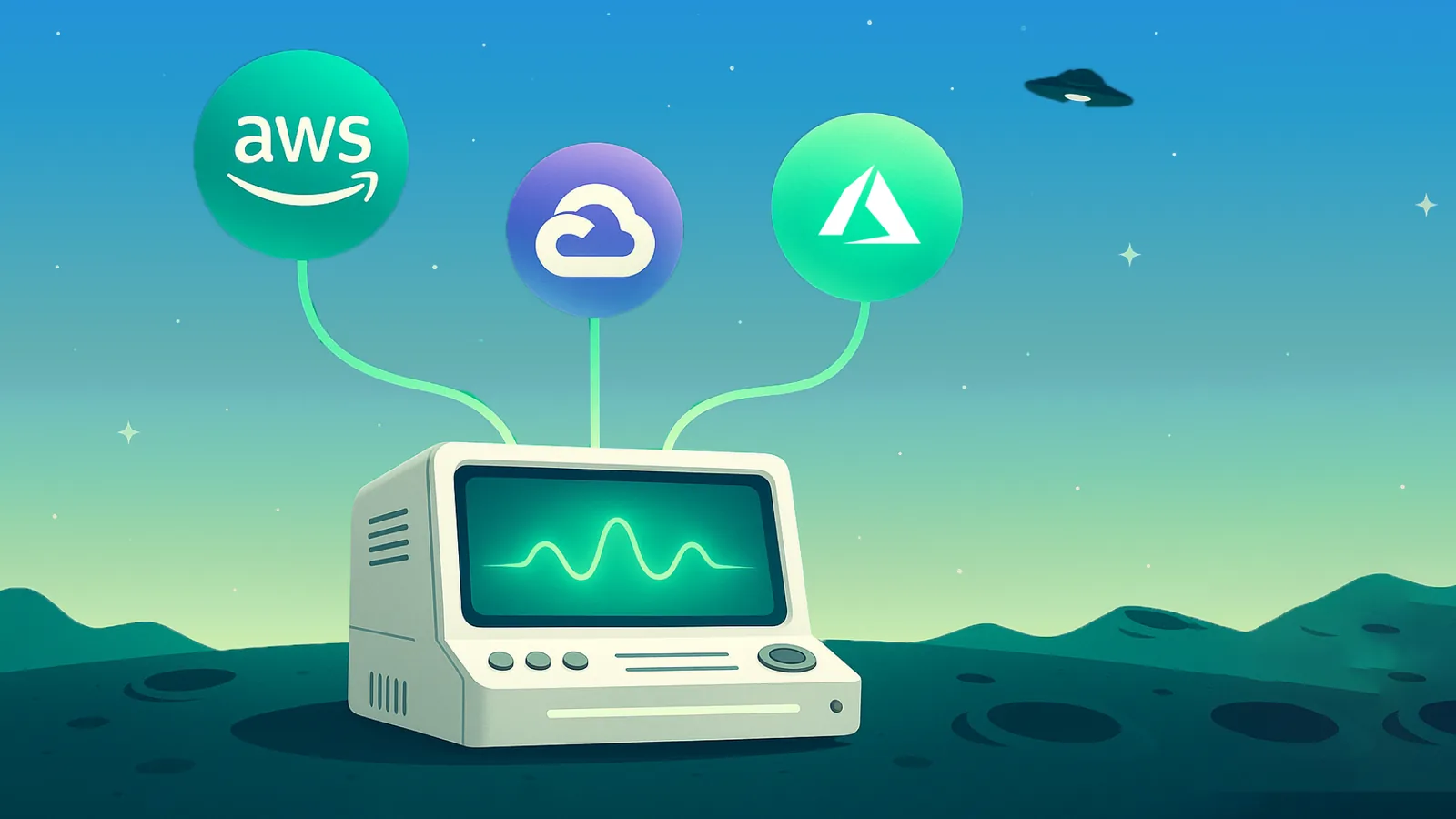
Eon's Cloud Backup Posture Management (CBPM) works alongside the native engines instead of replacing them. It continuously discovers the resources Eon supports across AWS, Azure, and Google Cloud as they appear, shows them in one view, and attaches retention and protection policies with no tagging prerequisite. For the data Eon ingests, it classifies what it finds and recovers individual records in minutes. NETGEAR cut recovery of a 10TB SQL Server database from 24 hours to under three after moving to Eon.
How much of your cloud data is running on a retention rule nobody chose? Book a demo and see how Eon discovers and protects the resources it supports across your clouds with no tagging prerequisite, and recovers individual records in minutes.
Frequently asked questions
What are the stages of data lifecycle management?
Data lifecycle management has six stages. They run in order as creation and classification, storage and protection, use and sharing, archival and tiering, retention and legal hold, and deletion. Each stage sets the conditions the next one inherits.
What is the difference between data lifecycle management and information lifecycle management?
The main difference is that DLM governs data by technical attributes like age, type, and classification, and automates how long it is kept and when it is deleted at the file, object, or resource level. ILM is the broader discipline: it manages information across its whole lifecycle based on business value and content, regardless of format.
Do cloud providers handle data lifecycle management automatically?
No, cloud providers do not handle data lifecycle management automatically. AWS, Azure, and Google Cloud each supply a rule engine you configure, and each engine governs one service boundary. Object storage rules do not cover block storage snapshots, and no native engine spans more than one provider.
How long should data be retained?
Data should be retained for as long as the specific legal, regulatory, contractual, or operational requirement demands, set per data class and never across the board. One organization-wide duration produces over-retention on low-value data and premature deletion on regulated data at once.
Does a lifecycle deletion rule really remove the data?
Not always. Versioning, soft delete, object lock, and immutability policies can all preserve data after a deletion rule reports success. Confirm removal against the object, its noncurrent versions, its snapshots, and any replica before treating the record as destroyed.
How does data lifecycle management reduce cloud costs?
Data lifecycle management reduces cloud costs by tiering inactive data on a schedule and removing data past its retention date. Protection copies add to the bill too, because snapshot chains, log archives, and replicas each carry their own retention, and bringing them under the same schedule cuts that spend.