Backup and recovery for Microsoft Azure
Eon connects to your subscriptions without storing credentials and without any Microsoft Graph permissions. You get coverage you can prove across the estate, recovery down to a single file or record, and backups Microsoft Fabric can query in place. Available on Azure Marketplace, so you can buy through your existing Azure account.



What Eon backs up on Azure
Eon works natively through Azure's own APIs, with no appliances to run, and recovers any resource across your subscriptions down to a single file, blob or record.
Virtual Machines & Managed Disks
Instance view, disks and network configuration captured together. Restore a whole VM, or a new one from the same backup. Disks encrypted with Azure Disk Encryption are supported on both the backup and the restore path, and Premium SSD v2 and Ultra disks are covered.
Blob Storage
Blob-level capture, stored incrementally after the first backup so you keep only what changed. Restore a container or individual blobs.
Azure Files
Native file share protection with a policy-driven model rather than a per-share configuration. Restore back to the original location.
How Eon connects to your Azure subscriptions
Less access than you expect.
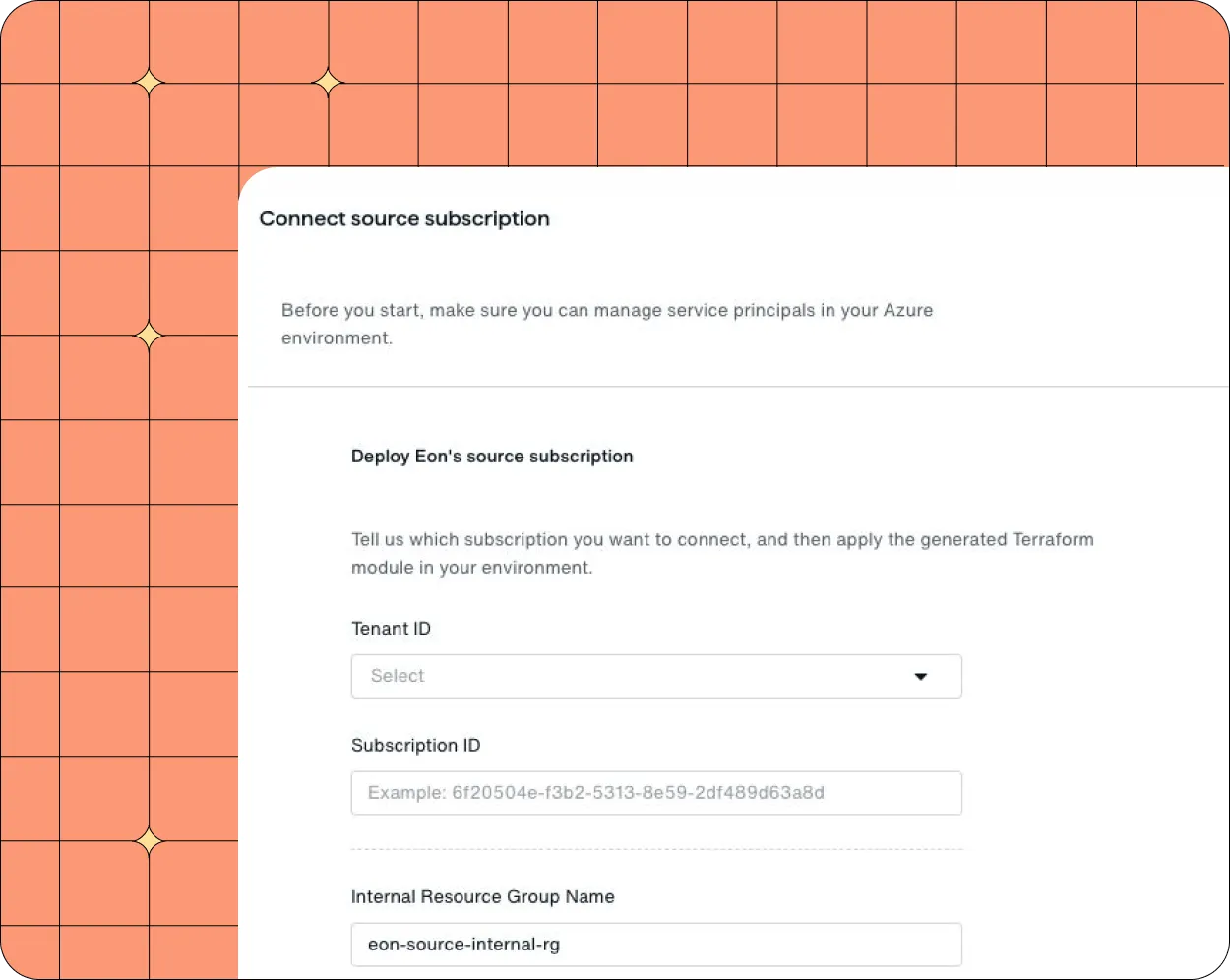
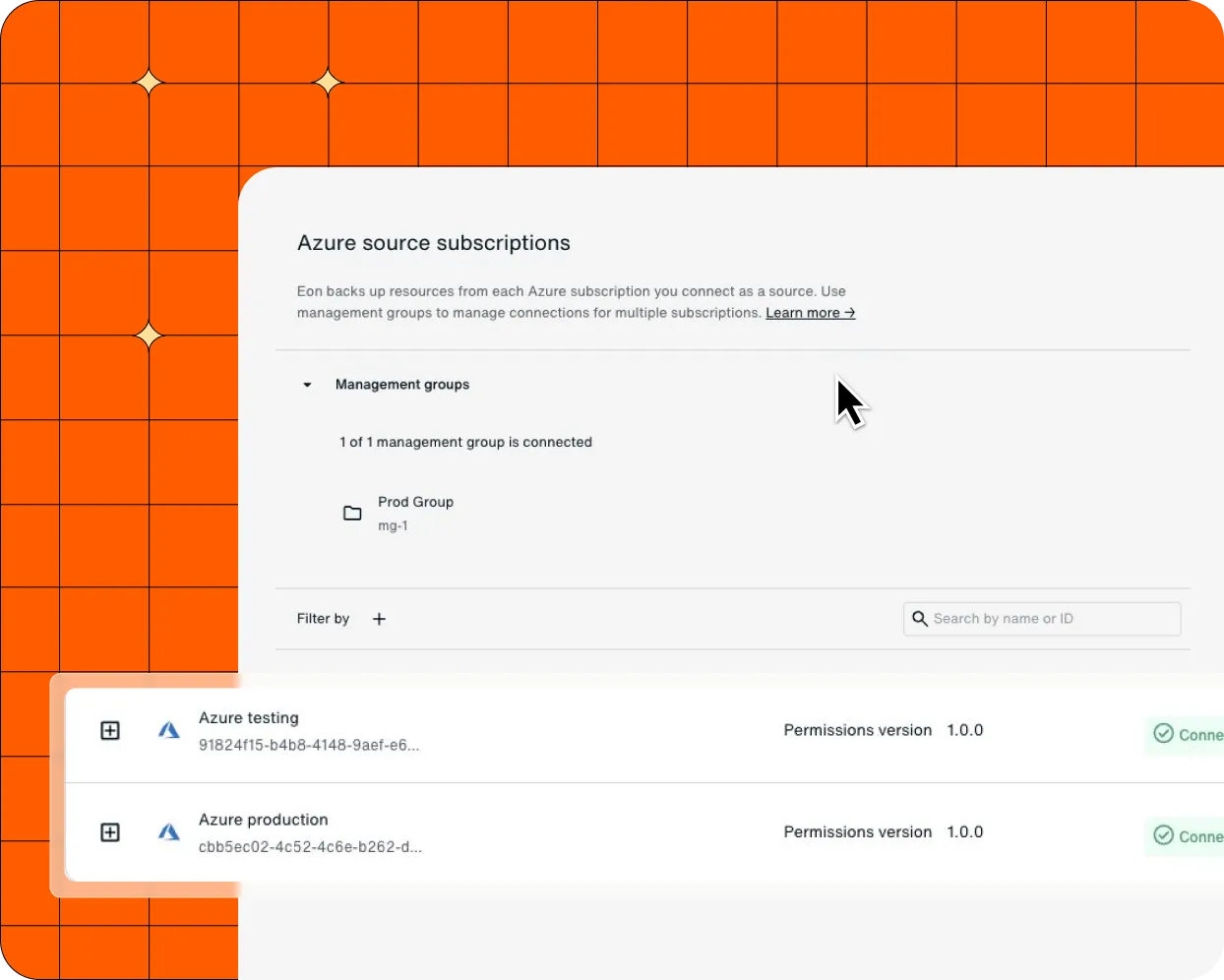
No Microsoft Graph permissions, so Eon has no visibility into Entra ID users, groups or sign-in logs. No role is ever assigned at tenant root. You choose whether source onboarding covers a single subscription or a management group.
No stored credentials, and nothing inbound.
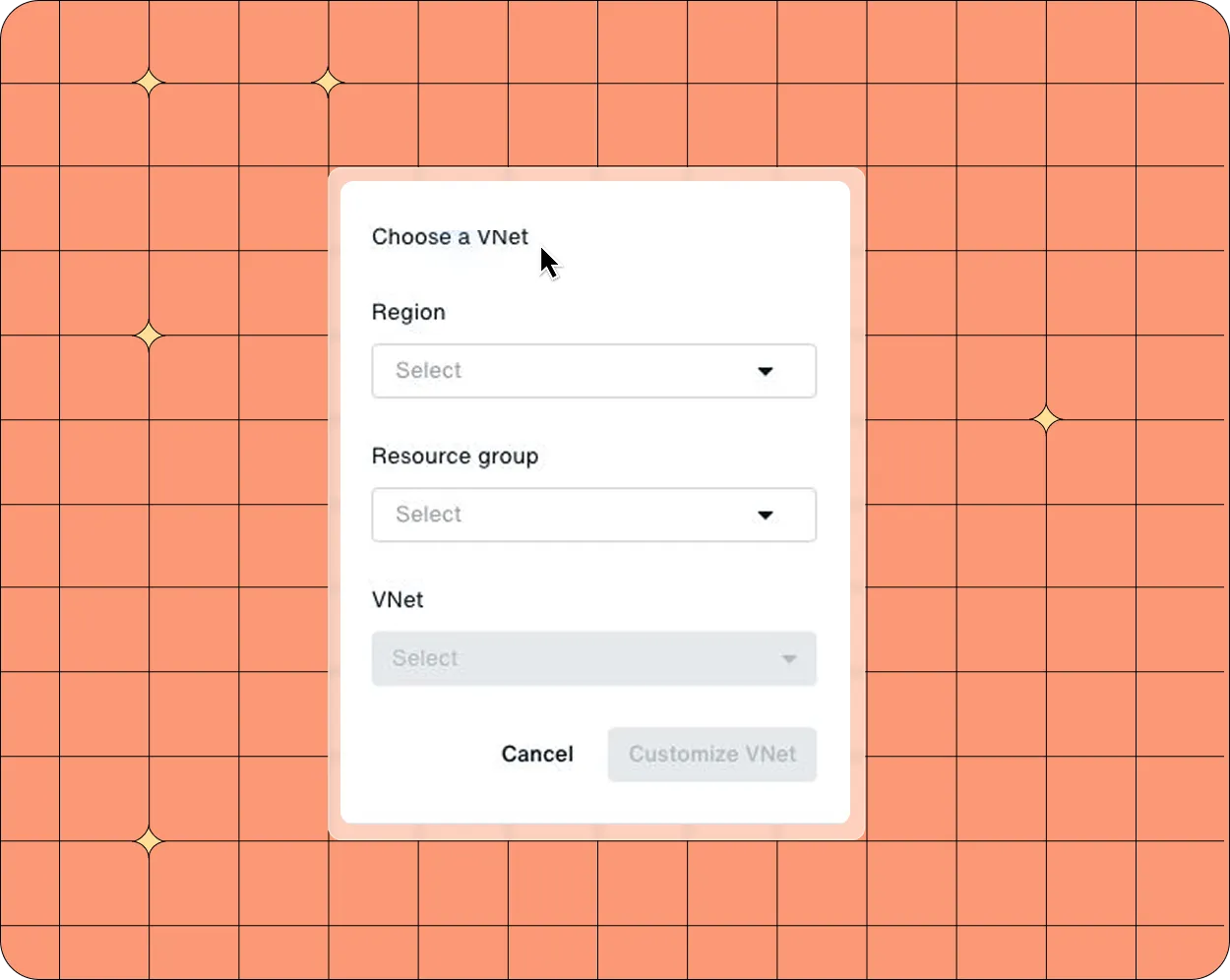
Restore uses workload identity federation, exchanging a federated assertion for short-lived tokens at runtime. The restore worker needs outbound HTTPS only, and can sit in a VNet and subnet you choose with egress filtered by Azure Firewall or NSG rules.
Destructive permissions live in one resource group.
Eon creates a dedicated resource group in each onboarded subscription, and the short-lived resources it needs to run a job live there. Permissions like disk delete are scoped to that group rather than the subscription, so the writeable footprint stays narrow and auditable.
From connection to recovery
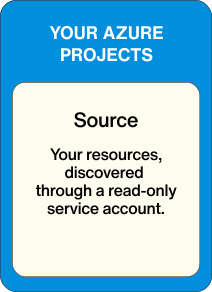
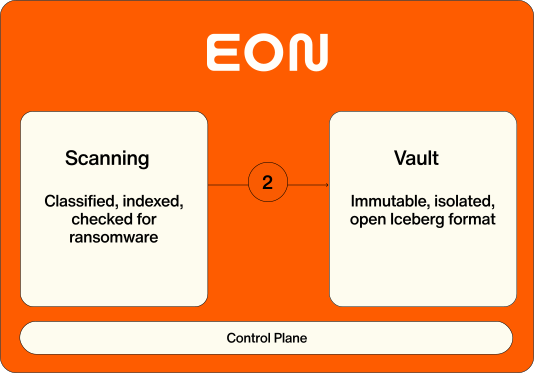
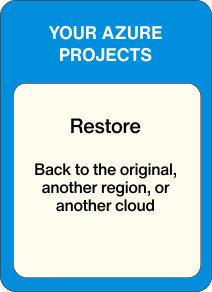
Connect a subscription with a read-only role and Eon takes it from there. Nothing to size, patch or operate, and recovery lands back in your own subscriptions.



Built with Microsoft
Eon collaborated with Microsoft to make backup data usable inside Fabric, and the OneLake integration is available in public preview. Eon is listed on Azure Marketplace with usage-based billing, so you can buy through the Azure account you already have. Backups are written as Iceberg tables in open format, not locked into a vendor format you cannot read.
Protecting petabytes across regulated, multi-subscription Azure estates

>100% ROI
in year one
SoFi more than covered the cost of Eon in its first twelve months, across five AWS Regions.

88% faster
recovery
NETGEAR cut restore time on a 10TB SQL Server database and reduced backup costs by 35%.


Ransomware and rogue AI agents
Both come down to something with valid credentials destroying data, starting with the backups. Recovery depends on whether your backups sit where those credentials can't reach, and whether you can tell which copy is clean.
Credentials from production do not open your backups
Backups land in an isolated, immutable vault, kept apart from the subscription they came from. Access is time-bound, so a key stolen out of production does not reach your recovery data, and nothing in there can be quietly overwritten or deleted.
You know which copy is clean before you restore
Every backup is scanned as it lands, for entropy shifts, mass deletion, suspicious file changes and ransomware notes. That runs across instances, object storage and databases, so you pick a clean recovery point rather than restoring and finding out.
Roll back what the agent touched
An automation with write access can do a lot of damage in a few seconds. Because Eon reads data down to the record, you restore the rows or blobs it changed and keep every good write that happened alongside them.
Backup storage cost
Backup spend grows quietly. Retention gets extended once and never revisited, snapshots outlive the resources they came from, and nobody owns the line item until Finance asks about it. Eon stores less to begin with, and shows you where the rest is going, by subscription and by region.
You store what changed, not another full copy
After the first backup, Eon keeps only what is new, and deduplicates across your whole estate rather than within one dataset at a time. Most teams take over 40% off backup storage spend.
One copy, not one per region
Protecting three regions the native way usually means paying to store three copies. Eon keeps one, and it stays searchable and restorable from any region or subscription you need it in.
Retention that matches what the data is
Because Eon classifies what it protects, retention follows the content instead of one default applied to everything. Snapshots of resources nobody owns any more expire, rather than sitting on the bill for years.


Backups Microsoft Fabric can query
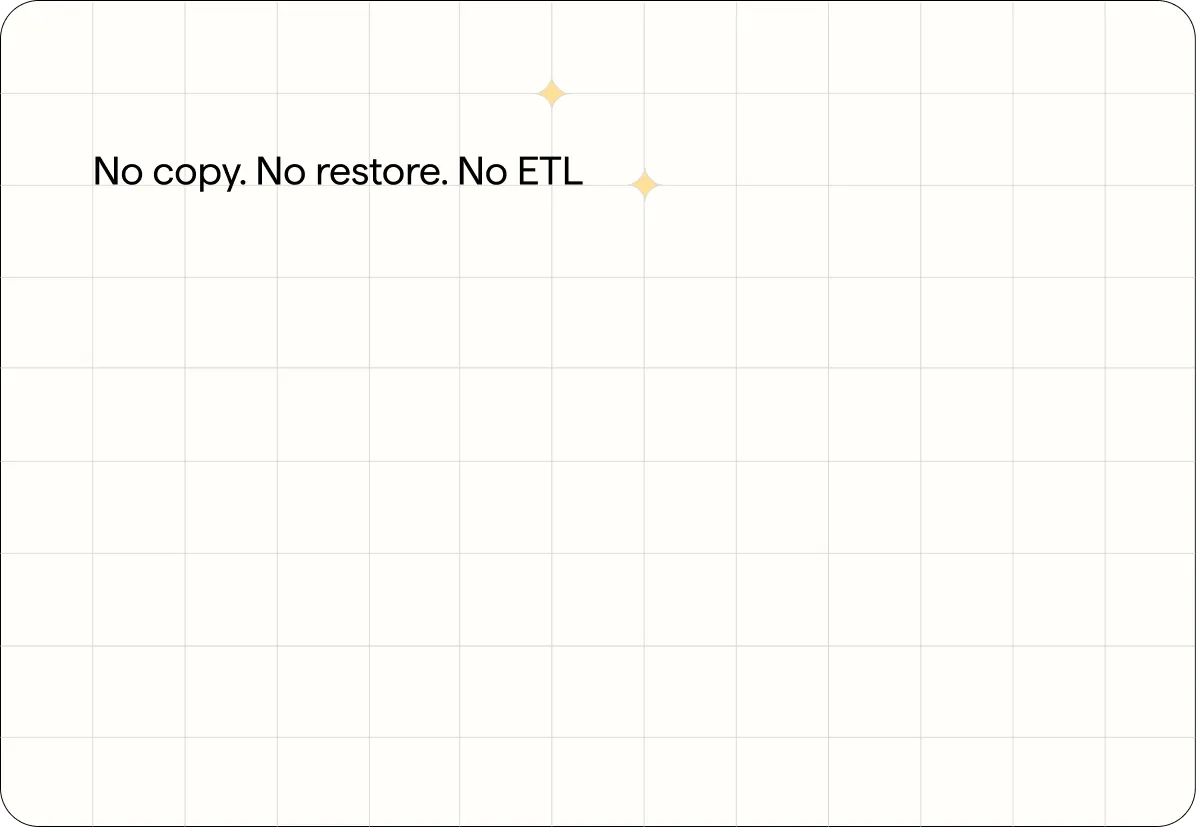
Eon stores your Azure backups in an open format Microsoft Fabric can read directly, so they show up as tables in your lakehouse, ready for Power BI, SQL or Spark. No copy, no restore. Available in public preview.
Eon and Azure Backup
Azure Backup is built into Azure and handles the basics well. It gets harder as you grow: each vault only covers one region, every service restores a different way, and checking that everything is protected is up to you.
Azure Backup
Eon
A vault and the resources it protects must sit in the same region.
Subscription or management group, with one view across the estate.
Not classified. Retention is a default you apply.
Classified on discovery, so protection follows the content.
Differs by workload. File-level for VMs and Files, container or prefix for Blob, and no record-level inside a database.
The same path everywhere, down to a single record.
Restore it first, then look.
Query it in place from Microsoft Fabric, in open Iceberg.
Not supported by Azure Disk Backup.
Open Iceberg tables you can read directly.
Azure only.
AWS, Google Cloud and Azure in one view.
More on Azure backup
.jpg)
FAQs

See it against your own subscriptions
Connect a subscription and Eon will show you what is there: every resource across your subscriptions and regions, what each one holds, what is currently protected, and what is not. Most teams find something they did not know was unprotected. Bring a recovery scenario you have had to handle and we will walk through it.