


Quick Summary
- Cyera and Sentra lead for cloud-native classification, with Cyera stronger on speed at petabyte scale and Sentra stronger on continuous compliance evidence.
- Wiz and SentinelOne fold DSPM into broader security stacks, Wiz through a CNAPP graph and SentinelOne through an SOC response workflow.
- Microsoft Defender for Cloud is the default inside Azure-centric environments; Varonis stays deepest on access governance across cloud and on-prem.
- BigID and Securiti lead for privacy-driven and AI-adjacent programs where DSPM sits alongside broader data governance work.
- None of these platforms confirm a restorable copy of the data they classify exists, which is where backup posture management picks up.
If you're evaluating the best DSPM tools for cloud data protection in 2026, eight platforms make the shortlist, and they cluster around distinct buyer profiles: cloud-native classification, security-stack consolidation, Microsoft-native fit, access governance, and privacy or AI-driven governance.
The right choice depends on which cluster your environment sits in.
By the end, you'll know which of the eight fits the environment you're actually running, and the recovery gap every DSPM here leaves open.
8 best DSPM tools for cloud data protection: TL;DR
- Wiz: Best for unified cloud security with graph-based risk correlation.
- Cyera: Best for fast, AI-native classification across multi-cloud environments.
- Varonis: Best for access governance and insider-risk visibility.
- Microsoft Defender for Cloud: Best for Azure-centric environments.
- Sentra: Best for compliance-heavy cloud and SaaS monitoring.
- BigID: Best for privacy-led data governance at enterprise scale.
- Securiti: Best for unified data and AI governance across hybrid environments.
- SentinelOne Singularity Cloud Security: Best for DSPM inside a detection-and-response stack.
What DSPM tools do for cloud data protection
Data security posture management (DSPM) discovers, classifies, and monitors sensitive data across cloud, SaaS, and hybrid environments. It answers three questions: where does sensitive data sit, who can access it, and what is the security posture of the store holding it.
DSPM sits alongside two related posture disciplines. CSPM checks how infrastructure is configured. Backup posture management confirms a restorable copy of the data actually exists. Together, the three cover configuration, data, and recovery, which are the layers a mature cloud data protection program needs running in parallel.
How we evaluated these DSPM tools
We built the shortlist from three sources: Gartner's Hype Cycle for Backup and Data Protection Technologies 2026, DSPM vendors most consistently cited across G2 and Gartner Peer Insights, and independent review-and-analyst roundups for this category. We cross-referenced the three, then filtered against verified review data and each vendor's own documentation.
Each remaining platform was scored on six criteria:
- Discovery coverage: Which cloud services, databases, and SaaS stores the platform can reach.
- Classification accuracy: How reliably it separates a customer record from a telemetry string.
- Remediation depth: Whether findings turn into fixes or tickets.
- Scan speed: Gartner's 2026 research warns that full-infrastructure scans can take days or weeks on some platforms.
- Pricing structure: The same research flags API call charges, egress fees, and integration limits as line items buyers miss.
- Protection-layer fit: How findings connect to backup, recovery, and incident response.
8 best DSPM tools for cloud data protection: Quick comparison
The 8 best DSPM tools for cloud data protection
1. Wiz: Best for unified cloud security with graph-based risk correlation
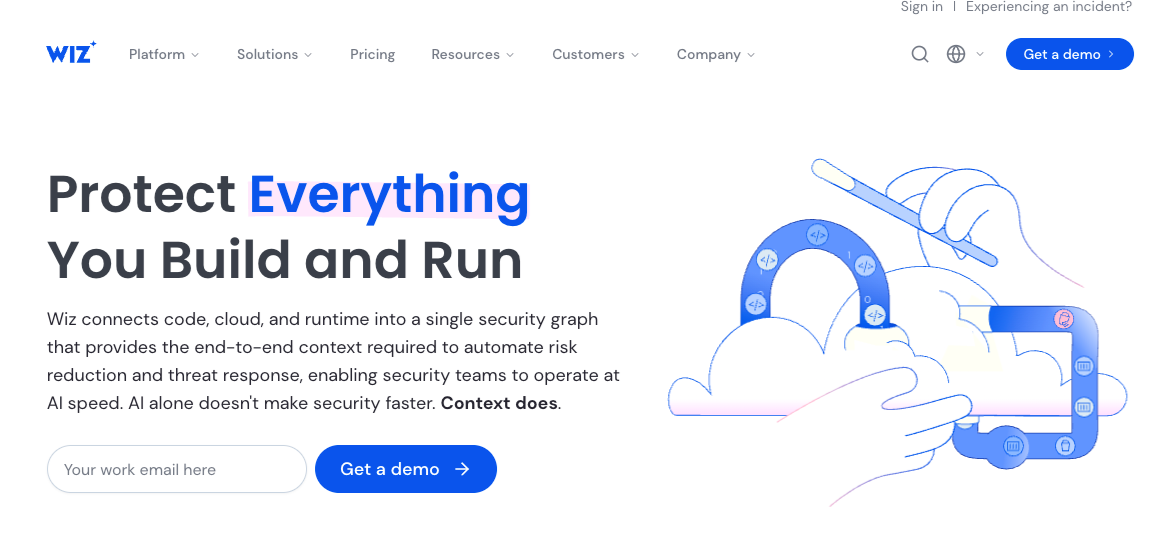
What it does: Wiz runs DSPM inside a cloud-native application protection platform (CNAPP), correlating sensitive-data findings with identities, misconfigurations, and network paths on a single graph.
Best for: Security organizations consolidating cloud tooling that want data risk ranked by real attack paths.
Wiz treats a data finding as one node on a graph, connected to identity, workload, and network context. That connection is the product, and it's why data findings from Wiz get prioritized differently than the same findings from a standalone DSPM.
The buyer question is console consolidation. Teams already running Wiz for CSPM and CWPP get data findings on the same graph they already work in. Those evaluating Wiz purely for DSPM should compare classification depth against Cyera and Sentra first.
Key features
- Security graph correlation: Connects data findings to identity, workload, and exposure context so critical paths rank above isolated findings.
- Agentless discovery: Connects through cloud provider APIs across AWS, Azure, and GCP with nothing to install.
- Code-to-data tracing: Links a data exposure back to the commit or pipeline change that created it.
Pros and cons
Pros:
- ✅ Attack-path context cuts alert noise for security teams buried in isolated findings.
- ✅ Remediation guidance lands in pull requests, where developers already work.
- ✅ One console covers CSPM, CWPP, CIEM, DSPM, and AI-SPM without stitching tools together.
Cons:
- ❌ The graph model takes weeks to learn well and longer to configure for signal quality.
- ❌ Buyers who only want DSPM pay for a broad platform whose other modules they may never use.
What users say
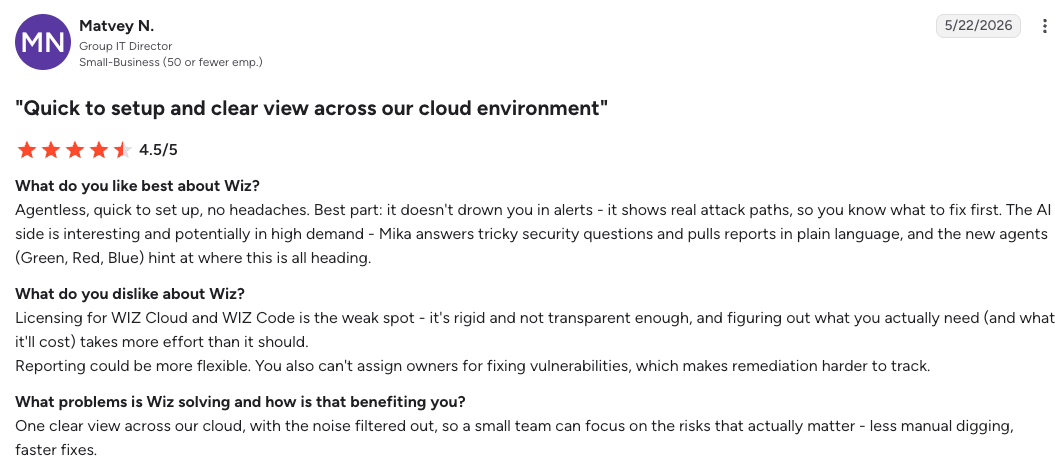
"One clear view across our cloud, with the noise filtered out." – Matvey N., G2
"Wiz provides so much information that it can feel overwhelming at first." – Jason I., G2
Pricing
Wiz publishes no price list. Pricing is quote-based on cloud workloads and modules selected; DSPM and AI-SPM price separately on top of core CNAPP.
Bottom line
Wiz fits organizations consolidating cloud security tooling. Buyers who only want a standalone sensitive-data scanner will find better-fit options in Cyera and Sentra.
2. Cyera: Best for fast, AI-native classification across multi-cloud
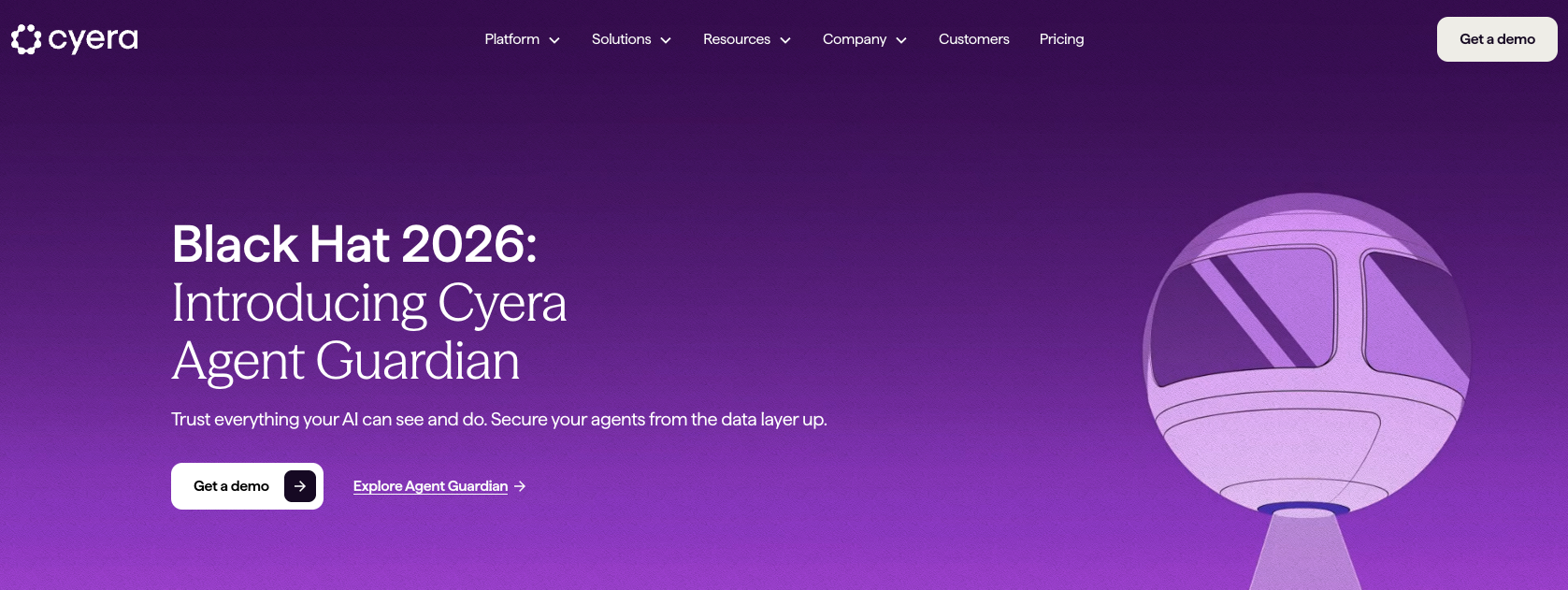
What it does: Cyera discovers and classifies sensitive data across IaaS, PaaS, and SaaS using an AI classification engine that learns an organization's own data patterns.
Best for: Cloud-first companies that need accurate classification running within days, without agents.
Cyera’s whole architecture bets on one thing: classification precision at petabyte scale, delivered fast. Every other capability (posture, remediation, agentic controls) depends on the classification underneath being right, and Cyera has been the DSPM most likely to be right in enterprise proofs of concept.
Enterprises whose top data-security problem is discovery and classification tend to land on Cyera. Those with a different top problem usually fit better elsewhere on this list.
Key features
- AI-native classification: Learns organization-specific data patterns to raise accuracy on custom and proprietary formats.
- Single-role deployment: One IAM role per cloud account, with agentless scanning from there.
- Automated remediation workflows: Applies encryption, fixes logging configuration, and corrects tags without manual steps.
Pros and cons
Pros:
- ✅ Deployment measured in days, not weeks or months.
- ✅ Classification accuracy holds up on messy, real-world data other DSPMs mislabel.
- ✅ Support responds fast enough that enterprise buyers name it as a differentiator in evaluations.
Cons:
- ❌ Limited reporting customization for enterprises with rigid audit templates.
- ❌ Newer platform than Wiz or Varonis, so procurement teams weighing vendor maturity may push back.
What users say
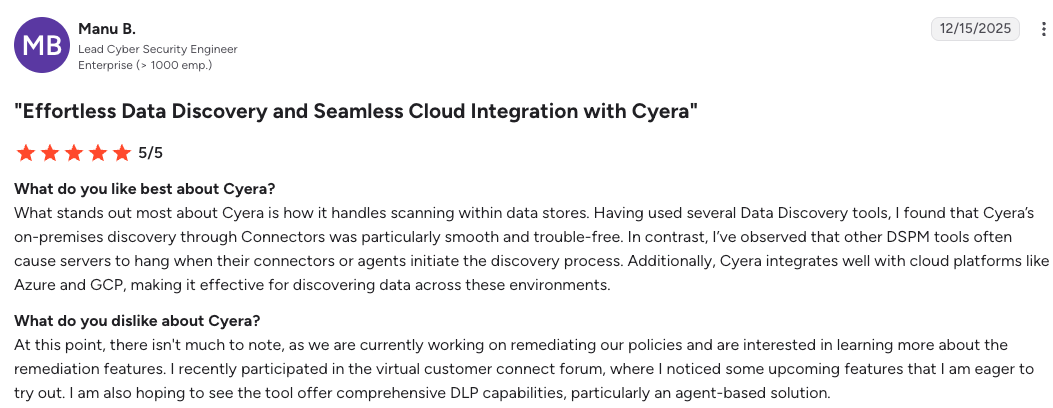
"Cyera integrates well with cloud platforms like Azure and GCP." – Manu B., G2
"The filtering is not intuitive and sometimes hard to filter." – Sidney S., G2
Pricing
Cyera publishes no price list. Quotes come through its sales process based on data volume and environment.
Bottom line
Cyera wins on classification speed and accuracy for cloud-heavy environments. Organizations with deep on-premises file-system coverage needs should shortlist Varonis instead.
3. Varonis: Best for access governance and insider-risk visibility

What it does: Varonis maps who can access sensitive data, monitors how they use that access, and flags anomalous behavior in real time.
Best for: Enterprises with complex permission hierarchies where the biggest data risk is internal over-exposure.
Varonis leads with entitlements where newer DSPM platforms lead with discovery. Every DSPM tells you the data is exposed; Varonis tells you which identities can reach it, which ones did, and cleans up the permissions at the source.
Key features
- Permissions mapping: Uncovers over-exposed and orphaned data across cloud storage, Microsoft 365, and file servers.
- Behavioral analytics: Baselines normal access patterns and alerts on deviations that indicate insider misuse or account takeover.
- Automated least-privilege enforcement: Removes excessive access without manual entitlement reviews.
Pros and cons
Pros:
- ✅ The deepest access-intelligence capability on this list, with real-time anomaly alerting mature enough to be trusted for incident response.
- ✅ Ready-made dashboards and audit trails cut compliance reporting cycles from weeks to days.
- ✅ Coverage spans cloud and on-premises stores that pure cloud-native scanners can't reach.
Cons:
- ❌ Implementation is heavy and requires dedicated internal staff during rollout.
- ❌ Full deployment often stretches over multiple quarters, longer than most buyers plan for.
What users say
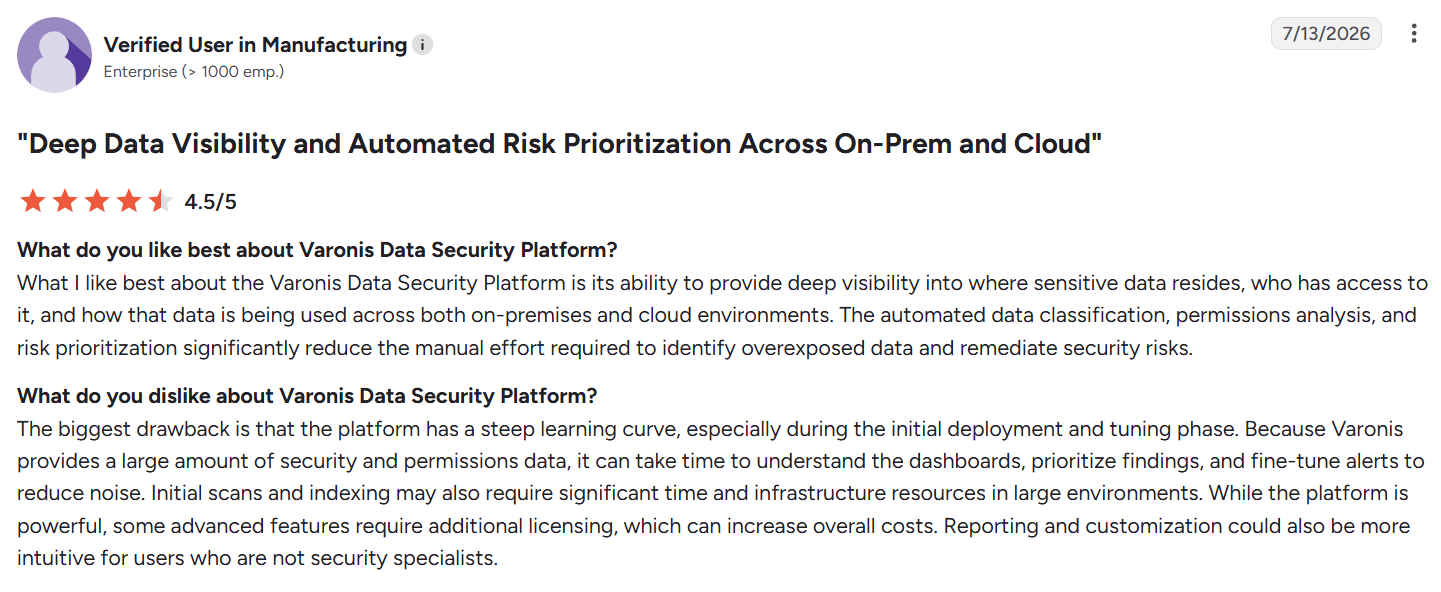
"[It provides] deep visibility into where sensitive data resides, who has access to it, and how that data is being used across both on-premises and cloud environments.” – Verified user in manufacturing, G2
“Many features that work well on-prem don't work as well in the cloud.” – Kiel H., G2
Pricing
Varonis sells on subscription, priced by users, data sources, and modules, with custom quotes per environment.
Bottom line
Varonis fits when insider risk and entitlement sprawl are the primary threat model. Greenfield cloud-native environments will get faster value from Cyera or Sentra.
4. Microsoft Defender for Cloud: Best for Azure-centric environments
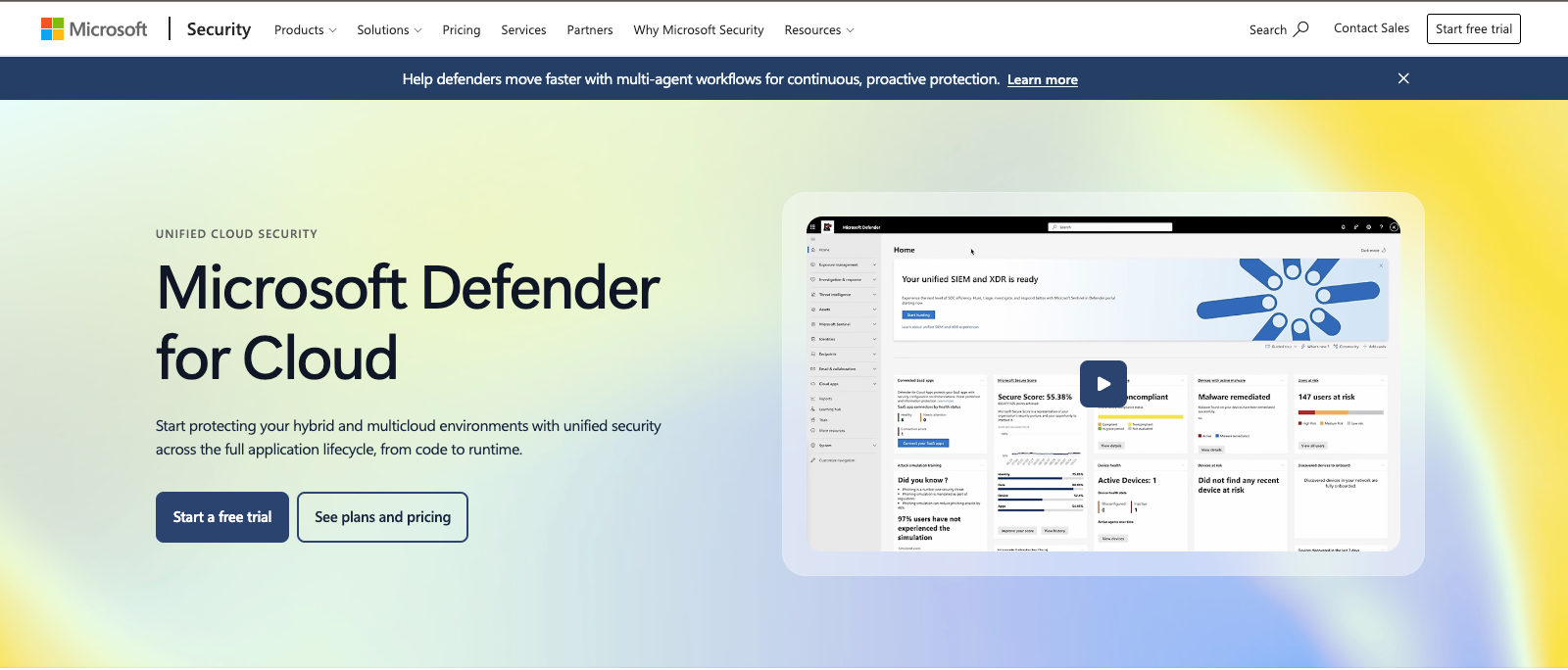
What it does: Microsoft Defender for Cloud adds sensitive-data discovery and posture management to Microsoft's cloud security suite, with the tightest hooks into Azure, Entra ID, and Purview.
Best for: Organizations already standardized on Microsoft security tooling and licensing.
Microsoft Defender for Cloud wins on native depth inside the Microsoft boundary. Findings correlate with Entra ID access logs and Purview classification labels without an integration project, which is context third-party scanners spend months reconstructing.
The decision usually comes down to how much of your data lives in Azure. Azure-dominant environments get more from Defender than from any dedicated DSPM. Multi-cloud environments with material AWS or GCP footprints should compare depth on non-Azure workloads before committing.
Key features
- Entra ID correlation: Maps data exposure to specific identities and service principals natively.
- Purview integration: Reuses classification labels already applied across the Microsoft data environment.
- Multi-cloud extension: Applies posture scanning to AWS and GCP accounts from the same console.
Pros and cons
Pros:
- ✅ Nothing new to procure, contract, or stand up for teams already on Microsoft security tooling.
- ✅ Native Entra ID and Purview integration removes months of integration work third-party DSPMs require.
- ✅ Per-resource Azure billing in the paid Defender CSPM plan scales cost with what you scan, no sales call needed.
Cons:
- ❌ Capability depth drops outside Azure, particularly on AWS and GCP where coverage is functional but shallow.
- ❌ Classification tuning is thinner than dedicated DSPM platforms, which shows in environments with heavy custom data types.
What users say
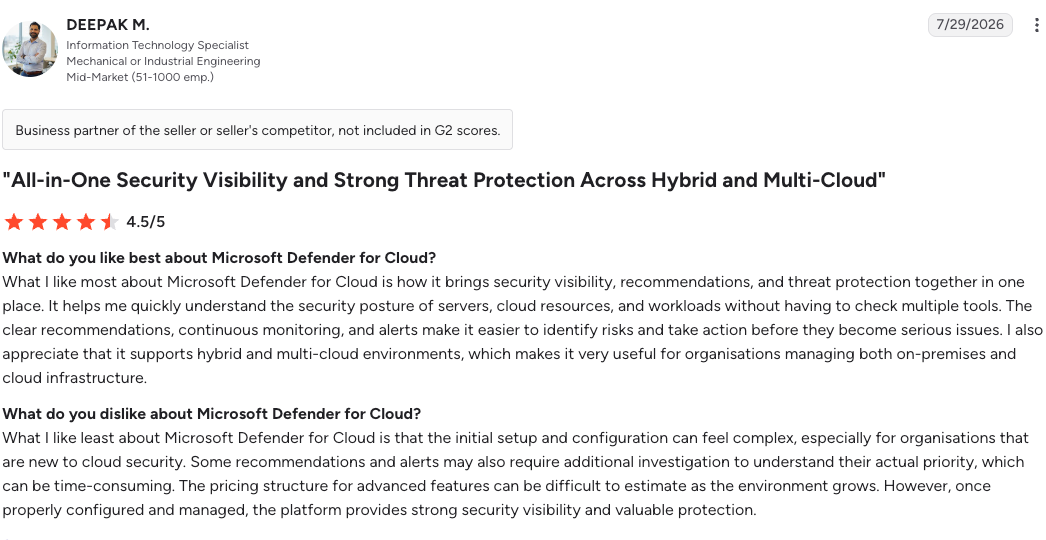
"It brings security visibility, recommendations, and threat protection together in one place." – Deepak M., G2
"Setting up connectors can sometimes be clunky." – Ahyar R., G2
Pricing
Microsoft publishes per-resource pricing on the Azure pricing page; buyers can model DSPM cost against workload count directly without a sales call.
Bottom line
The default choice for an Azure-dominant environment, with published pricing that simplifies budgeting against sales-quoted alternatives. Multi-cloud organizations should compare Defender's non-Azure depth against Cyera or Wiz before committing.
5. Sentra: Best for compliance-heavy cloud and SaaS monitoring
What it does: Sentra discovers, classifies, and monitors sensitive cloud data in real time, with the posture following the data as it gets copied or moved.
Best for: Regulated companies in finance, healthcare, and technology that need continuous compliance evidence.
Sentra's design premise is that sensitive data moves, and a scan of where it lived last quarter protects nothing today. Classification and posture checks run continuously, following data across copies and stores rather than snapshotting where it was.
For regulated environments where auditors want continuous evidence rather than point-in-time reports, that architecture is the reason to shortlist Sentra. Organizations where quarterly scans satisfy compliance can move faster with lighter platforms.
Key features
- Continuous discovery: Tracks sensitive data across cloud stores, databases, and SaaS as it gets created and duplicated.
- Compliance templates: Prebuilt reporting for GDPR, CCPA, and HIPAA shortens audit preparation.
- Data detection and response: Real-time alerting when exposure or access posture changes.
Pros and cons
Pros:
- ✅ Consistently rated among the strongest platforms for customer satisfaction by enterprise buyers.
- ✅ Agentless deployment lands across cloud stores without performance impact on production workloads.
- ✅ Classification accuracy holds up on unstructured content other DSPMs mishandle, including voice and video.
Cons:
- ❌ Classification speed drops at petabyte scale, where Cyera and Wiz maintain throughput.
- ❌ Smaller market presence than Wiz or Microsoft slows procurement in vendor-mature enterprises.
What users say
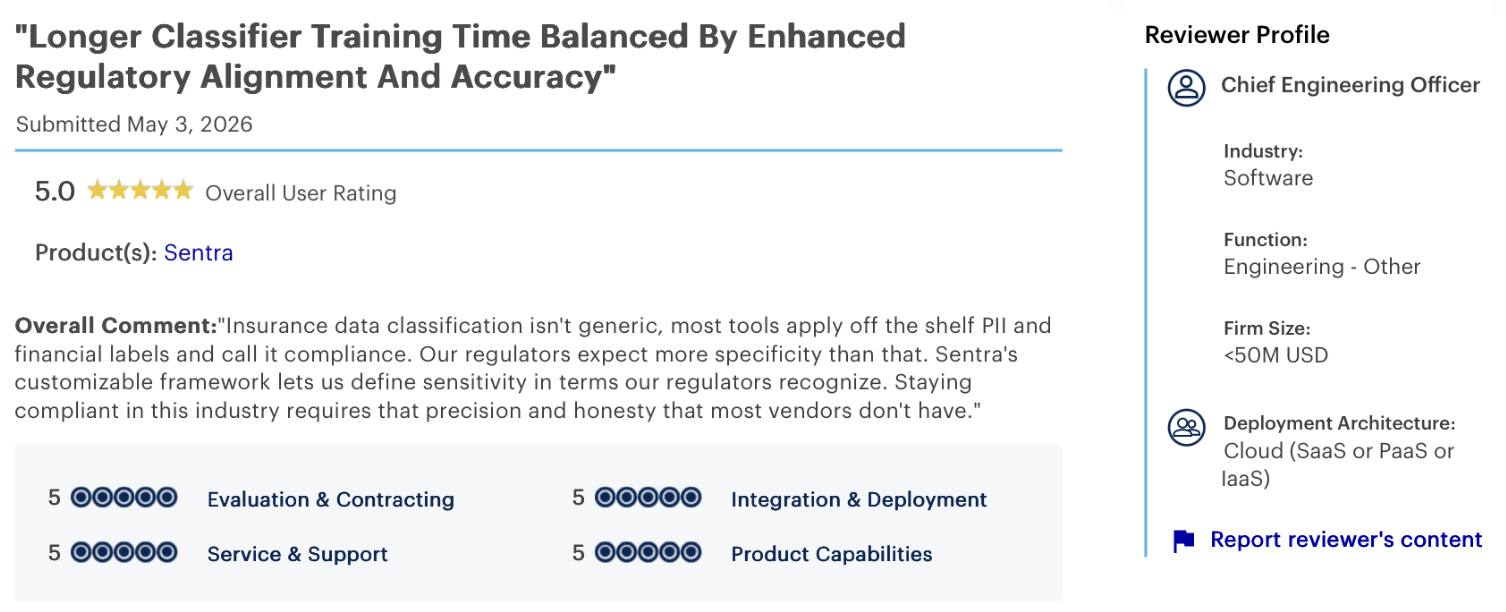
"Sentra’s customizable framework lets us define sensitivity in terms our regulators recognize." – Chief engineering officer in software industry, Gartner Peer Insights
"More built-in analytics on classification drift [over time] would be helpful.” – Marketing associate in consumer goods, Gartner Peer Insights
Pricing
Sentra publishes no price list. Quotes come through its sales process based on data volume.
Bottom line
Sentra fits when audit evidence and continuous monitoring drive the purchase. Buyers who want DSPM fused with infrastructure and workload security in one platform should shortlist Wiz or SentinelOne instead.
6. BigID: Best for privacy-led data governance at enterprise scale
What it does: BigID combines DSPM with privacy operations, covering discovery, classification, consent, retention, and data-subject requests across hundreds of source types.
Best for: Enterprises where the same platform must serve security, privacy, and governance stakeholders.
BigID trades cloud-native speed for privacy heritage and connector breadth. Newer DSPM platforms reach first inventory in days; BigID reaches audit-ready privacy governance in months, across sources cloud-native tools cannot see.
Buyers choose it when the compliance deadline or the connector coverage problem is more crucial than time to first dashboard. Cloud-first companies without heavy privacy-ops mandates will move faster with Cyera or Sentra.
Key features
- Source coverage: Connectors for hundreds of data stores, from mainframes and Hadoop to cloud warehouses.
- Privacy automation: Data-subject request handling, consent, and retention policies run on the same classification layer.
- AI governance modules: Tracks which sensitive data feeds model training and AI pipelines.
Pros and cons
Pros:
- ✅ Widest source coverage on this list, particularly for legacy and hybrid estates cloud-native DSPMs cannot reach.
- ✅ One classification layer serves security, privacy, and governance, removing duplicate scanning across teams.
- ✅ Regulatory framework depth across GDPR, CCPA, HIPAA, and DORA, built into the platform rather than bolted on.
Cons:
- ❌ Interface trails newer cloud-native DSPMs, and support quality is inconsistent across regions.
- ❌ Configuration for large environments is heavy and typically requires dedicated implementation partners.
What users say
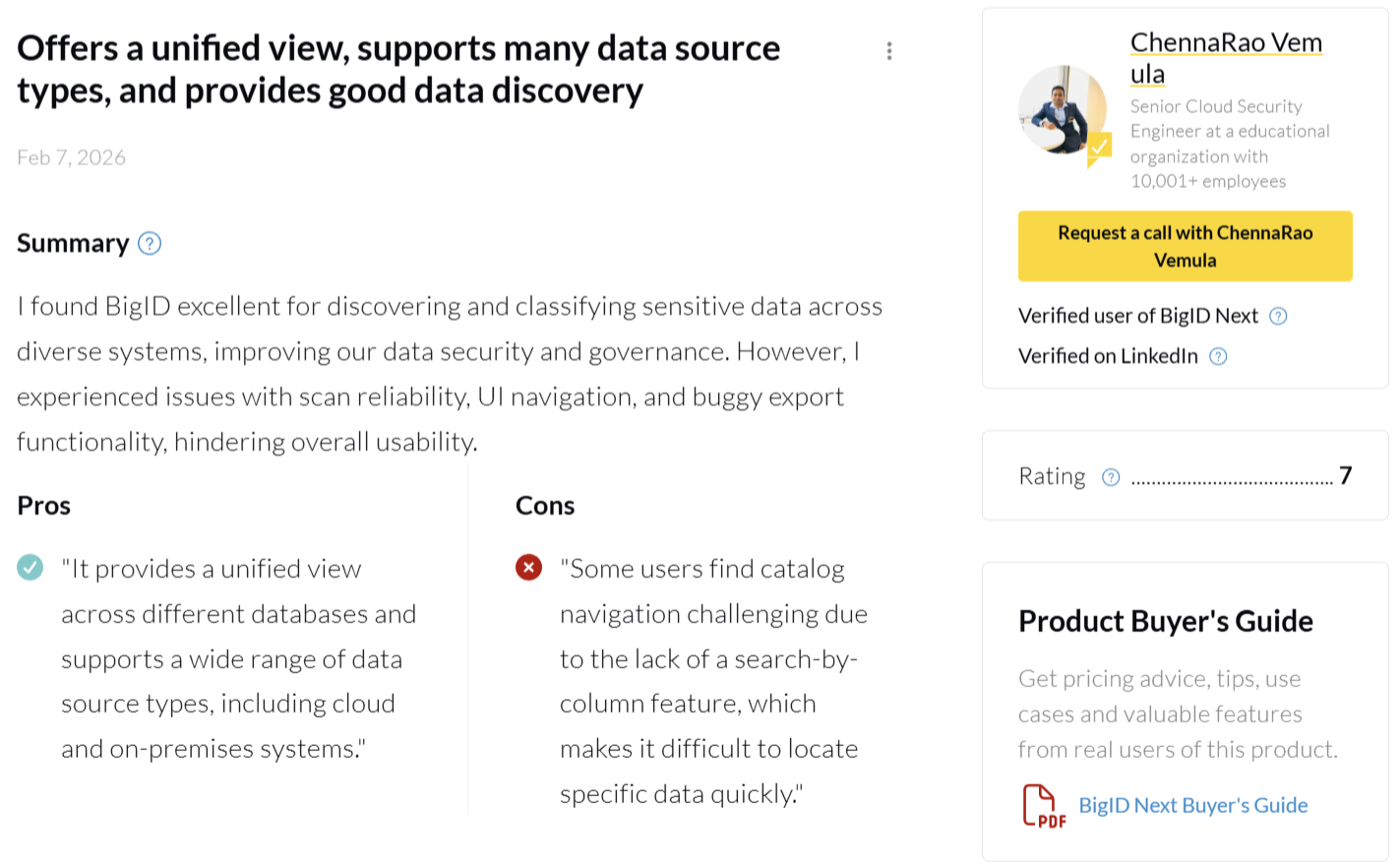
"It provides a unified view across different databases and supports a wide range of data source types." – ChennaRao Vemula, PeerSpot
"One area where BigID can be improved is the UI, which has a lot of bugs." – Aniruddha Nath, PeerSpot
Pricing
BigID publishes no price list. Quotes are based on sources and modules.
Bottom line
BigID fits enterprises consolidating privacy and security spend on one platform. Cloud-native companies without privacy-ops mandates will move faster with Cyera or Sentra.
7. Securiti: Best for unified data and AI governance across hybrid environments
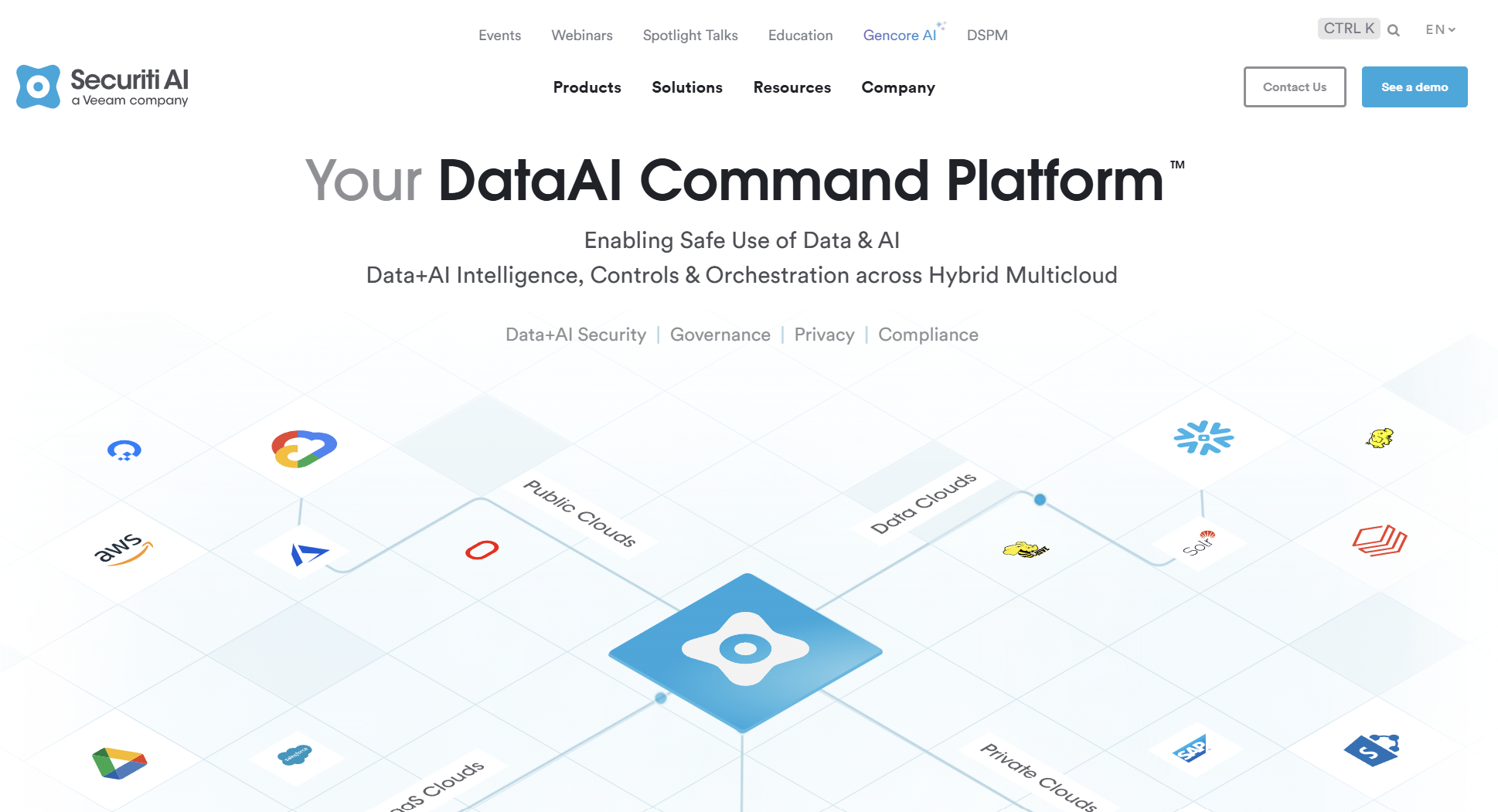
What it does: Securiti runs DSPM through a knowledge graph that maps sensitive data flows and correlates security intelligence across hybrid multi-cloud environments, with the same layer extending into AI governance.
Best for: Enterprises adopting AI on top of a hybrid or multi-cloud data estate who want DSPM and AI security governance running on the same classification layer.
Veeam completed its $1.725 billion acquisition of Securiti AI in December 2025, folding the DSPM, privacy, and AI-governance stack into Veeam's data resilience platform. Its knowledge graph maps sensitive data flows across stores, identities, applications, and AI pipelines on one layer, so one classification effort feeds both DSPM and AI.
Fit depends on how much AI is landing on your data estate. Enterprises where AI adoption drives DSPM investment get more from Securiti than from a pure-play DSPM. Others move faster with lighter platforms.
Key features
- Knowledge graph correlation: Maps sensitive data flows across hybrid stores, identities, applications, and AI pipelines on one graph.
- AI data governance: Detects when AI training, inference, or third-party AI services use sensitive data, and enforces appropriate controls.
- Broad compliance coverage: Prebuilt frameworks span GDPR, CCPA, HIPAA, and dozens of jurisdiction-specific regulations.
Pros and cons
Pros:
- ✅ Unified classification layer for DSPM, DLP, privacy, and AI governance removes duplicate scanning across teams.
- ✅ Broad compliance framework coverage across dozens of jurisdiction-specific regulations, deeper than most cloud-native DSPMs.
- ✅ Knowledge graph maps sensitive data flows across hybrid estates that pure-cloud platforms cannot reach.
Cons:
- ❌ Platform breadth stretches procurement conversations longer than pure-play DSPM tools require.
- ❌ Configuration depth demands dedicated data-governance owners; leaner teams underuse the platform.
What users say
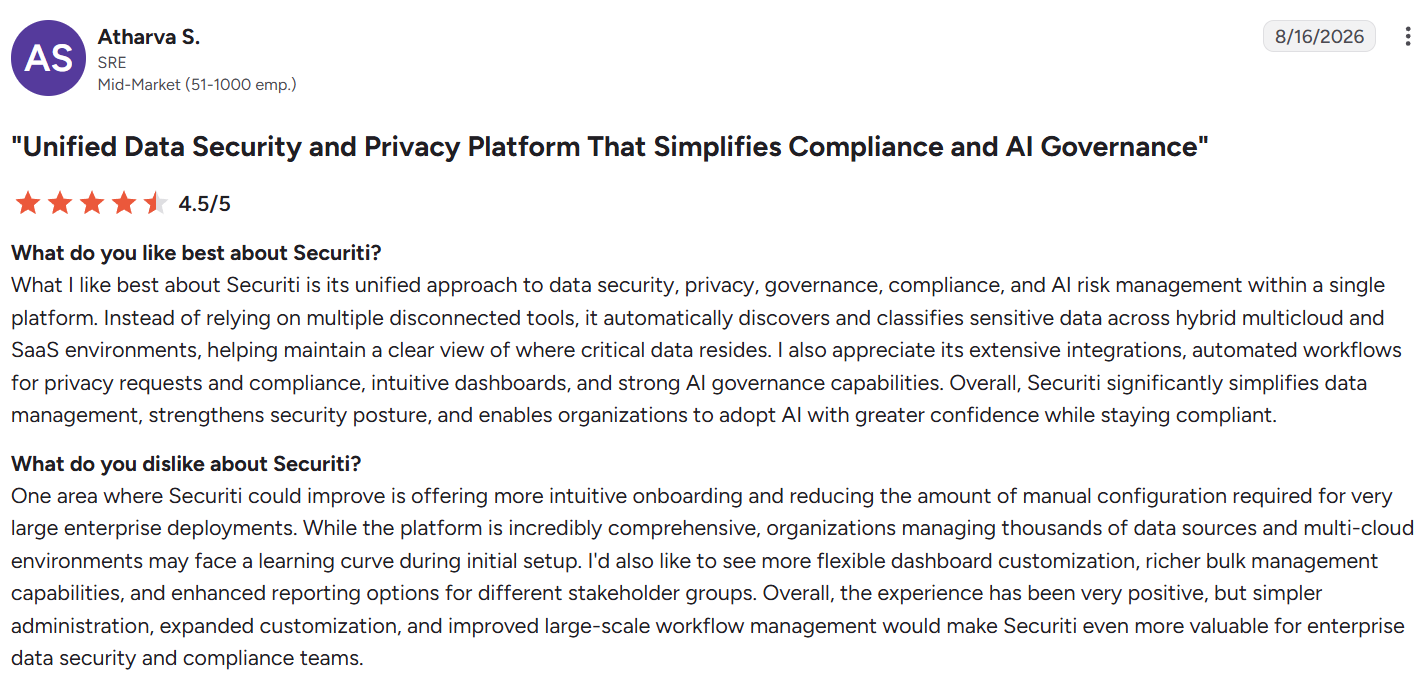
"It automatically discovers and classifies sensitive data across hybrid multicloud and SaaS environments." – Atharva S., G2
"In an environment where we had a lot of information, sometimes it was a little slow." – Tacio Veiga, PeerSpot
Pricing
Securiti publishes no price list. Pricing is quote-based on modules selected and data volume.
Bottom line
Securiti fits enterprises where AI adoption, hybrid-cloud complexity, or both are driving DSPM investment. Organizations that need pure cloud-native DSPM without the AI governance layer will move faster with Cyera or Sentra.
8. SentinelOne Singularity Cloud Security: Best for DSPM inside a detection-and-response stack
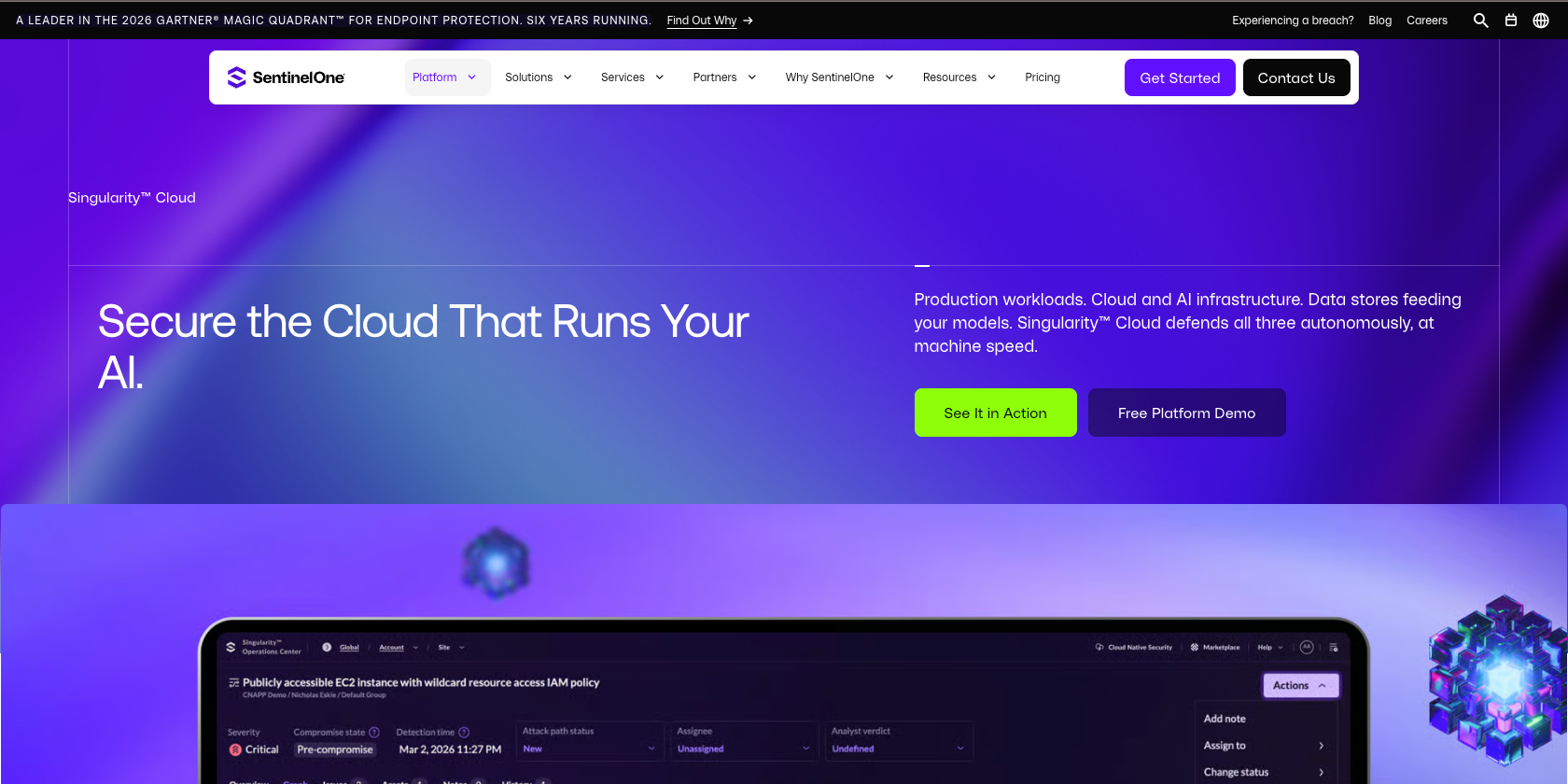
What it does: Singularity Cloud Security is a CNAPP that folds data security findings into SentinelOne's detection, response, and automation stack.
Best for: SOC-driven organizations that want data risk feeding the same console as endpoint and cloud threat response.
Singularity Cloud Security’s angle is response. Classification depth is where dedicated DSPM specialists still win. A sensitive-data finding lands next to runtime detections in the same console analysts already work in, and containment actions fire from that surface rather than a separate DSPM UI.
Fit comes down to ownership. If the SOC owns data security and wants findings feeding the same response workflow as endpoint and cloud detections, Singularity is the natural fit. If a dedicated data-security team owns it, pure-play DSPMs classify deeper.
Key features
- Exploit-path prioritization: Ranks data exposure by evidence that an attacker can reach it.
- Automated response: Isolation and remediation actions trigger from the same console as detections.
- BigID lineage integration: Traces breach impact through data relationships, beyond infrastructure alone.
Pros and cons
Pros:
- ✅ Consistently among the easiest platforms in the category to deploy and operate day-to-day.
- ✅ Response automation shortens the gap between finding and fix from days to minutes.
- ✅ Strong fit for mid-market security teams running lean without dedicated data-security specialists.
Cons:
- ❌ Alert tuning and configuration require sustained effort during rollout to reach signal quality.
- ❌ Native data discovery is shallower than dedicated DSPM platforms and leans on the BigID integration for depth.
What users say
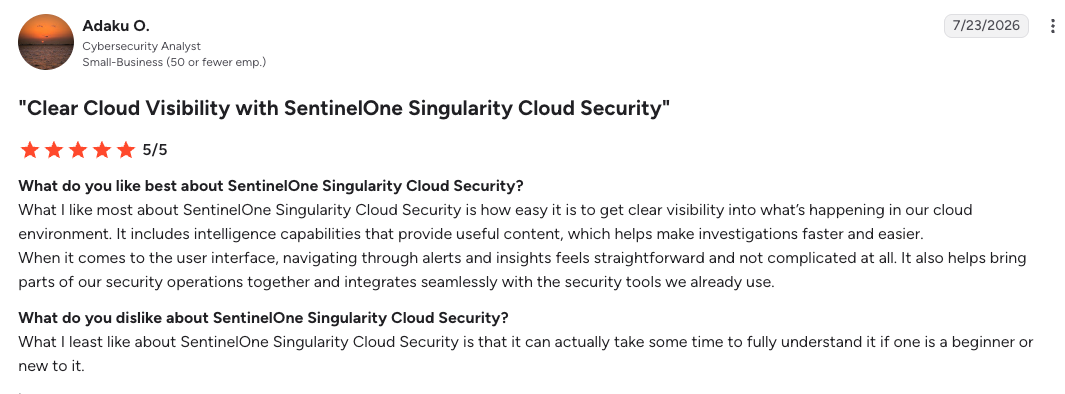
"It includes intelligence capabilities that provide useful content, which helps make investigations faster and easier." – Adaku O., G2
"New users may need time and training to fully utilize all its functionalities." – Sanjo J., G2
Pricing
SentinelOne publishes endpoint package tiers on its packages page; cloud security pricing is quoted per environment.
Bottom line
Singularity fits when the SOC owns data security and wants one response surface across endpoint, cloud, and data findings. Buyers optimizing for pure classification depth should shortlist Cyera or Sentra instead.
How to choose between these DSPM tools
Choose Wiz if you:
- Want data risk ranked by real attack paths across identity, workload, and network context.
- Are consolidating several cloud security tools into one platform.
Choose Cyera if you:
- Need AI-native classification precision running within days on a cloud-first footprint.
- Run large multi-cloud environments where classification accuracy at petabyte scale is the primary problem.
Choose Varonis if you:
- Face insider risk and permission sprawl across cloud and on-premises stores.
- Need entitlement analytics, behavior monitoring, and audit trails in one place.
Choose Microsoft Defender for Cloud if you:
- Run an Azure-dominant environment on Microsoft security licensing.
- Want published per-resource pricing over a sales-quoted contract.
Choose Sentra if you:
- Operate in a regulated environment where auditors want continuous evidence rather than point-in-time reports.
- Need classification and posture that follow data as it moves and gets copied between stores.
Choose BigID if you:
- Need privacy operations and security findings on one classification layer.
- Consolidate legacy and cloud sources under one governance program.
Choose Securiti if you:
- Are extending DSPM to cover AI governance and pipeline exposure on the same classification layer.
- Run hybrid multi-cloud and want a knowledge graph mapping data flows across it.
Choose SentinelOne if you:
- Want data findings driving automated response inside the SOC.
- Run SentinelOne for endpoint and cloud detection and want data risk feeding the same console.
Skip a dedicated DSPM purchase entirely if your cloud footprint is a handful of accounts with well-understood data stores. Provider-native classification plus disciplined tagging covers that scale, and the budget does more in the protection layer.
The recovery layer these tools don't cover
Every platform above answers where sensitive data sits and who can reach it. None answers whether a clean, restorable copy of that data exists.
The gap is wider than most security leaders realize. In Eon's 2026 Cloud Data Infrastructure Report, 91% of cloud leaders say they're confident they know what's protected across accounts, regions, and clouds. Yet, 61% discover protection gaps only after an incident, audit, or failed restore. Confidence and evidence point in opposite directions.
We built Cloud Backup Posture Management (CBPM) to close that side of the posture problem.
CBPM classifies cloud resources as they're created and applies backup and retention policies automatically, so the PII a DSPM scanner flags on Tuesday is already covered by an immutable, logically air-gapped copy.
When an incident lands, Granular Restoration returns the affected file, record, or table without rebuilding the full environment. NETGEAR runs on this architecture and brought a 10TB SQL Server recovery from 24 hours to under three.
The two categories are converging. Eon and SentinelOne announced a partnership in March 2026 that pairs SentinelOne's DSPM discovery and classification with Eon's CBPM, surfacing alerts for datastores that are sensitive and non-recoverable at the same time.
Final verdict
Whichever scanner wins the evaluation, pair it with backup posture that can restore what the scanner finds.
If a ransomware payload or a rogue AI agent hit the sensitive data your DSPM just flagged, could you prove a clean, restorable copy exists? Would the restore reach the record, file, or table level, or would it force a full-environment rebuild?
Book a demo and see how Eon confirms what's covered across your accounts and clouds, then restores a single file or record without a full rebuild.
Frequently asked questions
What is the best DSPM tool for cloud data protection?
Wiz is the best DSPM tool for most cloud-first organizations in 2026, ranking data risk by real attack paths across identity, workload, and network context. The best fit for any given organization depends on environment, existing tooling, and whether classification depth, access governance, or response automation is the primary need.
What is the difference between DSPM and CSPM?
CSPM secures cloud configuration and catches misconfigurations at the infrastructure layer. DSPM reads the data inside that infrastructure, classifying it and flagging who can reach it. The two overlap little in practice: CSPM covers whether the bucket is configured correctly, DSPM covers what's inside the bucket and who can read it.
How much do DSPM tools cost?
Most DSPM vendors price by quote, based on data volume, connected sources, and modules selected. Microsoft Defender for Cloud is the exception, with per-resource pricing published on the Azure pricing page. Before signing any quote, scrutinize API call charges, egress fees, and integration limits.
Does DSPM protect data or only find it?
DSPM discovers, classifies, and monitors sensitive data, and some platforms remediate exposure by revoking permissions or applying encryption. It does not create restorable copies, so a DSPM finding confirms data is at risk without confirming it can be recovered. Backup posture management covers the recovery side.
Is DSPM the same as backup posture management?
No. DSPM manages the security posture of sensitive data, covering where it sits and who can access it. Cloud Backup Posture Management (CBPM) manages protection posture, confirming every resource is classified, backed up, and restorable. Mature cloud programs run both, now connected by integrations like the SentinelOne and Eon partnership.