Eon Yukon vs. Snowflake
Add Eon Yukon to Snowflake to land streaming tables merged, sorted and described within seconds, read in place as Iceberg.
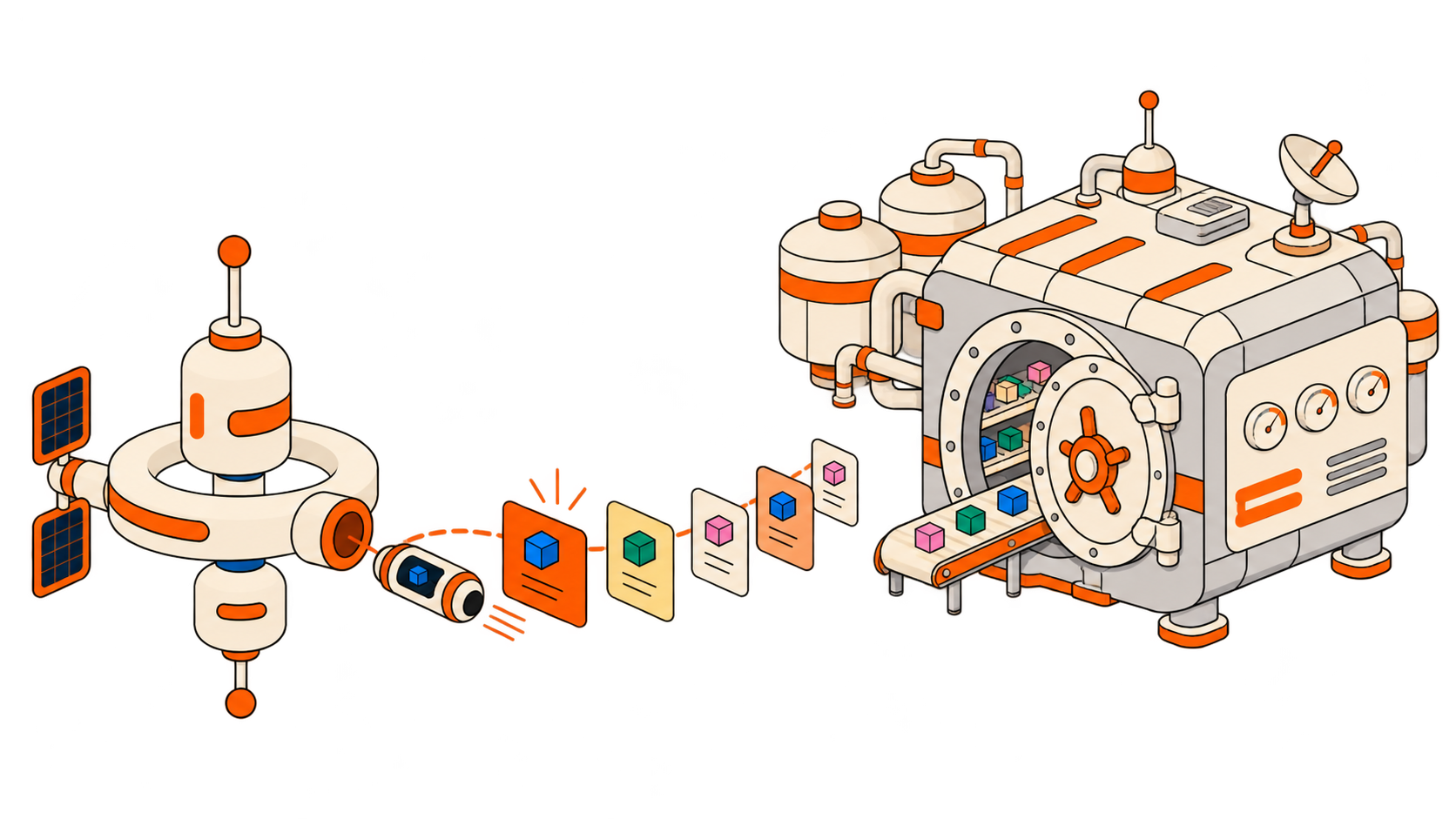
Current rows on arrival
Eon merges, deduplicates and aggregates streaming data as it lands. Snowflake queries current rows without merge queries or dynamic tables to refresh.
Less compute per event
Our public benchmarks show Eon uses 4× to 7× less compute than open-source Spark and Flink for ingestion and compaction combined.
Iceberg tables Snowflake reads
Eon writes Apache Iceberg tables registered in AWS Glue, Google BigLake or any Iceberg REST catalog. Snowflake reads them in place through a catalog-linked database, and so does every other Iceberg engine.
Comparison: Eon vs. Snowflake


Data freshness
Query-ready data within seconds.
Snowpipe Streaming lands appends in 5 to 10 seconds. Current rows wait for a merge query or a dynamic table, which refreshes no faster than every 60 seconds.
Data preparation & maintenance
Event-level data lands ready to query, with optional updates, deduplication and aggregates. Table maintenance is built in.
Merge queries and dynamic table refreshes run on a warehouse. Automatic Clustering is billed as its own line.
Pipeline complexity
One managed pipeline produces the tables you choose in one pass, with no separate processing or maintenance jobs.
Openflow or the Kafka connector, a pipe, merge queries and dynamic tables to build, chain and monitor.
Context for AI agents
Built-in table descriptions, statistics and change history help agents understand and query the data.
Semantic views generated from query history, then curated by your team, for Cortex Agents. Nothing records distributions, value-matched joins or what changed on every commit.
Open formats & interoperability
Iceberg tables, readable by compatible engines.
Snowpipe Streaming writes Iceberg only into Snowflake-managed tables.
Querying & compute management
Serverless SQL and Spark Connect, billed per query with no idle compute cost.
Virtual warehouses to size and suspend, billed per second with a 60-second minimum each time one starts.
Real-time application serving
Current values, looked up by key in under 1 ms through Redis-compatible and HTTP APIs.
Hybrid tables, Snowflake Postgres or interactive tables, each another store or warehouse to load and keep in sync.
Real-time aggregations
Summaries update alongside event-level data, written to tables and served live, with no state for your team to manage.
Dynamic tables refreshed on a warehouse, 60 seconds behind at the earliest.
Operational overhead
Fully managed by Eon, with no tuning required. Dedicated deployment in your region or BYOC.
Snowflake runs the platform. Your team sizes warehouses, sets target lags and watches refresh and clustering credits.
Compute efficiency
One pass produces the tables you choose, with efficient ingestion and built-in maintenance.
Ingest, merge queries, refresh and clustering each run as their own compute over the same rows.
How Eon Yukon complements Snowflake
Streaming tables that arrive current
Event streams carry producer retries, late updates and deletes. Dashboards and agents need the latest state of each order, user or device, not every version of it.
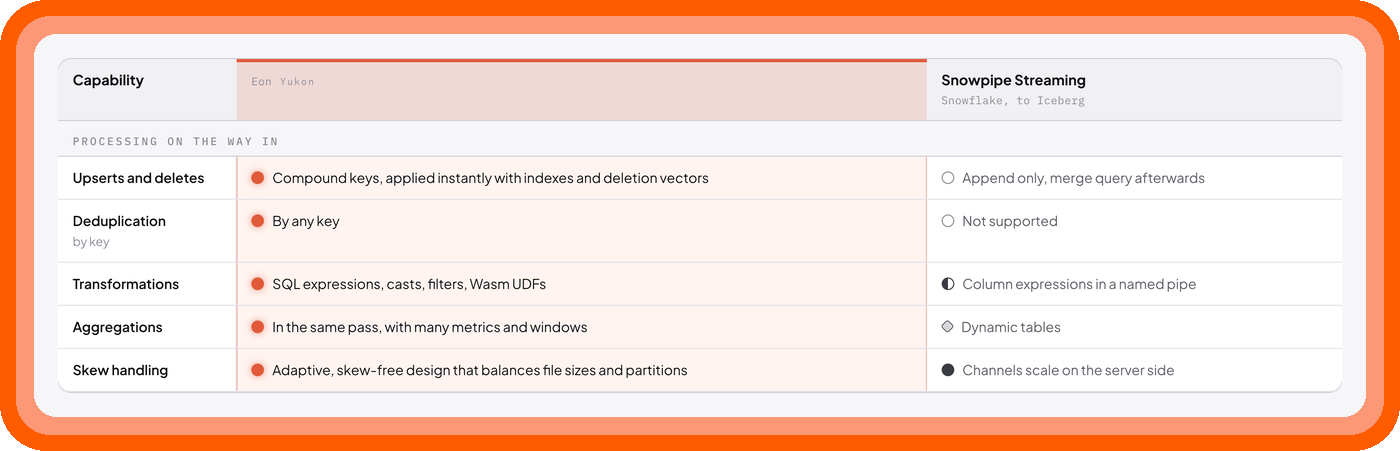
Snowpipe Streaming lands rows in 5 to 10 seconds, but it appends them. Getting to one current row per key takes a merge query or a dynamic table, which refreshes on a virtual warehouse at most once a minute. Deduplication is logic your team writes and keeps running.
Eon Yukon merges by key as data lands: upserts and deletes on compound keys, applied with indexes and deletion vectors, and deduplication by any key. Types, transforms and aggregates are applied in the same pass, so the table Snowflake reads is correct at every commit.
Context agents read before they query
An agent that doesn't know what a table means samples rows, guesses at keys and runs exploratory queries before it can answer. On Snowflake, each of those queries keeps a warehouse running.
Snowflake gives agents semantic views: logical tables, facts, metrics and dimensions that Cortex Agents read to write SQL. Semantic View Autopilot generates them from query history and BI files, and your team refines them. Nothing records distributions, value-matched joins or what changed on every commit.
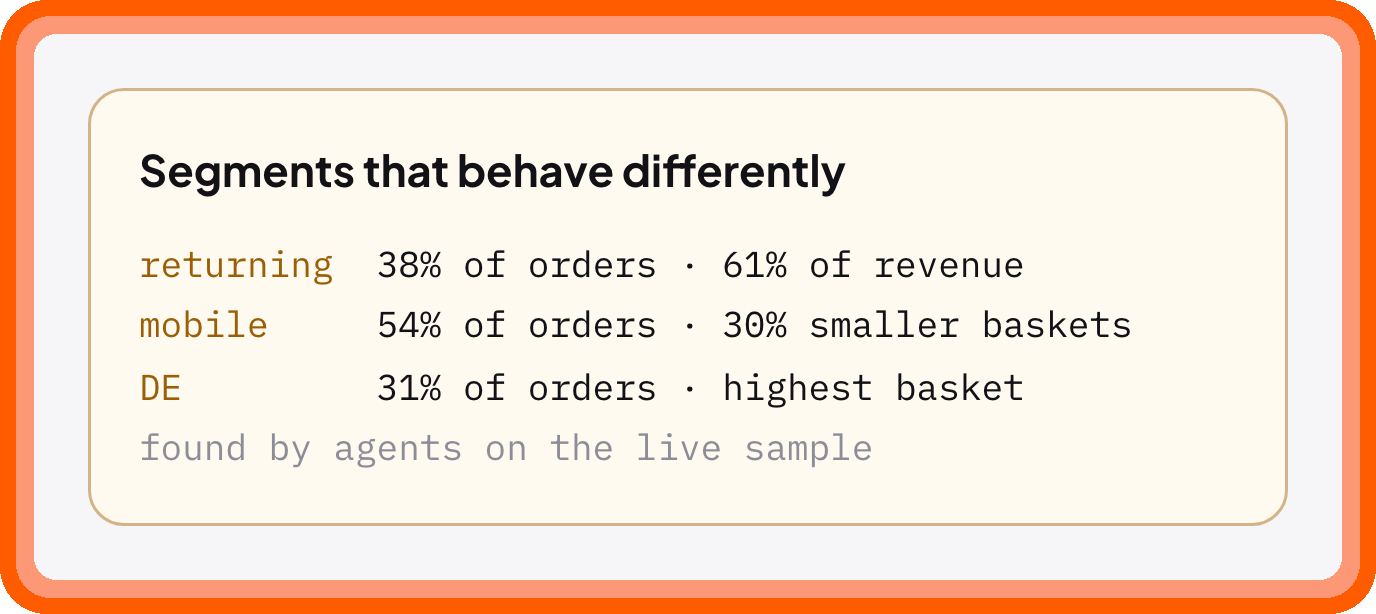
Eon writes distributions, null rates and what changed in the same commit as the data, and agents that study a live sample keep each table's grain, column meaning and joins, found by matching values, current alongside the pipeline. Agents read it over MCP, from Claude, Gemini, Cursor or your own agents, so one call replaces the exploratory queries.
Serverless queries for agents and apps
Agents and apps send many small queries at unpredictable times. Warehouses are sized and billed for steady BI workloads.
A Snowflake virtual warehouse bills per second with a 60-second minimum each time it starts, and each size up doubles the credits per hour.
Eon Yukon runs serverless SQL on a distributed engine and bills per query, with nothing running when idle. Existing Spark batch jobs can connect over Spark Connect; RDD, custom-JVM and GPU jobs stay on Spark.

Runs next to Snowflake
Adding an engine shouldn't mean moving data or starting a migration.
Eon runs managed in a dedicated account, or in your own AWS or Google Cloud account with your cloud bill and commitments. Tables are Apache Iceberg in the region you pick, registered in AWS Glue, Google BigLake or any Iceberg REST catalog. Snowflake reads them through a catalog integration on that catalog, an external volume on the bucket and a catalog-linked database, so every Eon table appears in Snowflake with no copies and no load jobs. Auto-refresh polls the catalog every 30 seconds by default, billed on the Snowpipe line, and picks up each new commit. Eon receives health metrics, column statistics and usage, never row values.
How streaming costs compound
Ingestion
$0.01 per GB, with everything below included.
Snowpipe Streaming at 0.0037 credits per GB, with clustering and transforms extra.
Upserts and dedup
Included, applied as data lands.
Merge queries on a virtual warehouse.
Clustering and compaction
Included, continuous.
Automatic Clustering on its own bill line. Compaction of Snowflake-managed Iceberg tables run and billed by Snowflake, storage on your cloud bill.
Real-time aggregations
Included, in the same pass.
Dynamic tables, refreshed on a virtual warehouse.
Rich column statistics
Included, on every commit.
Through Snowflake, at extra cost.
Query compute
Per query, with nothing running when idle.
Warehouses billed per second, 60-second minimum each start.
Where the difference shows up most:

More tables
each new stream on Snowflake brings its own merge query, dynamic table and clustering credits. With Eon, one read of each event does all of it, so cost follows data volume, not the number of jobs.

Agent and app queries
bursts of small queries wake a warehouse and pay its 60-second minimum. Eon Yukon bills only for the queries it runs.

See how Eon works in your environment
Bring a stream you load into Snowflake today and we will show you that data landing in Eon Yukon tables, with freshness and compute compared side by side.