Eon Context
Tables that explain themselves to every agent that reads them.
Eon Context captures column statistics and changes as data lands, and keeps a description of every table current with each commit: its grain, what each column means, how tables join and what changed. Agents and analysts start from that context over MCP instead of sampling rows and guessing at keys.
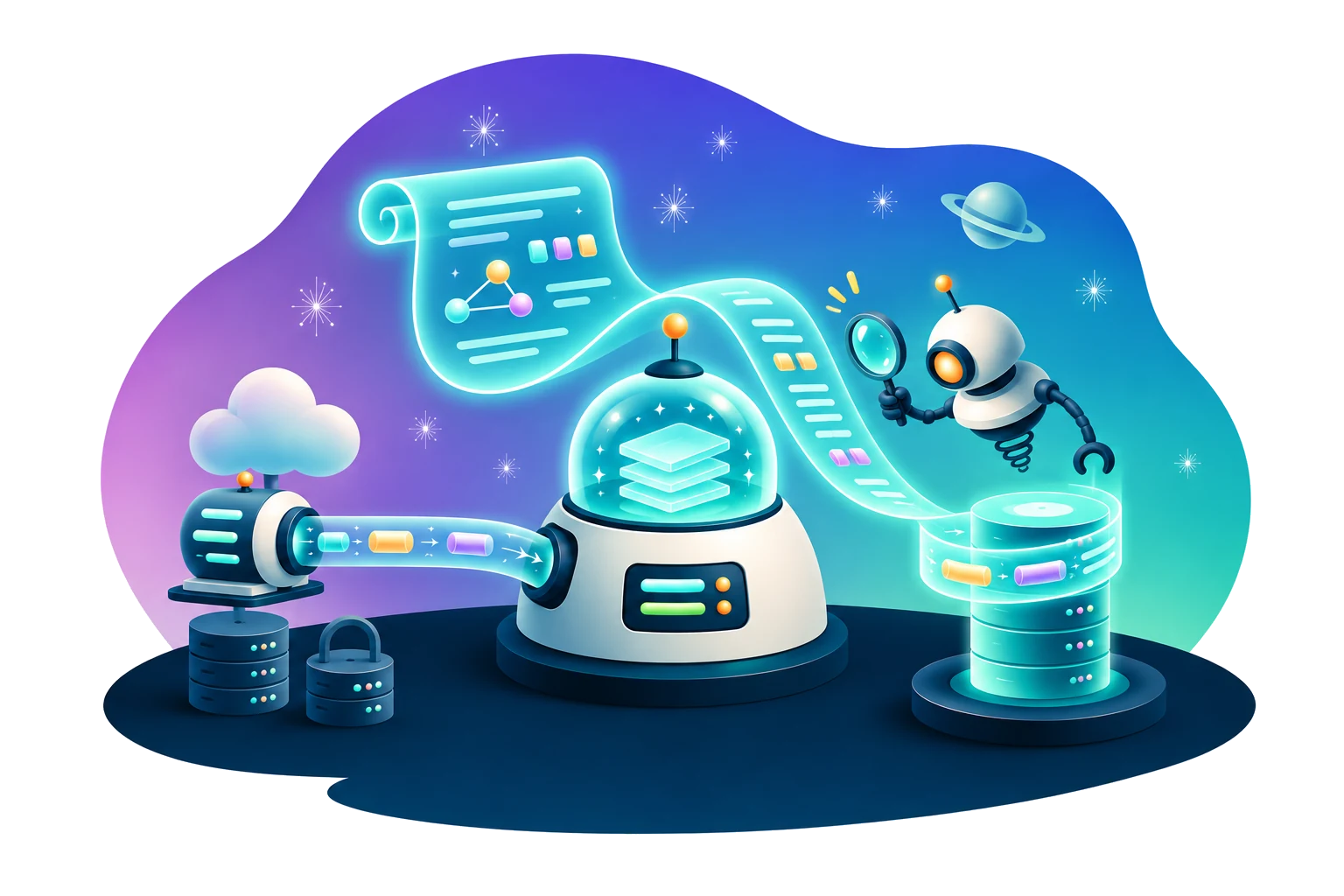
Build context that helps agents use the data
An agent that doesn't know what a table means samples rows, guesses at keys and runs exploratory queries before it can answer. Eon Context writes that knowledge in the same commit as the data.
Statistics on every column, every commit
Full Iceberg statistics plus distributions, quantiles, null rates, distinct counts and top-k values per column, tracked over time and written as data lands, with 0 bytes scanned to learn them.
Descriptions that stay current
Eon Context maintains table and column descriptions from data profiles and agents studying a live sample, so a column's description keeps up with the data.
Joins and changes, found for you
Eon Context finds joins by matching values across tables and records what changed: new columns, new values and dropped columns. Signals flag unusual changes such as a stalled feed or a jump in empty values.
Context over MCP
Agents reach data and context over MCP from Claude, Gemini, Cursor, Codex or your own agents, and understand a table in 1 call instead of five.
From the event to an agent that understands it
Eon Context is built inside the ingestion pipeline rather than in a separate catalog job that runs after it.
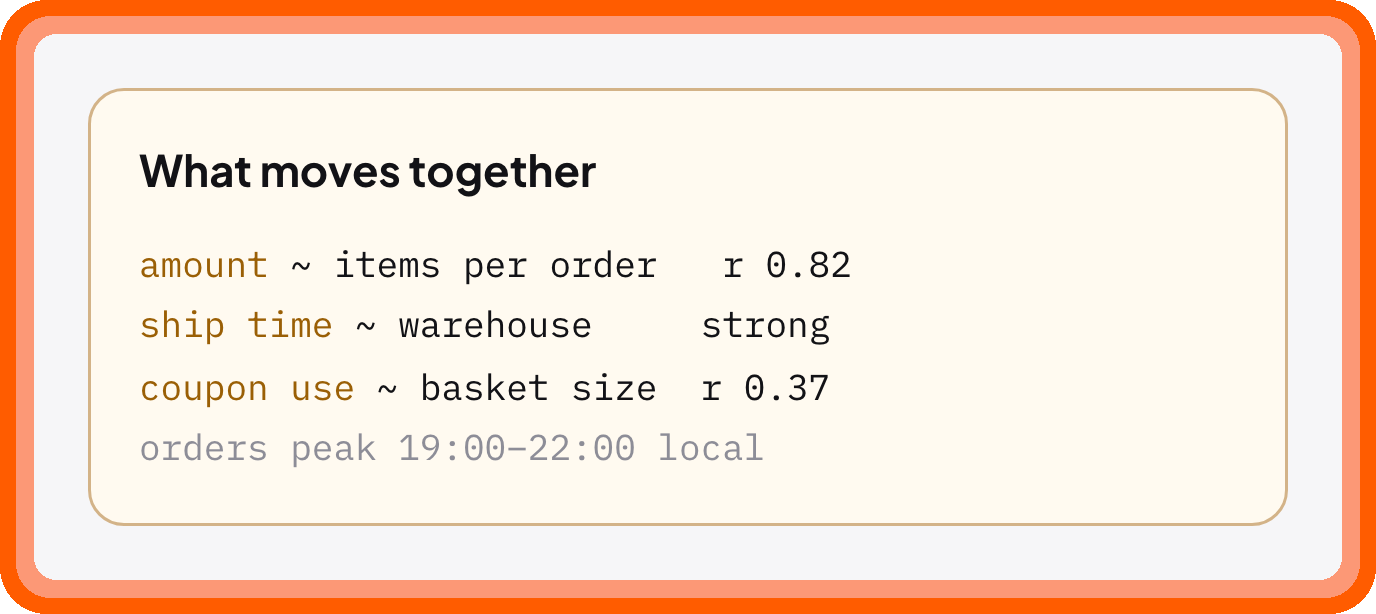
As each commit lands in Apache Iceberg, Eon Context records counts and distributions from statistics on every row.
Meaning, joins and segments come from agents that study a live sample kept alongside the pipeline, one that preserves every source and the shape of the data.
The result is a generated description of each table, served over MCP and kept within seconds of the data, so agents and analysts know what to query before they query it.
Put live context to work
01
Analyst agents over billions of rows
An analyst agent reads what every table means, then answers in under a second. See AI ready data and context for agents.
02
Agents that build and watch pipelines
Agents create, change and watch pipelines over MCP, and see in the context what each change did to the table.
03
Catch broken feeds early
Signals on a stalled feed, a new column or a jump in empty values show up in the table's context as soon as the data does.
04
Faster onboarding to new data
Analysts and engineers read a table's grain, keys and joins before writing a query, instead of reverse-engineering it from samples.
See how Eon works in your environment
Bring a table your agents query today and we will show you the context Eon Yukon keeps for it as data lands: its grain, its joins and what changed.