Give AI agents fresh data they understand
Eon Yukon keeps a description of every table current as the data lands, so agents read the context first and answer with one query instead of guessing.
Agents fail when they don't understand the data
Agents get answers wrong when they don't know what a table means, how it joins or what changed. So they sample rows, guess at keys and run exploratory queries before every answer, often on data that is hours old. Each of those queries costs compute and time, and the answer can still be wrong.

Tables without meaning
Column names and types don't say what a value means, which key is the grain or which tables join. Agents guess, and a wrong join gives a confident wrong answer.

Exploration that costs compute
Before answering, an agent describes the table, samples rows and runs several aggregate queries. Every step is billed compute and seconds of waiting.

Context written by hand
Semantic layers and catalog descriptions are maintained by people, and they fall behind as schemas and values change.

Data that arrives late
Batch pipelines land data hours after it happened, so agents answer questions about yesterday.
How Eon makes data ready for agents
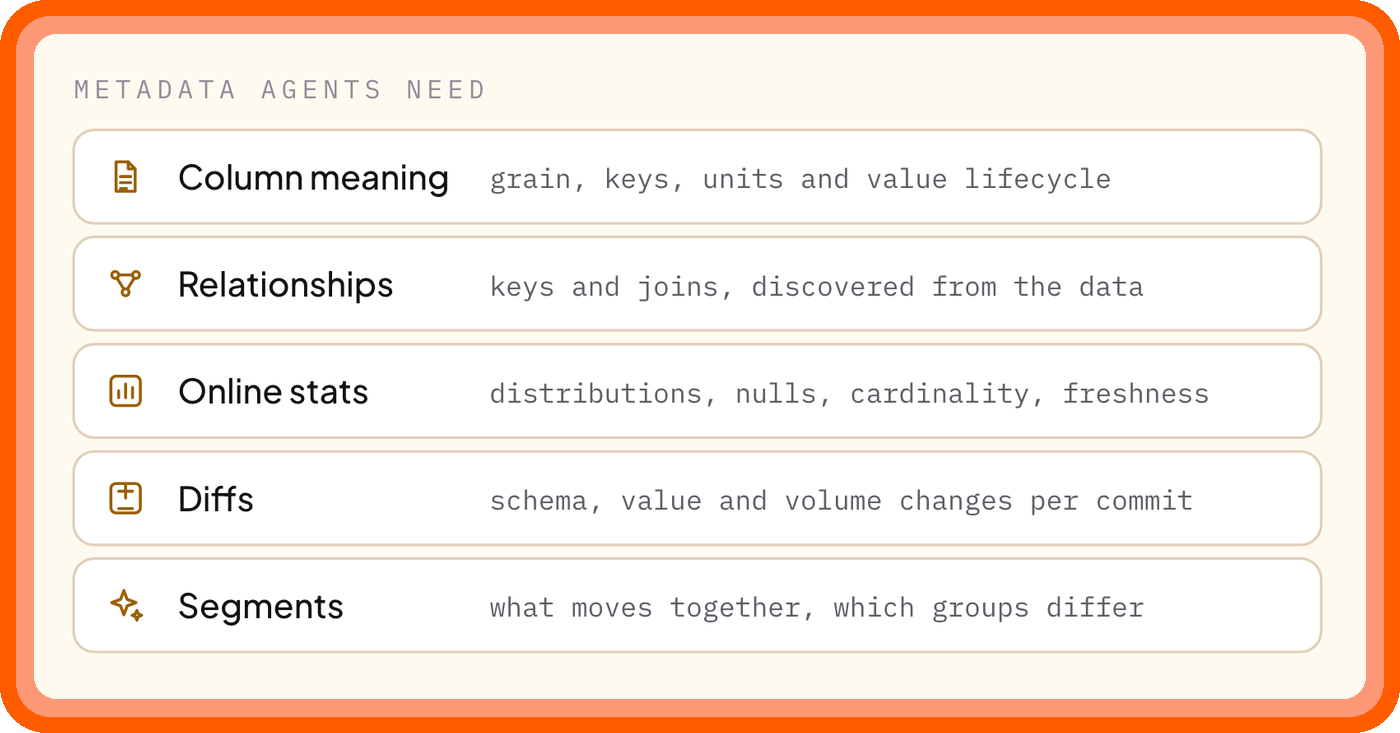
Eon Yukon lands streaming data as clean Apache Iceberg tables, queryable within seconds. It updates a description of each table as the data lands: its grain, what each column means, distributions, joins and what changed. Agents read that context over MCP, then query with serverless SQL or any Iceberg engine. The description covers what your catalog and semantic layer leave stale, such as column meaning and recent changes.
Context written in-stream
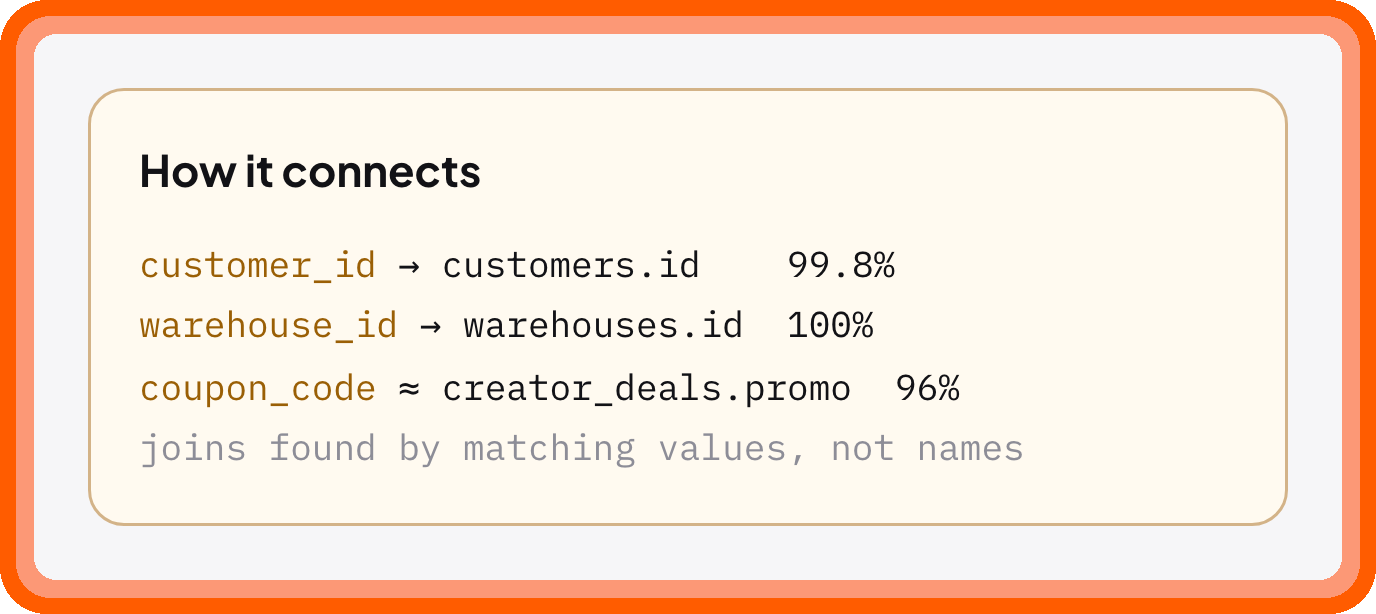
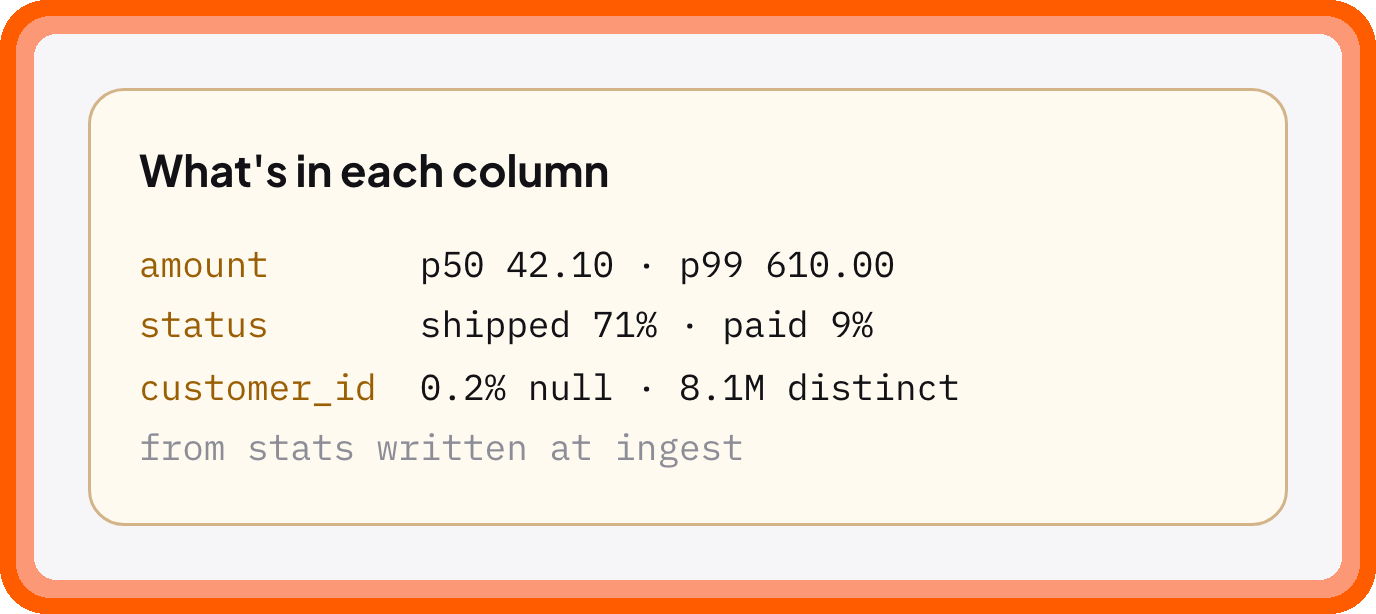
Eon Yukon captures column statistics and changes during ingestion, and maintains table and column descriptions informed by stats on every row and by agents that study a smart sample of the data. Distributions, null rates and what changed are updated in the same commit as the data, so the context is never behind the table. Those agents keep each table's grain, column meaning and joins, found by matching values, current alongside the pipeline. The sample is smart: it keeps every source and rare values, so the descriptions agents write can be trusted. Eon also keeps a log of what happened to the data, such as a new column, a spike or a source that went quiet.
Served to agents over MCP
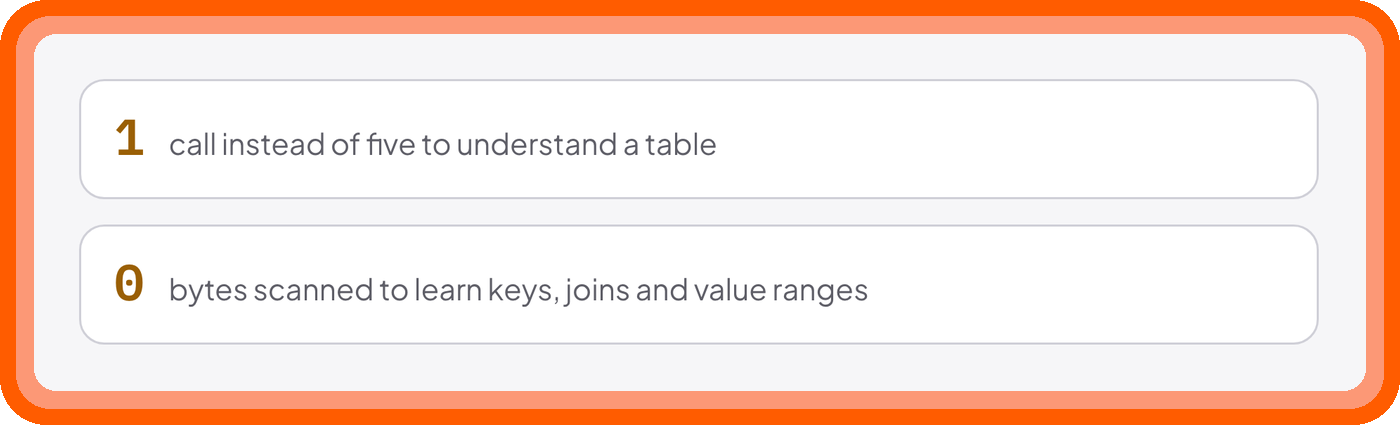
Claude, Gemini, Cursor or your own agents read context and run SQL over MCP. It takes 1 call instead of five to understand a table, and 0 bytes scanned to learn keys, joins and value ranges. Agents can also create, change and watch pipelines over MCP.
Answers from the first query
Eon Yukon plans queries from the statistics built at ingest. Asked "What drives order sizes in the last week?", an agent answers with one context call and one query, instead of six exploratory queries.
Fresh, clean tables underneath
Events land deduplicated, merged by key and queryable within seconds, in Apache Iceberg tables in a dedicated account in your region, shared with you, or in your own account with BYOC. Agents read the current row for each order, user or device, not a log of every version.
See how Eon works in your environment
Bring a table your agents query today and we will show you the context Eon Yukon keeps for it as data lands, and the queries it saves.