

Unitrends cloud backup pricing isn’t listed anywhere on its website. Click any pricing button on the product pages, and you land on a form where a sales rep (or one of Unitrends’ channel partners) builds a quote.
That’s a problem if you’re trying to compare Unitrends against native AWS or Azure backup, or against a cloud-native platform, before a sales call. The numbers that do exist are spread across a reseller price sheet, a 2022 datasheet, a couple of licensing FAQs, and third-party deal benchmarks.
We pulled those sources together here. By the end, you’ll know what each piece of a Unitrends deal costs, how Forever Cloud retention is billed, what the AWS and Azure product adds to your cloud bill, and which contract terms to push on before you sign.
What is Unitrends cloud backup?
Unitrends cloud backup covers two services: offsite storage for backups taken by Unitrends appliances, and protection for workloads already running in AWS and Azure. Unitrends has been part of Kaseya since a May 2018 merger, and its products are sold alongside Kaseya’s other IT tools.
The 2 Unitrends cloud backup products
Unitrends sells two different products under the “cloud backup” name, and they’re priced in different ways. Most of the confusion about what Unitrends costs starts here.
Unitrends Cloud (Forever Cloud) for appliance backups
Unitrends Forever Cloud is offsite storage for backups taken by Unitrends appliances, physical or virtual. Your on-site appliance replicates backups to Unitrends data centers in the US, Canada, the UK, Germany, or Australia, where copies sit on immutable storage.
It’s the offsite copy in a 3-2-1 backup setup, and it works much like backup as a service (BaaS) for that copy. Disaster Recovery as a Service (DRaaS) is an add-on on top of it.
Enterprise Cloud Backup for AWS and Azure
Enterprise Cloud Backup protects workloads running in AWS and Azure. It deploys a Unitrends Backup virtual appliance from the AWS Marketplace as an EC2 image (or from the Azure Marketplace), backs up VMs, databases, and servers to that appliance, and can replicate the copies to the Unitrends Cloud.
If most of your estate runs in the cloud, this is the product you’re pricing.
How Unitrends cloud backup pricing works
Unitrends prices every deal by quote. Its Request Pricing page asks for your details so a rep can "craft a tailored plan for your business," and every pricing link on the Enterprise Cloud Backup page leads to "Request a Quote."
Behind that quote, a Unitrends bill is built from four layers:
- Appliance hardware: Recovery Series appliances, priced by usable capacity. You skip this layer if you run virtual appliances.
- Backup software: Unitrends Backup, licensed per CPU socket or by protected capacity, or per protected VM in the cloud. It’s sold as a perpetual license or a subscription.
- Cloud storage: Forever Cloud capacity for the offsite copy, priced on how much you protect and how long you keep it.
- Services: DRaaS, support, and (when you buy through a reseller) managed service fees.
Plenty of buyers never deal with Unitrends directly. Managed service providers and resellers package these layers into a monthly fee.
Invenio IT, for example, describes its Unitrends service as "one flat rate for install, storage, VIP support and recoveries," with two DR tests a year and a 5-year warranty included.
Unitrends cost components and price ranges
Invenio IT, a Unitrends reseller, publishes the most detailed public numbers.
Its Unitrends price sheet lists these ranges:
Ranges as published by Invenio IT, verified as of October 2026.
The same page lists Datto SIRIS appliances (a separate Kaseya product line) with no prices, so none of these figures apply to Datto.
The ranges are wide because they cover everything from a single small-office box to a multi-site enterprise rollout. The main cost drivers are storage capacity, number of devices, retention policy, deployment option, upgrades, and contract length.
Third-party deal data fills in the enterprise end. Recovery Series appliances run about $1,400 per TB at the large end of the capacity range and $3,200 or more per TB at the small end. Unitrends Backup software runs $1,200 to $1,900 per socket as a perpetual license, or $650 to $950 per socket a year on subscription.
Its three-year deal benchmarks look like this:
VendorBenchmark doesn’t publish its method, so use this to evaluate a quote you’ve already received.
How Forever Cloud retention is billed
Forever Cloud is licensed on two inputs: how much protected data you send and how long you keep it. It is sold in 500 GB increments, with retention from 90 days to forever.
Forever Cloud retention comes in three choices: 90 days, annual (1 to 7 years), or indefinite, with longer retention costing more per GB.
The last per-GB list price Unitrends published was $0.09 to $0.14 per GB a month, "depending on the retention policy you choose," in a 2022 datasheet. VendorBenchmark’s figures land in the same range: about $85 to $140 per TB a month for standard retention, with a 25% to 60% premium on 7- and 10-year tiers.
Confirm today’s rate with Unitrends or your reseller before you budget, since Unitrends’ only published list price is from 2022.
Two billing details work in your favor. You pay for the data you choose to protect, so a high daily change rate doesn’t inflate the bill. And Unitrends says you’ll "never worry about paying ingress, egress, or upcharges" when you pull data back.
One works against you. VendorBenchmark reports per-TB increases of 5% to 8% a year on Forever Cloud, compounding on top of your data growth, so renewal bills can run 40% to 60% above year one.
Forever Cloud vs. hyperscaler storage
Unitrends’ own cost calculator post argues that 10 cents per GB beats 1 cent per GB once you add egress, retrieval, and compounding storage.
The math for 10,000 GB (about 10 TB) at current AWS list prices in US East:
AWS rates come from the Amazon S3 pricing page. The first 100 GB of data transfer out each month is free, then it’s $0.09 per GB for the first 10 TB. Deep Archive standard retrieval is $0.02 per GB, and objects carry a 180-day minimum storage charge.
On raw numbers, S3 Standard costs $670 to $1,170 less a month, so you’d have to pull the whole copy back almost every month for Forever Cloud to come out ahead.
The comparison is uneven in the other direction, though. An S3 bucket is just storage. Forever Cloud includes replication from your appliance, immutable storage, and the option to add DRaaS, and you’d need to build or buy those yourself on top of S3.
If you’re sizing the whole bill, snapshot sprawl and version growth are the kind of overlooked cloud backup charges that quietly inflate it.
Unitrends Enterprise Cloud Backup pricing for AWS and Azure
Enterprise Cloud Backup has no published price either, but its licensing tells you what you’ll be paying for.
Unitrends’ AWS backup licensing has four parts:
- Per-VM licenses: A server license for each protected VM. Every license includes the full feature set, so there’s no edition to pick.
- A backup VM in your account: The Unitrends appliance runs as a VM in your AWS account, and backup storage is disk-attached to that VM.
- Replicated capacity: A "Unitrends Backup Replicated Capacity" license matching the TBs replicated, if you’re sending copies from a physical appliance.
- Forever Cloud capacity: Needed if you want the backups copied outside your cloud account.
The backup VM is the cost line cloud teams tend to miss. It’s a running VM, so your cloud provider bills you for its compute and for every GB of backup disk attached to it, on top of the Unitrends licenses. Data size, backup frequency, and retention all decide how big that VM needs to be.
Replication adds one more charge. Copying backups from an AWS appliance to the Unitrends Cloud is data transfer out of AWS, which AWS bills at its standard internet rates.
Two limits are worth checking against your estate. In AWS, Instant Recovery and bare metal recovery aren’t supported, and workloads outside U.S. regions aren’t covered. That FAQ dates from 2023, so ask whether either has changed.
Azure follows the same appliance-plus-license model, with a server license for each protected VM. There’s also a separate Unitrends Backup for Microsoft Azure service, sold for a flat monthly subscription fee.
Unitrends’ AWS product page claims customers “Save 30% or more” compared to other vendors, without naming which vendors or the workloads behind the figure. Price your actual alternative yourself before you lean on it.
Our breakdowns of AWS Backup and Azure Backup pricing walk through both bills. For reference, AWS Backup charges $0.05 per GB-month for EBS snapshot warm storage in US East.
Veeam’s cloud product carries a similar infrastructure cost, which we covered in our Veeam pricing breakdown.
Contract terms that change your total cost
The quote is only the starting point. These terms decide what you’ll pay across a three- to five-year relationship.
Multi-year agreements and hardware discounts
Invenio IT notes that "Unitrends Backup Hardware is discounted with a 36-month agreement," and the same page advertises a 100% discount on 36-month agreements without saying which items it covers. Ask your reseller exactly what that discount applies to.
Three years is the typical Unitrends term. A three-year prepaid deal earns 6 to 10 more points of discount than a one-year deal, and a five-year term adds another 3 to 5. The trade-off is that you lock in capacity and retention choices you’ll likely want to change as data grows.
Renewal uplift and cloud retention increases
The default renewal uplift runs about 7% on standard contracts and 10% to 12% on older contracts being repriced to list. Forever Cloud’s 5% to 8% yearly per-TB increase stacks on top of that. Ask for escalation capped at CPI or 3% in writing.
Auto-renewal windows
Unitrends contracts typically auto-renew with a 60- to 90-day notice window, per VendorBenchmark. Miss the window, and you’re committed to another term at the renewal price.
Hardware refresh and Kaseya bundles
Appliance refreshes often land at the same time as software renewals, which bundles two decisions into one negotiation. Separating them earns 10 to 15 more points of discount.
Kaseya also bundles other products (Datto, Spanning, and VSA) into deals, sometimes as "bonus" entitlements with their own renewal cycles. That’s how a year-three renewal ends up looking very different from the year-one quote.
Where Unitrends pricing works and where it falls short
The model rewards estates built around an on-site appliance and penalizes ones spread across many cloud accounts.
Where it works
- One vendor for the full stack: The on-site appliance, software, and offsite cloud copy come from one vendor, often on one reseller invoice.
- Predictable cloud copy costs: Forever Cloud bills on protected capacity, so change rates don’t inflate it, and recovery is free of egress fees.
- Long retention on a fixed rate: Retention runs from 90 days to forever, so seven-year compliance retention doesn’t need a separate archive product.
- DR testing built in: With DRaaS, Unitrends automatically tests recovery in its cloud and reports on whether backups are recoverable.
Where it falls short
- No public prices: Every comparison starts with a form and a sales call.
- Per-VM licensing in the cloud: License counts need a true-up whenever teams launch new instances in AWS or Azure.
- A backup VM on your cloud bill: The appliance’s compute and attached disks don’t show up in the license quote.
- Compounding renewals: Per-TB increases on cloud retention stack on top of data growth at every renewal.
Is Unitrends cloud backup worth the cost?
Unitrends is worth the cost for organizations whose servers still run mostly on-site or in a colocation facility and who want the appliance and the offsite copy from one vendor. For estates that run mostly in AWS or Azure, the appliance model adds cloud spend and licensing work at every account.
Unitrends fits if you:
- Run physical, VMware, or Hyper-V servers on-site and want a backup appliance with a cloud copy attached.
- Buy through an MSP and prefer one monthly fee covering install, support, and recoveries.
- Need retention of seven years or longer on a fixed per-GB rate.
Look elsewhere if you:
- Run most production workloads across many AWS or Azure accounts and regions.
- Want new cloud resources protected automatically, with no per-VM license count to keep current.
- Have AWS workloads outside U.S. regions (confirm Unitrends’ current support first).
Our roundups of BaaS providers and enterprise backup solutions cover other options and how they price.
How to get an accurate Unitrends quote
A Unitrends quote is only as good as the numbers you bring to it.
Work through these before the first call:
- Measure protected data and growth: Count TB per site and per cloud account, and estimate 12-month growth, since Forever Cloud is sold in 500 GB blocks.
- Set retention per dataset: Keep most data on 90-day or one-year retention, and save 7-year or indefinite tiers for regulated records.
- Count sockets and VMs: List the sockets on-site and the VMs in AWS and Azure, since each protected cloud VM needs its own license.
- Ask for line items: Get separate prices for hardware, software, Forever Cloud, DRaaS, and support, with renewal terms for each.
- Price the backup VM: Add the instance size and attached disk Unitrends recommends to your AWS or Azure cost estimate.
- Bring competing quotes: A documented competitive quote earns 8 to 12 more points of discount than budget-only negotiation.
Note: Get the Forever Cloud renewal rate in writing, with a cap on yearly increases, before you sign the first term. It’s much harder to negotiate once three years of backups live in that cloud.
Unitrends Enterprise Cloud Backup vs. Eon for AWS and Azure
For AWS and Azure workloads, the biggest pricing difference is what you pay for besides stored data. Unitrends adds per-VM licenses and a backup VM in each account. Eon doesn’t charge per VM or keep a backup VM running in your accounts.
Eon is our cloud data protection and recovery platform, built around Cloud Backup Posture Management (CBPM), a category we created.
Eon discovers resources in your AWS and Azure accounts through read-only APIs, keeps finding new VMs, databases, and object storage as teams create them, and assigns backup policy and retention by data type.
There’s no manual tagging, and no license count to true up when a team launches a few dozen new instances.
On cost, global deduplication cuts backup storage by 30% to 50%, and Cost Explorer breaks backup spend down by source account, resource type, and resource. NETGEAR cut its backup storage 35% after moving off a legacy provider, and recovered a 10 TB SQL Server database in under three hours instead of a full day.
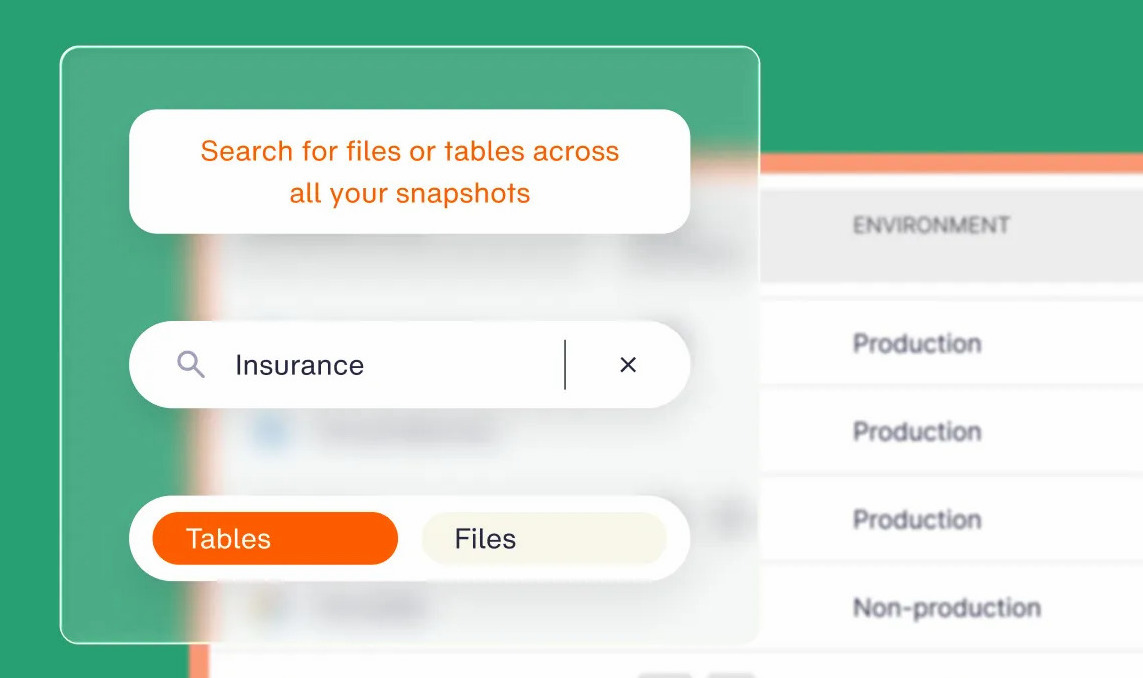
Backups sit in immutable, logically air-gapped vaults. Recovery is granular, so you can restore a single file, database record, or table, and Global Search finds it across clouds without restoring an environment first. For managed databases like Amazon RDS, Aurora, and Azure SQL, Eon analyzes the logical content of backups for ransomware to find a clean recovery point.
Pricing is usage-based. You pay per GB per month for the data you back up, with recovery and data access built in and no separate retrieval or egress fees, ransomware protection is a separate package, and Eon is available on AWS Marketplace with consumption-based billing. Like Unitrends, Eon has no public rate card, so you’ll get a quote built around your capacity and growth.
Eon has limits too. Its on-premises coverage is limited, so a company backing up racks of physical servers and VMware hosts will get more from Unitrends’ appliance model.
Unitrends is the better fit for on-prem-heavy estates that want an appliance and a cloud copy from one vendor. Eon fits cloud-first teams protecting AWS and Azure across many accounts and regions, where per-VM licenses and backup VMs multiply with every account.
Our Eon vs. AWS Backup comparison covers how Eon prices against the native option.
The bottom line on Unitrends cloud backup pricing
Unitrends cloud backup pricing makes sense for what the product was built to do: protect on-site servers with an appliance and keep a cloud copy at a fixed per-GB rate with no recovery fees. The total gets harder to predict over a three-year term, once per-TB increases, renewal uplifts, and bundled Kaseya products reach the bill.
In AWS and Azure, the licenses and backup VMs grow with every account you add, and so does the work of keeping coverage complete. If you can’t prove coverage, you don’t have coverage, and per-VM licensing turns that proof into a manual count.
Want to know what your AWS and Azure backups would cost with no backup VMs to run? Book a demo and see how Eon finds every resource across your accounts, applies policy automatically, and breaks backup spend down by account and resource.
Frequently asked questions
How much does Unitrends cost?
Unitrends costs $995 to $90,000 for appliance hardware, plus $200 to $20,000 a month for service, based on reseller Invenio IT’s published ranges. Cloud and DRaaS add $45 to $5,000 a month. Unitrends doesn’t publish its own prices, so your exact figure comes from a quote.
How much does a cloud backup cost?
Cloud backup costs about $1 to $24 per TB a month for raw AWS storage, and more for a managed backup service. Amazon S3 Standard lists at $0.023 per GB and Glacier Deep Archive at $0.00099 per GB, while Unitrends Forever Cloud’s last list price was $0.09 to $0.14 per GB. Restores, retrieval, and data transfer out can add to raw storage bills.
What is the cheapest cloud backup option?
The cheapest cloud backup option on list price is an archive storage tier like Amazon S3 Glacier Deep Archive, at $0.00099 per GB a month. Restores cost more and take longer, with retrieval fees, data transfer charges, and a 180-day minimum storage charge. For large estates, the lowest total cost usually comes from storing less, through deduplication and retention matched to each dataset.
How much does 1TB of cloud storage cost?
One TB of cloud storage costs about $23.55 a month in Amazon S3 Standard (1,024 GB at $0.023 per GB) and about $1.01 a month in S3 Glacier Deep Archive. At Unitrends’ 2022 list price of $0.09 to $0.14 per GB, 1 TB in Forever Cloud would run roughly $92 to $143 a month.
Does Unitrends charge egress fees?
No. Unitrends doesn’t charge ingress, egress, or recovery fees for Forever Cloud. If you run the Unitrends appliance in AWS, though, replicating backups out to the Unitrends Cloud counts as AWS data transfer out, which AWS bills at its own rates.
Who owns Unitrends?
Kaseya owns Unitrends. The two companies merged in May 2018, and Unitrends products are sold alongside Kaseya’s other IT management and backup tools.